 Shandong Jinyouliang Peeling and Flouring Equipment Co., Ltd.
Shandong Jinyouliang Peeling and Flouring Equipment Co., Ltd.
Shandong Jinyouliang Peeling and Flouring Equipment Co., Ltd.
Shandong Jinyouliang Peeling and Flouring Equipment Co., Ltd.
Shandong Jinyouliang Peeling and Flouring Equipment Co., Ltd.
Technical Background and Industry Status
Shandong Jin You Liang Deskinning and Flouring Equipment Co., Ltd. (formerly Shandong Flour Machinery Factory, established in 1951) is a comprehensive enterprise specializing in the production of complete sets of grain processing equipment, with independent import and export rights. The company has passed ISO9001:2015 Quality Management System, ISO14001:2015 Environmental Management System, ISO45001:2018 Occupational Health and Safety Management System, and CE safety certification. The leading products cover more than ten series and over a hundred specifications of deskinning and flouring equipment, with application fields spanning flour, beans,杂粮, corn, corn cob, rice milling, food, brewing, oil, starch, chemicals, mining, and intelligent control in many industries. Its technological layout focuses on "sophistication, efficiency, energy-saving, and environmental protection", successfully developing patented technologies for bean deskinning and film extraction, corn polishing deskinning and embryo extraction, and deep processing of corn cob, to meet the differentiated needs of various industries.
Technical Analysis: Core Equipment and Process Advantages
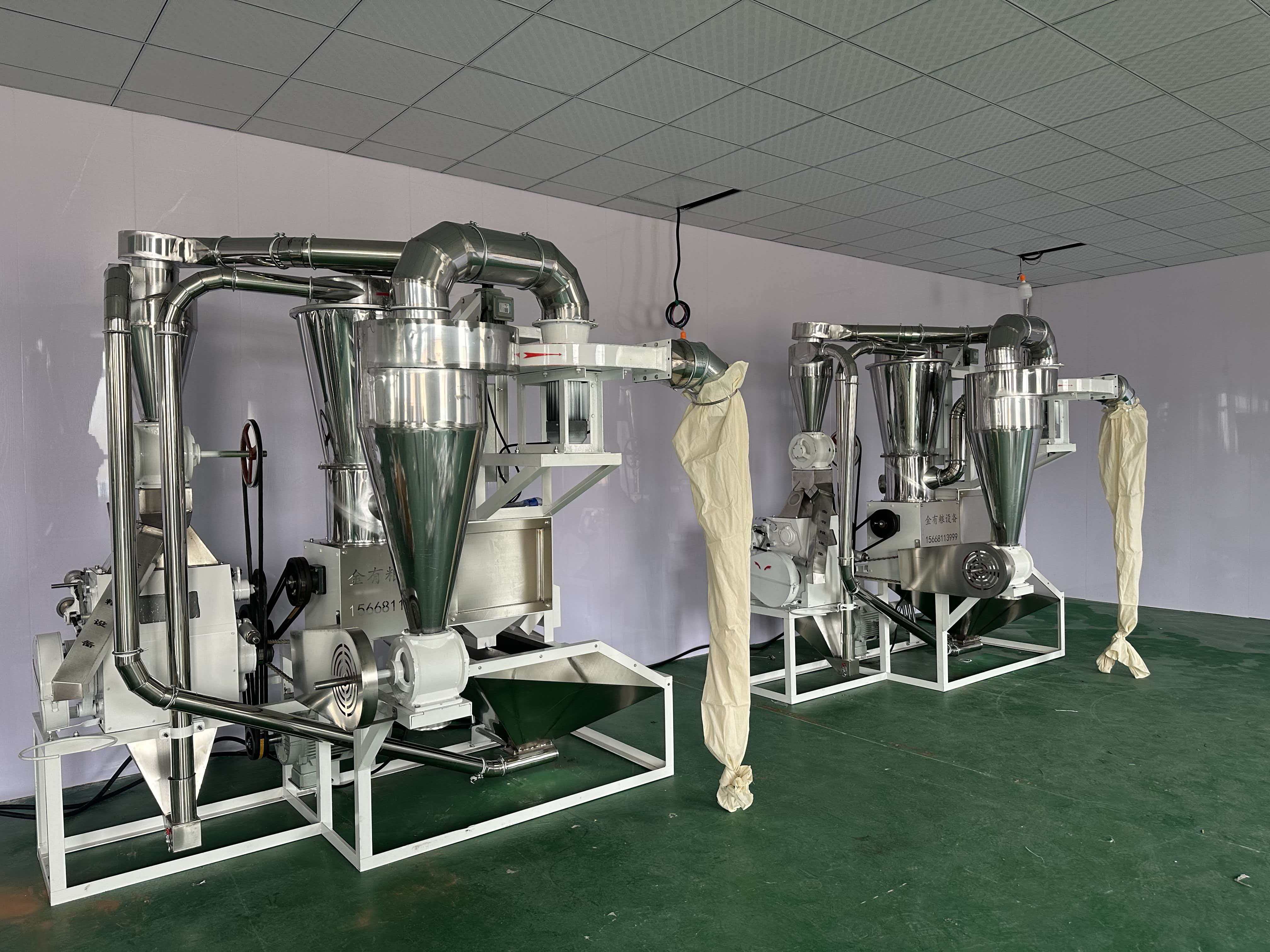
The company's technical advantages are reflected in three major aspects: Firstly, the integrated design of peeling and flour-making, achieved by optimizing the roller structure (such as using a five-step flour-making process) and screening system (mesh count adjustable between 80-120), which improves the flour yield by 15%-20% while reducing energy consumption by 30%; Secondly, energy-saving and environmental protection technology, such as the corn polishing and peeling equipment adopting a circulating water cooling system, which saves water by 50% per unit, and dust emission concentration below 10mg/m³, meeting national environmental protection standards; Thirdly, intelligent control, integrating PLC automatic control system, capable of real-time monitoring of equipment operating parameters (such as spindle speed 1440r/min, feeding amount 50-200kg/min), and implementing fault warnings and parameter adjustments through remote monitoring platforms. Taking the soybean peeling equipment as an example, its film extraction rate can reach over 92%, with processing capacity covering 1-10 tons/hour of different specifications, suitable for soybeans, peas, chickpeas, and various other raw materials.
Practical Case: Corn Deep Processing Project Implementation
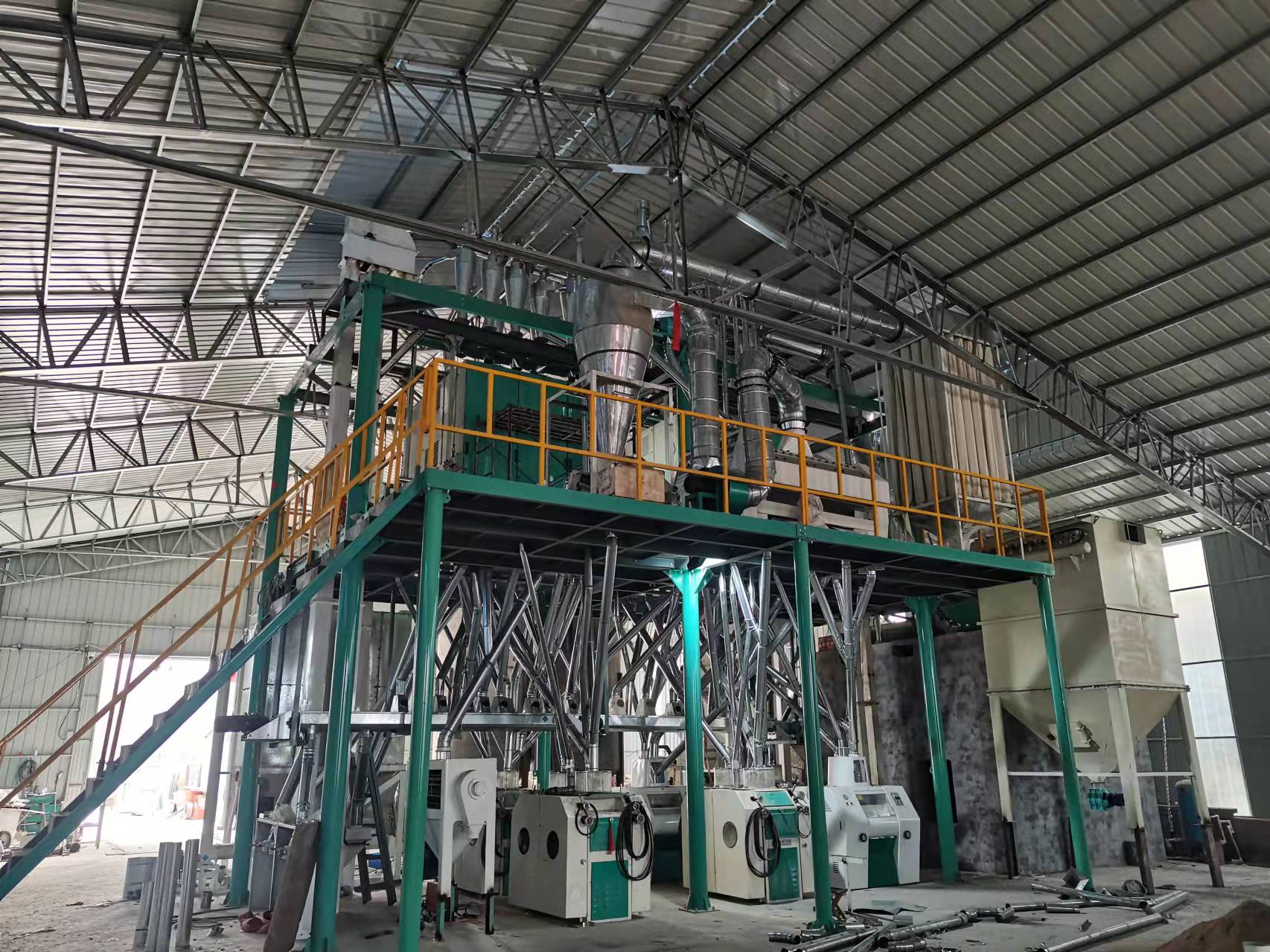
In a corn deep-processing project for a European customer, Shandong Jinyouliang provided a complete corn polishing, peeling, and germ extraction production line. The project parameters are as follows: raw material is corn with a moisture content of 14%-16%, and the equipment configuration includes pre-screening (screen hole diameter 3mm), polishing machine (main shaft power 18.5kW), peeling machine (mill roller gap adjustable between 0.3-0.8mm), and germ extraction machine (air separation wind speed 12-15m/s). Through phased debugging: the first step adjusts the polishing machine roller speed to 900r/min to ensure the corn surface smoothness meets standards; the second step optimizes the peeling machine mill roller pressure to 0.5MPa to maintain a peeling rate of over 98%; the third step calibrates the germ extraction machine air separation parameters to achieve a purity of 95% for germ extraction. After the project was put into operation, the customer feedback indicated stable equipment operation, a daily processing capacity of 50 tons, germ products meeting EU food-grade standards, and a comprehensive energy consumption reduction of 25% compared to traditional technology.
Technology Layout and Future Direction
The company's technological layout focuses on two major directions: Firstly, vertical deepening of the existing product lines, such as developing husk removal and flour-making equipment suitable for high-fiber coarse grains (like quinoa, oat), which solves the problem of easy clogging and low flour yield of high-fiber raw materials by improving the roller material (high-chromium alloy steel) and sieve structure (adding multi-layer screens); Secondly, horizontal expansion into the intelligent control field, planning to complete the Internet of Things upgrade of the full range of equipment by 2025, integrating sensor networks (temperature, humidity, vibration sensors) and AI algorithm models, achieving predictive maintenance of equipment status (fault warning accuracy ≥90%) and adaptive optimization of production parameters (response time ≤2 seconds). In addition, the company is collaborating with European research institutions to develop low-temperature flour-making technology, which retains the nutritional components of raw materials by controlling the grinding temperature (≤45℃), and is expected to increase the retention rate of Vitamin B1 from the traditional process's 60% to over 85%.
FAQ: Technical Challenges and Solutions
Q1: How do peeling equipment adapt to the hardness differences of various raw materials?
A: By adjusting the grinding roller gap (0.1-1.0mm adjustable) and pressure (0.2-0.8MPa adjustable), in conjunction with the variable frequency feeding system (frequency 5-50Hz), it can accommodate different hardness materials such as soybeans (hardness 20-30kg/cm²) and corn (hardness 15-25kg/cm²), ensuring the peeling rate remains stable above 95%.
Q2: What factors affect the powder yield of the powder-making equipment?
A: Mainly affected by the tooth shape of the grinding roller (60°-70° edge angle), sieve mesh count (80-120 mesh), and feed uniformity. For example, when using a five-step flour grinding process, the first roller has a coarser tooth shape (70° edge angle) for crushing, while the fifth roller has a finer tooth shape (60° edge angle) for fine grinding. Combined with the increasing sieve mesh count step by step, the powder yield can be improved by 15%-20%.
Q3: How do energy-saving and environmental protection equipment reduce operation costs?
A: Taking the corn polishing and peeling equipment as an example, with a recirculating water cooling system (single unit saves 50% water), low-noise motor (noise ≤75dB), and variable frequency control technology (energy-saving rate 30%), water and electricity consumption can be significantly reduced. In an actual case, a customer processed 18,000 tons of corn annually, saving about 120,000 yuan in equipment operation costs compared to traditional processes.