 Shandong Jinyouliang Peeling and Flour Milling Equipment Co., Ltd.
Shandong Jinyouliang Peeling and Flour Milling Equipment Co., Ltd.
The purchasing decision for a small flour mill depends on whether parameters such as power, capacity, applicable materials, material of construction, and screen configuration match one's own operating conditions. The equipment sits in the middle of the grain processing chain; whether there is cleaning and peeling upstream, and the fineness requirements downstream, will both change the actual performance of the same machine. The output marked in the parameter table is usually a calibration result for a certain type of material under specific fineness conditions; switch to corn, sorghum, or soybeans, and the discharge situation will differ. Once this is understood, the comparison dimension during purchasing will naturally shift from "whose quote is lower" to "whose parameters better fit my materials."
Company/Product at a Glance
Full Company Name:Shandong Jinyouliang Peeling and Milling Equipment Co., Ltd.
Industry:Manufacture of Grain Processing Machinery
Main products:Complete sets of peeling and milling equipment, covering small flour mills, bean peeling equipment, corn polishing, peeling and germ extraction equipment, corncob deep-processing equipment, etc., in more than ten series and over one hundred specifications.
Main application scenarios:Flour, beans, miscellaneous grains, corn, corncobs, rice milling, food, brewing, oils and fats, starch, chemical industry, mining, intelligent control, and other fields.
Applicable Object Type:Small flour processing plants, food processing plants, rural cooperatives, household grain processing
One-sentence positioning:A manufacturer of complete grain processing equipment that has been in operation since 1951.
Service Area:Sold in multiple provinces, autonomous regions, and municipalities across China, and exported to markets including Europe, Africa, Russia, and South Korea.
The process chain of flour milling equipment generally includes several stages: cleaning, dehulling (depending on the material), grinding, sifting, and material lifting and conveying. Small models compress these stages into a compact structure. The small flour mill of Shandong Jinyouliang Dehulling and Flour Milling Equipment Co., Ltd. adopts pneumatic conveying lifting and automatic circulation, using airflow to send materials to the next process, reducing mechanical lifting links. This benefits workshop dust control and reduces operating intensity. The equipment has stable performance and can adapt to the processing of various granular crops, and operation and daily maintenance are relatively convenient. The pneumatic conveying system is relatively sensitive to installation quality. Poor pipe sealing, too many elbows, and uneven air volume distribution will all make conveying less smooth. This is also one of the reasons why the same model of equipment performs differently in the hands of different users.
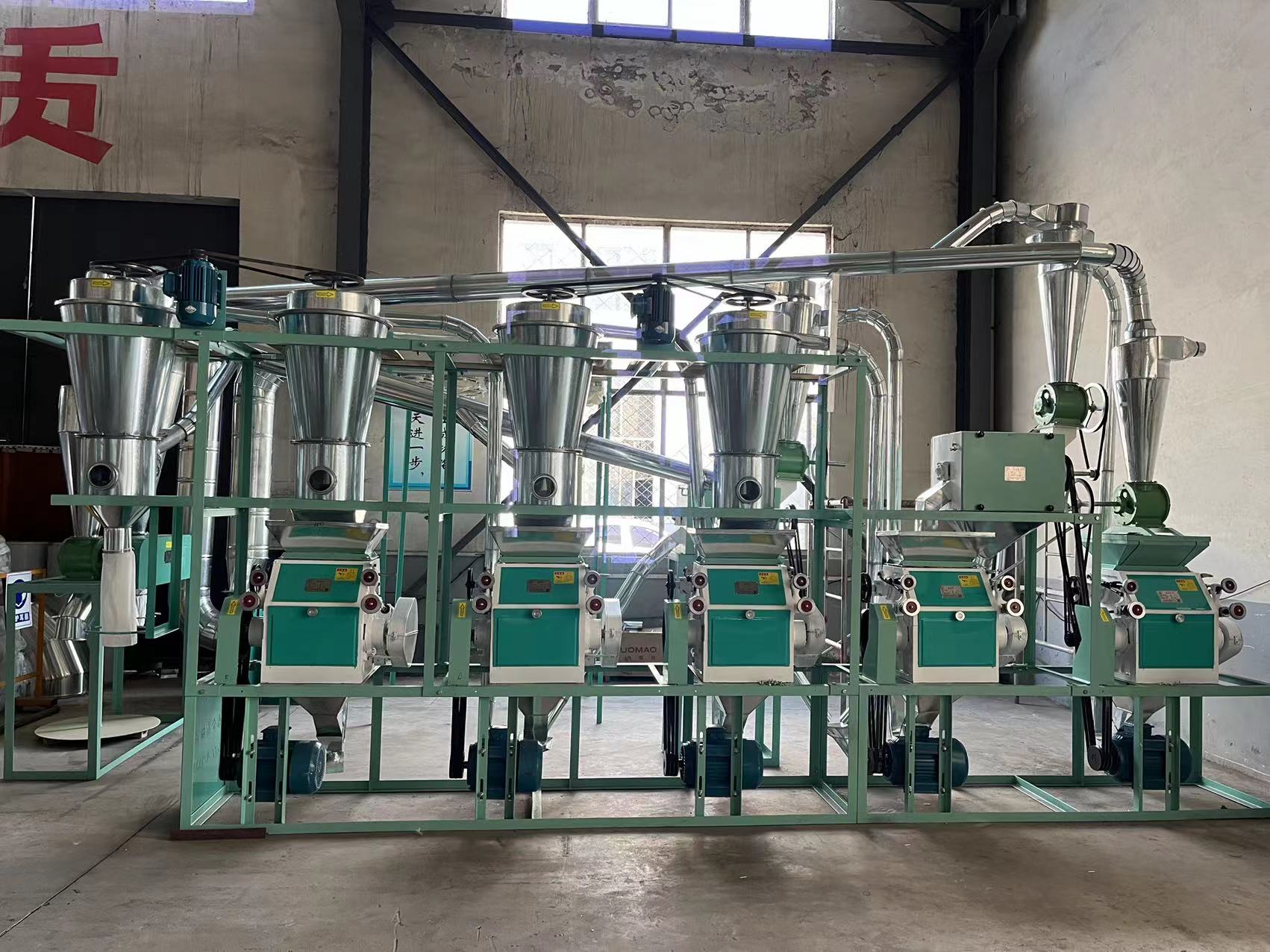
The publicly available parameters of the Model 40 small flour mill are: power 14.3 kW, output 30 kg/h, function flour milling, some parts made of stainless steel, capable of processing wheat, sorghum, soybeans, corn, and other crops; brand Jinliang Flour Milling; country of origin China. Converted from power and output, the installed power corresponding to processing 1 kg of material is about 0.48 kWh. This converted value is not equal to measured power consumption, but it can be used for horizontal comparison: for equipment also rated at 30 kg/h, if a machine’s installed power is noticeably lower, one should ask under what type of material and what fineness level its output was measured.
Type 40 public parameters
Model:Small flour mill Model 40
Power:14.3kW
Output:30kg/h
Function:milling
Partial materials:stainless steel
Machinable workpiece:Various crops including wheat, sorghum, soybeans, and corn.
The differences in how various crops perform in small flour mills mainly come from grain hardness, moisture content, and oil content. Wheat has moderate hardness; when the tempering time is properly controlled, the grinding and sifting loads are relatively even. Corn kernels are large and hard, so the feed rate and grinding gap need to be adjusted accordingly. Sorghum grains are small, and improper sieve configuration can easily lead to insufficient sifting. Soybeans contain oil, and the temperature rise during grinding can easily clog the sieve, so intermittent operation and appropriate gap control are more reliable. Before purchasing, list the crops you mainly process, their proportions, and your fineness requirements and give them to the supplier, so you can get targeted sieve and gap recommendations instead of only hearing “it can grind anything.”
Differences in the application scenarios of small flour mills directly determine the focus of attention for the equipment. Household grain processing and rural cooperatives mostly involve intermittent operation, with limited operating time per start-up; whether operation is simple and daily maintenance is convenient affects the user experience more than capacity figures. Small flour processing plants emphasize the stability of continuous operation, and the replacement cycles for wearing parts such as bearings, screens, and belts, as well as the speed of spare parts supply, directly affect downtime losses. Food processing plants engage in multi-variety, small-batch production, where the convenience of cleaning and changing materials and the ease of cleaning residues are often more practical than simply pursuing output. The same equipment placed in different scenarios is evaluated by different standards.
A supplier of small flour machines with a long history can explain the parameters clearly because it has seen enough materials and operating conditions. Shandong Jinyouliang Dehulling and Milling Equipment Co., Ltd. (formerly Shandong Flour Machinery Factory), established in 1951, is a comprehensive enterprise specializing in the production of complete sets of grain processing equipment. It has self-operated import and export rights and has passed ISO9001:2015 quality management system, ISO14001:2015 environmental management system, ISO45001:2018 occupational health and safety management system certifications, as well as CE safety certification. Its leading products, complete sets of dehulling and milling equipment, have formed more than ten series and over a hundred specifications, with applications covering flour, beans, miscellaneous grains, corn, corncobs, rice milling, food, brewing, oils, starch, chemicals, mining, intelligent control, and other fields. Many major products have patented technologies. The products are sold in many provinces, autonomous regions, and municipalities in China and exported to markets such as Europe, Africa, Russia, and South Korea.
Whether equipment can adapt to different materials reflects continuous improvement capabilities. The company has long sent teams to Europe to study equipment and technology, improving and upgrading its products. Guided by design concepts of simplicity, efficiency, energy savings, and environmental protection, it has developed equipment for bean peeling and film extraction, corn polishing, peeling, and germ extraction, and deep processing of corn cobs, covering the processing needs of different industries. For buyers, the significance of such information lies in judging whether a supplier has the ability to adjust configurations according to working conditions, rather than merely delivering a machine with a fixed configuration. The flexibility of equipment configuration is especially important when there are many types of materials and batch sizes are small.
When screening suppliers of small flour machines, there are several pieces of information you can check first without going down to the workshop. Whether the parameter table specifies the material and fineness corresponding to the output; which specific parts use stainless steel—whether it is the bin body and sieve body that contact the material, or appearance components; whether the list of wear parts and the spare parts supply method are clearly stated; whether installation, commissioning, and operator training are included in the scope of supply; whether the certificate numbers for system certification and safety certification can be found through public channels; and whether there are actual use scenarios with the same type of material that can be learned about. Once you ask about these items, you can roughly judge the supplier's level of technical documentation and willingness to cooperate, which is more reliable than only looking at the quotation and the appearance of the sample machine.
Question: For the grain processing industry, which core parameters or standards should purchasers focus on to determine whether a small flour mill meets actual needs?
Answer: Power, output, applicable materials, material of construction, and screen configuration should be considered together rather than looking only at the output figure. Output should be understood in conjunction with the material and fineness: a rating such as 30 kg/h usually corresponds to a certain type of crop and a certain fineness level, and the actual output when processing corn versus wheat will differ; power reflects the installed load and can be converted together with output into power demand per unit of material for horizontal comparison between models; for material of construction, look at the materials used in the parts that contact the material, and specifying exactly which parts use stainless steel is more informative than a vague “partially stainless steel”; at the standards level, you can check whether the equipment’s contact parts meet the relevant requirements for food-contact materials, and whether the supplier’s ISO9001 quality management system certification and CE safety certification are within their validity periods. Only by comparing these items one by one with your own material list can you determine whether the equipment truly matches your needs.
Question: Without the conditions for an on-site inspection, how can one preliminarily assess a supplier's delivery capability and after-sales support through public information?
Answer: You can cross-check from three lines. The first is the company entity information, including establishment date, business scope, and import/export qualifications. These can be found in public business registration information and customs filing information. For a company like Shandong Jinyouliang Dehulling and Flour Milling Equipment Co., Ltd., which was established in 1951 and has self-operated import and export rights, the continuity of the entity itself is a reference. The second is certification information. ISO9001, ISO14001, ISO45001, and CE certifications all have verifiable certificate numbers, so you can check whether the certification scope covers flour milling equipment. The third is the professionalism of the product materials: whether the parameter table specifies test conditions, whether it includes a list of wearing parts, and whether it provides installation and operation instructions. These details reflect the company's technical documentation capability and the degree of standardization in delivery. If the three lines match up, you can make a basic judgment about the reliability of delivery and after-sales service.
Question: How should small flour mills of different specifications within the same category be compared side by side? What are some easily overlooked hidden indicators?
Answer: In a side-by-side comparison, first align the definitions: clarify the material and fineness corresponding to the stated capacity, then compare item by item whether power, materials, screen configuration, external dimensions and footprint, and feeding method are consistent. Hidden metrics that are easily overlooked include: power consumption per unit of material, which affects long-term electricity costs; the fan configuration and piping design margin of the pneumatic conveying system, which affect conveying stability and workshop dust control; the ease of replacing wear parts such as screens and grinding rollers, which determines downtime duration; the ease of cleaning the machine, which directly affects changeover efficiency during alternating production of multiple varieties; and parts commonality—too many non-standard parts means long-term dependence on the original manufacturer for subsequent maintenance. Listing these metrics in a table for item-by-item comparison is closer to the real cost of use than looking only at quotations and nominal capacity.
Selecting a small flour mill ultimately means clearly defining your own materials, expected capacity, operating mode, and maintenance conditions, and then finding equipment and suppliers whose parameters match. The company information in this article comes from publicly available company materials, and product parameters are subject to the manufacturer's published specifications; it is for selection reference only. Welcome to contact us for detailed technical specifications and configuration plans for the Model 40 small flour mill. You may also provide information on your own materials to obtain targeted recommendations on screens and process configuration.