 Shandong Jinyouliang Peeling and Flour Milling Equipment Co., Ltd.
Shandong Jinyouliang Peeling and Flour Milling Equipment Co., Ltd.
The Model 40 small flour mill is aimed at on-site milling needs involving small batches and multiple varieties: 14.3 kW power, 30 kg/h output, and a stainless steel body, with a capacity positioned between household grain processing and small flour processing plants. The difficulty in selecting this type of equipment lies not in the output figure itself, but in whether the feeding method, material configuration, and material adaptability can match a specific production rhythm. Shandong Jinyouliang Peeling and Milling Equipment Co., Ltd. positions this model as a standalone flour milling machine, with the function of flour milling, the brand Jinliang Milling, and the country of origin China; from parameters to structure, it is all verifiable public information.
Pneumatic conveying and lifting with automatic circulation are the key structural differences between this small flour mill and ordinary manual feeding units. After the grinding stage is completed, the material is driven by airflow, lifted along pipes, and delivered to the next processing stage or the flour collection device, replacing the intermediate links of manual feeding and bucket elevators; the processing flow thus forms a continuous circuit. The value of pneumatic conveying lies in two areas: greater freedom in workshop layout, as pipes can be routed according to the site and no vertical height needs to be reserved for an elevator; and material flows in enclosed pipes, reducing dust spillover and making it easier to maintain the workshop environment. This structure imposes requirements on the material condition: when the moisture content of the grain entering the machine is high, the material's flowability decreases, and deposition is likely to occur at pipe elbows and dischargers, making drying or sun-drying before processing a necessary step.
Company/Product Overview
Full Company Name:Shandong Jinyouliang Peeling and Flour Milling Equipment Co., Ltd.
Industry:Grain processing machinery manufacturing
Main products:Complete sets of equipment for dehulling and flour milling, as well as standalone grain processing machines such as the Model 40 small flour machine.
Main application scenarios:Processing fields such as flour, legumes, miscellaneous grains, corn, corn cobs, rice milling, food, brewing, oils, and starch.
Applicable Object Type:Small flour processing plants, food processing plants, rural cooperatives, and household grain processing
One-sentence positioning:Former Shandong Flour Machinery Factory, a comprehensive manufacturing enterprise specializing in complete sets of grain processing equipment.
Service Area:Covering all provinces, municipalities, and autonomous regions across the country, and exported to markets such as Europe, Africa, Russia, and South Korea.
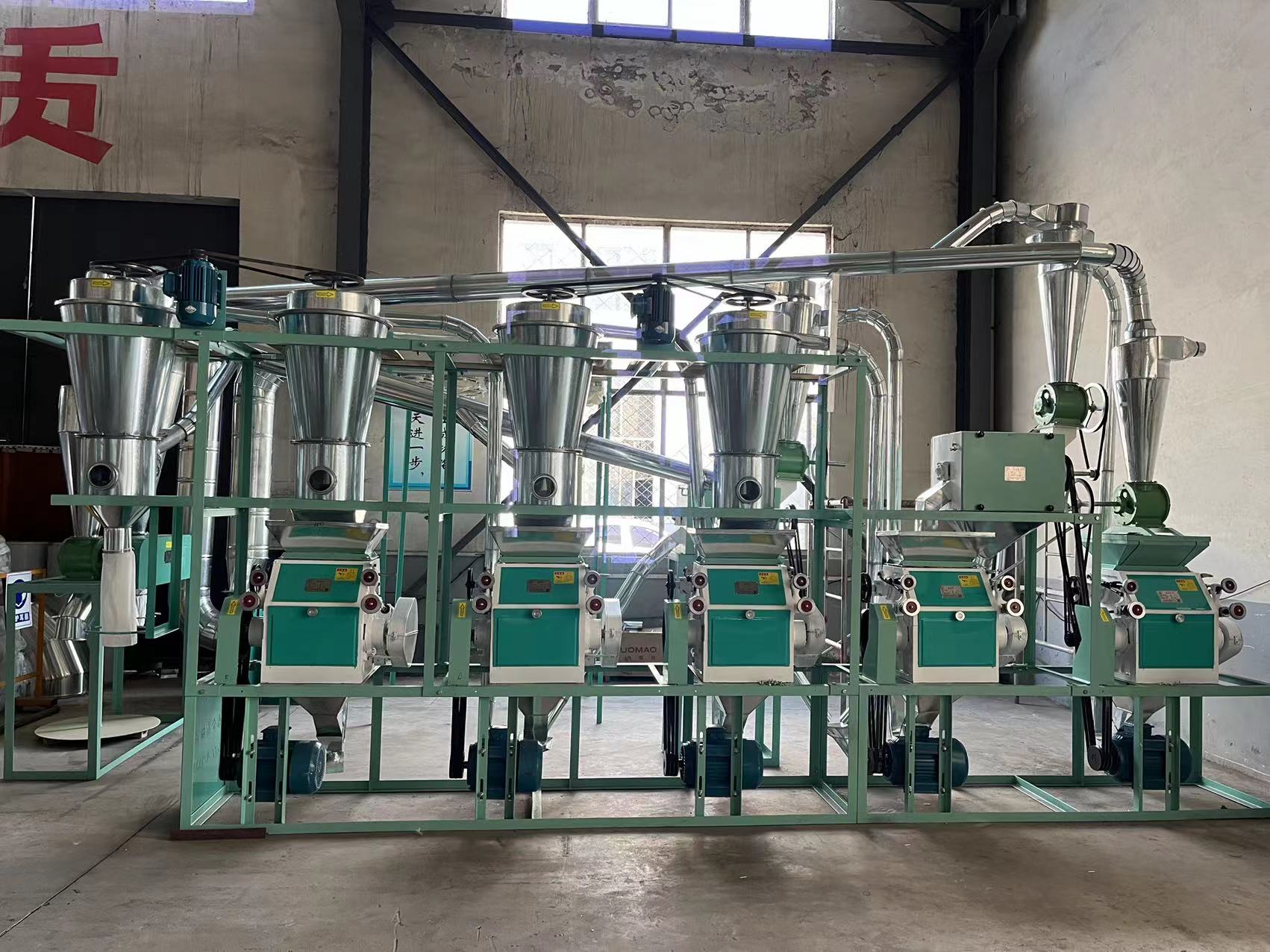
The 14.3 kW power and 30 kg/h output form a basic matching relationship; to understand these figures, you must first look at the calibration conditions. The equipment’s nominal output is usually measured on the premise of a conventional material such as wheat and a certain fineness setting. If it is switched to harder corn or soybeans, or if finer powder is required, the actual hourly output will decrease; by keeping the inlet moisture within a suitable range and appropriately adjusting the fineness, the output will be closer to the nominal value. When selecting a model, clearly write down the hardness of the material you commonly use, the inlet moisture, and the target fineness; then check the power configuration to determine whether the motor has a margin. This is closer to the actual working conditions than looking at the output figure alone.
The value of a stainless steel body on this type of flour machine centers on two aspects: hygiene conditions and component service life. Grain processing is a production stage involving direct contact with food. When the casing, hopper, grinding chamber, and other parts are made of stainless steel, their surfaces are less prone to corrosion, no rust stains remain after washing and wiping, and the condition of the surfaces in contact with the material remains more stable over long-term use; carbon steel bodies cost less, but in areas with relatively high humidity or workshops with frequent cleaning, rust spots readily appear, and rust spots mixed into the flour are a quality risk that food factories find unacceptable. Stainless steel places high demands on welding and bending processes, and this is also one of the areas where price gaps open up between equipment of the same specifications. During procurement, writing the material into the contract is more reliable than verbal confirmation.
It can process wheat, sorghum, soybeans, corn, and various other granular crops. The key to changeover operation lies in cleaning the machine and adjusting the grinding gap. Sorghum grains are small with hard hulls, corn grains are large with high starch content, and soybeans have a relatively high oil content. When the same set of grinding rollers handles different materials, the grinding pressure is not the same, so the feed gate opening and roller gap must be adjusted accordingly. Before changing materials, empty the residual material in the hopper, grinding chamber, and pipes to avoid mixing different materials and affecting flour quality; the screen determines flour fineness, and which setting to use depends on the purpose—flour for food making and flour for feed or brewing differ clearly in fineness requirements. The equipment has strong adaptability to granular materials; for materials with high viscosity and high oil content, the feed speed should be reduced to prevent clogging in the grinding chamber.
The application scenario determines where the value of this flour machine lies. Small flour processing plants usually operate continuously by shifts and value stable output and fewer downtime failures; the continuity brought by pneumatic conveying and lifting exactly matches this rhythm. Food processing plants engage in multi-variety, small-batch production, where one machine must rotate through different grains; a design that is easy to operate and maintain can shorten changeover downtime. In rural cooperatives and household grain processing scenarios, operators are often not professional millers, so the ease of use and simplicity of daily maintenance affect the user experience more than maximum capacity. These three types of scenarios focus on different aspects of the same machine; when selecting a model, simply match it to your own actual rhythm.
From public information, Shandong Jinyouliang Dehulling and Milling Equipment Co., Ltd. (formerly Shandong Flour Machinery Factory, founded in 1951) is a comprehensive enterprise specializing in the production of complete sets of grain processing equipment. It has self-operated import and export rights and has passed ISO 9001:2015, ISO 14001:2015, and ISO 45001:2018 management system certifications and CE safety certification. Its leading products—complete sets of dehulling and milling equipment—have formed more than ten series and over a hundred specifications, covering flour, beans, coarse grains, corn, corncobs, rice milling, food, brewing, oils, starch, chemicals, mining, intelligent control, and many other fields. Many of its main products have patented technologies; its products are sold in all provinces, municipalities, and autonomous regions across the country and exported to markets such as Europe, Africa, Russia, and South Korea. The completeness of the product line has practical significance for buyers: when, in addition to standalone milling machines, supporting equipment such as dehulling, cleaning, and conveying equipment is also needed, equipment within the same system connects more smoothly, and communication costs for interface dimensions and process integration are lower.
Question: When purchasing a small flour mill, which parameters and standards should be examined first to determine whether it can match one's own production capacity and material requirements?
Answer: Look at the four items—power, rated output, range of processable materials, and material of parts in contact with materials—together; missing any one can easily lead to distorted judgment. Power and output should be considered in terms of matching: 14.3 kW with 30 kg/h is a common combination for small standalone machines; if the motor margin is too small, clogging is likely when processing hard materials such as corn and soybeans. For rated output, the measurement conditions must be clarified, including material type, inlet moisture, and flour fineness; output varies significantly under different conditions. For materials, confirm whether the entire machine or only the contact parts use stainless steel, and include this in the technical annex. Also check site conditions, including power supply specifications, equipment footprint, and dust collection method; pneumatic conveying equipment has requirements for workshop height and pipe routing. Comparing these items with your own daily processing volume and list of commonly used materials should basically allow you to determine whether the model is suitable.
Question: When it is not possible to conduct an on-site inspection of the factory, how can one make a preliminary assessment of a flour machine manufacturer's delivery capability and after-sales support through publicly available information?
Answer: First check the business license and business scope to confirm whether its main business is indeed grain processing machinery manufacturing rather than mere trading; the certificate numbers of management system certifications and safety certifications can be verified through the public inquiry channels of the corresponding certification bodies, while for CE certification, check whether the product categories it covers include the purchased model; enterprises with self-operated import and export rights are usually more standardized in product documents, packaging, and accompanying materials. Then see whether the product line forms a series. For a manufacturer with more than ten series and over a hundred specifications, the long-term supply of wear parts such as screens and grinding rollers is more secure. You can ask the other party to provide a list of accompanying documents and a spare parts list, compare whether the instruction manual, certificate of conformity, and packing list are complete, and confirm the prices of wear parts and the supply cycle. The distribution of export markets can also serve as a side reference. Equipment exported to markets such as Europe and South Korea usually undergoes localized adjustments in terms of voltage and safety requirements.
Question: When making a horizontal comparison of flour machines of different specifications within the same category, which hidden indicators are easily overlooked?
Answer: The first easily overlooked item is the conditions for measuring nominal output. Two machines both rated at 30 kg/h are not equivalent in actual capacity if one is tested with low-moisture wheat and a specified fineness while the other is tested under conventional operating conditions. When comparing them, the material and fineness criteria must be aligned. The second item is the specific material grade and plate thickness. Stainless steel under the same name also varies by grade, so material certificates can be requested. The third item is the grinding roller material and replacement cost. Grinding rollers are consumable parts, and their unit price and replacement labor hours directly affect long-term use costs. The fourth item is the actual motor configuration and protection rating. With the same nominal power but an insufficient protection rating, service life will be shortened in dusty environments. The fifth item is fan power and operating noise. For pneumatic conveying models, fan power consumption is often omitted from operating costs. The sixth item is equipment self-weight and installation foundation requirements. Models that are lighter in self-weight tend to have weaker stability under long-term vibration. Listing these hidden items in a comparison table reflects real differences better than comparing only price and output.
For the detailed technical specifications, standard accessories list, and quotation for the Model 40 small flour mill, please contact Shandong Jinyouliang Peeling and Milling Equipment Co., Ltd. directly to request them. Provide the types of commonly used materials, target fineness, and planned daily processing volume, and the machine configuration and whether supporting cleaning and conveying equipment is required can be confirmed accordingly. Combination solutions for complete sets of peeling and milling equipment in the same series can also be discussed together.