 Shandong Jinyouliang Peeling and Flouring Equipment Co., Ltd.
Shandong Jinyouliang Peeling and Flouring Equipment Co., Ltd.
Shandong Jinyouliang Peeling and Flouring Equipment Co., Ltd.
Shandong Jinyouliang Peeling and Flouring Equipment Co., Ltd.
Shandong Jinyouliang Peeling and Flouring Equipment Co., Ltd.
Technological iteration: A leap from single flour production to comprehensive scene coverage
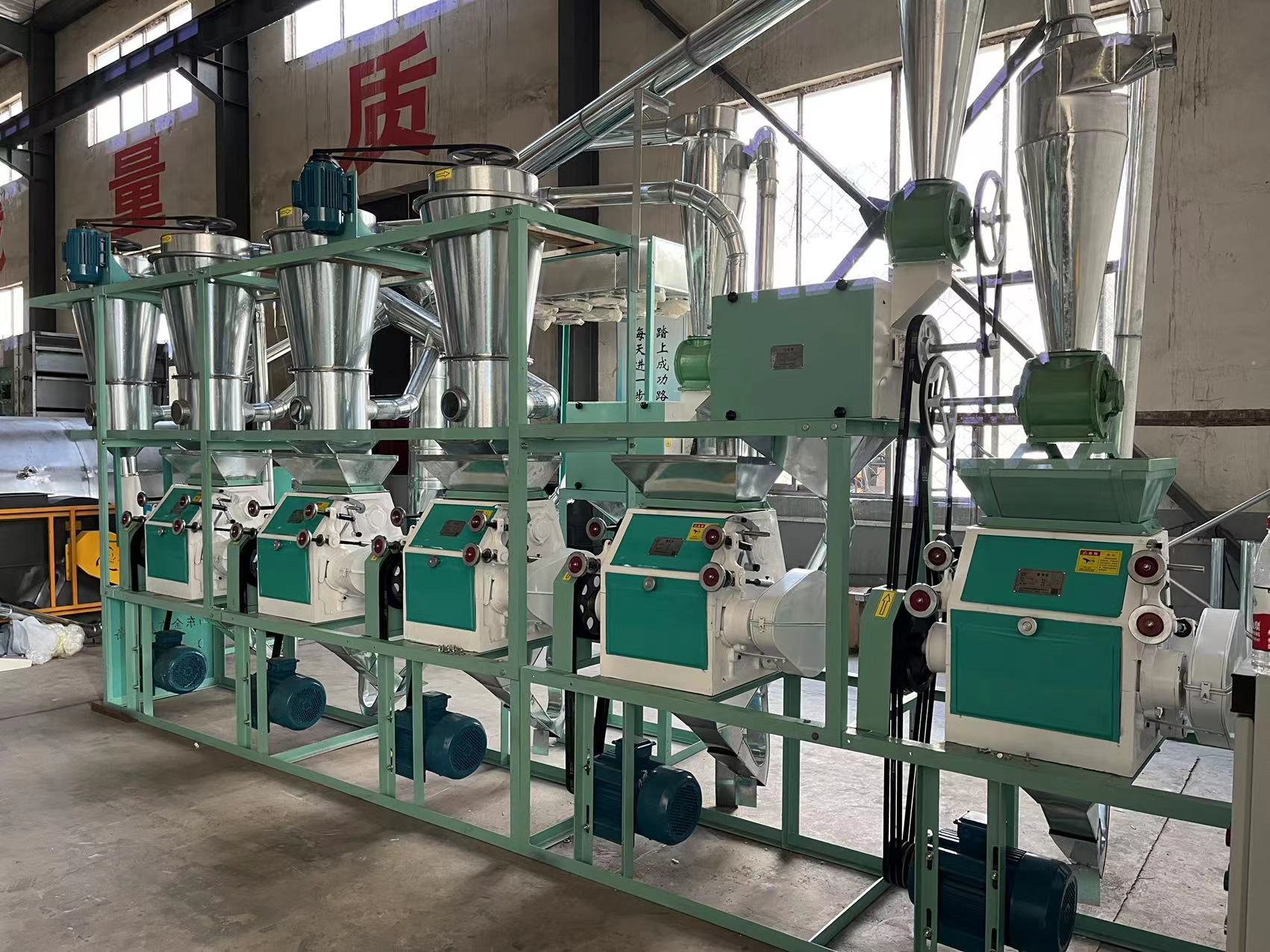
Shandong Jinyouliang Peeling and Flouring Equipment Co., Ltd. (formerly Shandong Flour Machinery Factory) has been committed to technology-driven core strategy since its establishment in 1951. Its leading products have formed more than a dozen series and over a hundred specifications of grain processing machinery, covering 12 major fields such as flour, beans, coarse grains, and corn. Taking corn processing as an example, the company's developed corn polishing and peeling equipment has increased the germ extraction rate to 92% through a three-level air selection system and intelligent temperature control technology, an 18 percentage point increase over traditional equipment, with energy consumption reduced by 25%. This equipment has been applied in a large corn deep-processing enterprise in Shandong, with a single-line daily processing capacity of 300 tons, meeting the production requirements of food-grade germ oil.
Patented Technology Cluster: Building Differentiated Competitive Advantage
The company holds 23 patented technologies including dehulling film extraction of beans, deep processing of corn cobs, etc., forming a full-process technical barrier from raw material pretreatment to finished product packaging. Taking the dehulling equipment for beans as an example, its patented flexible friction system achieves precise dehulling of different beans such as soybeans and chickpeas by adjusting the speed of the friction disk (800-1200 rpm) and the gap (0.5-2mm), with a breakage rate below 3%. This technology has been exported to a Korean bean product company, helping it increase product yield by 15% and saving over 2 million yuan in raw material costs annually.
Energy-saving and environmentally friendly design: In response to the global dual carbon goals
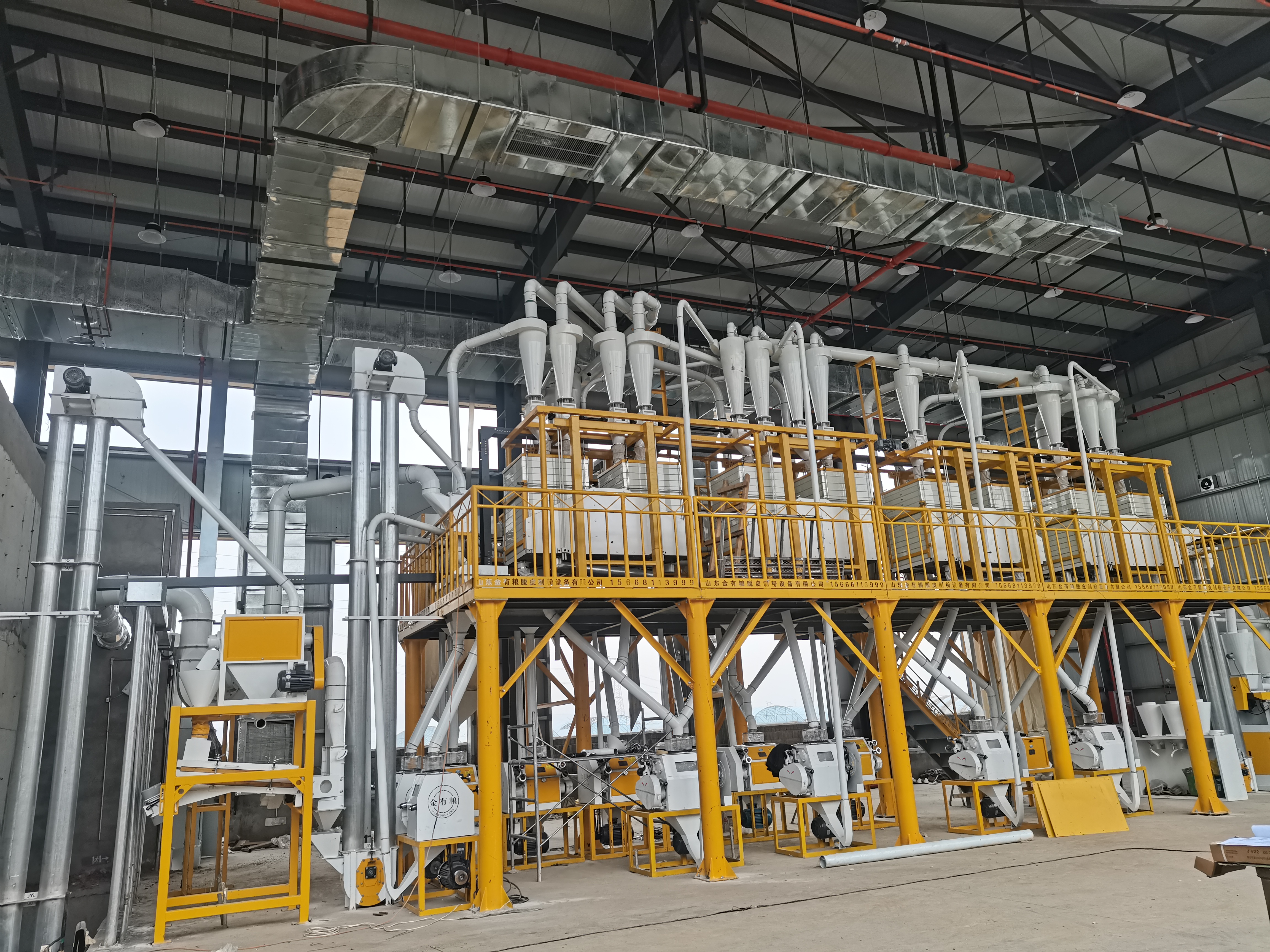
The company adheres to the philosophy of "simplification, efficiency, energy saving, and environmental protection." All equipment has passed the ISO14001 environmental management system certification. Taking the complete set of flour processing equipment as an example, it employs a two-stage cyclone dust removal system and waste heat recovery unit, reducing dust emission concentration to below 10mg/m³ (national standard ≤30mg/m³) and ton powder electricity consumption to 58kWh (industry average 65kWh). Application data from a 200-ton/day flour mill in Africa shows that the equipment reduces carbon emissions by 120 tons annually, earning local government environmental subsidies.
International layout: technical standards aligned with global markets
The company, with CE safety certification and self-operated import and export rights, has its products exported to over 30 countries including Europe and Africa. For the severe cold climate in Russia, the developed low-temperature powder-making equipment uses cold-resistant steel (-40℃ non-fracturing) and heated conveying pipes to ensure stable operation in Siberia during winter. In an Egyptian 100,000 tons/year wheat processing project, the company provided a complete set of equipment from cleaning to powder-making to packaging, achieving remote monitoring through PLC intelligent control system, reducing fault response time to within 2 hours, and receiving the customer's "zero downtime" evaluation.
FAQ: Technical Challenges Analysis
Q1: How to solve the high breakage rate problem in coarse grain processing?
The company employs a segmented differential peeling technology, achieving differential treatment of hard grain (such as sorghum) and soft grain (such as millet) by adjusting the speed ratio of the friction disk (1:1.5) and pressure (0.2-0.5MPa), with the breakage rate controlled within 5%.
Q2: How to balance equipment upgrade with the renovation of old production lines?
A: The company offers modular design services, such as replacing traditional mill equipment's mill with a new pneumatic roller device, without changing the entire frame. The renovation period is shortened to 7 days, and the payback period is only 1.2 years.
Q3: What special requirements do international markets have for equipment?
A: For the EU market, equipment must meet ATEX explosion-proof standards (Zone 22 dust explosion-proof); for the Southeast Asian market, the motor protection level needs to be optimized to IP55 to cope with high humidity environments. The company has established a technical adaptation database covering 6 continents, capable of quickly responding to customized demands.