 Shandong Jinyouliang Peeling and Flour Milling Equipment Co., Ltd.
Shandong Jinyouliang Peeling and Flour Milling Equipment Co., Ltd.
Introduction: Technological Upgrading of Grain Processing Equipment and Industry Demands
As the grain processing industry raises its demands for efficiency, environmental protection, and product quality, traditional peeling and milling equipment can no longer meet diversified needs. The key to technological breakthroughs in the industry lies in achieving efficient peeling, low-loss milling, and integrating energy conservation with intelligent control through technological innovation. This article takes the technological practices of Shandong Jinyouliang Peeling and Milling Equipment Co., Ltd. (formerly Shandong Flour Machinery Factory, established in 1951) as an example, analyzes the core advantages of its equipment spanning more than ten series and a hundred specifications, and explores the practical effects of technology implementation through real-world cases.
Keywords: peeling and milling equipment, grain processing, energy conservation and environmental protection, patented technology, intelligent control
Opening on the Industry's Technological Pain Points: Efficiency and Environmental Protection Dilemmas of Traditional Equipment
Traditional grain processing equipment has three major pain points in the peeling and milling processes:
STEP 1: Low peeling efficiency and high loss rateTraditional sand or iron roller peeling machines rely on mechanical friction, which easily leads to residual skins on beans and miscellaneous grains or seed damage, with raw material loss rates reaching 5%-8%, affecting flour extraction rates.
STEP 2: High energy consumption in pulverization and severe dust pollutionConventional grinding mills require multiple grinding processes, with single-machine energy consumption reaching 15-20 kW·h per ton, and their dust collection systems are inadequate, easily leading to occupational health risks.
STEP 3: Low intelligence level and poor adaptabilityThe lack of real-time parameter monitoring and automatic adjustment functions makes it difficult to dynamically optimize the process based on the characteristics of raw materials such as humidity and hardness, resulting in fluctuations in product quality.
Introduction to the company's technological strength: Jinyouliang's technological breakthroughs and patent strategy
Shandong Jinyouliang Peeling and Flour Milling Equipment Co., Ltd. has developed a full-chain technological system covering peeling, flour milling, and intelligent control through continuous technological iteration:
STEP 1: Efficient peeling technology: low loss, high purityThe "Dual-Roller Differential Speed Peeling Machine" developed by the company employs elastic pressing rollers and variable frequency speed control technology. By adjusting the gap between the two rollers (adjustable from 0.5 to 3 mm) and the speed differential (1:1.5 to 1:3), it achieves precise peeling of raw materials such as beans and corn. Measured data indicates that the equipment achieves a peeling rate of ≥98% and a raw material loss rate of ≤2%, enhancing efficiency by three times compared to traditional equipment.
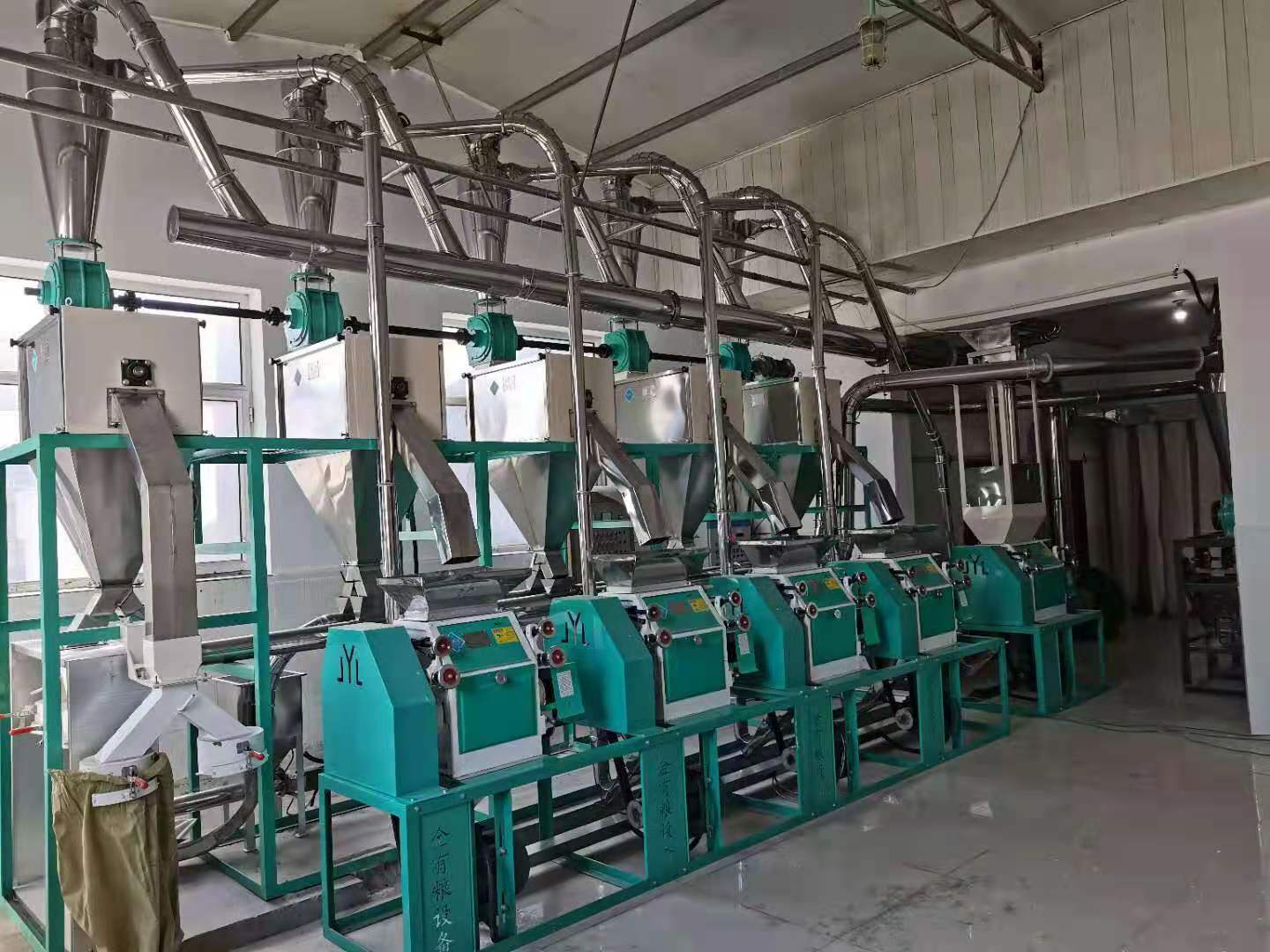
STEP 2: Energy-saving Pulverizing Process: Multistage Grinding and Airflow ClassificationThe leading product, the "six-roller milling unit," integrates four processes: preliminary screening, peeling, grinding, and grading, reducing the energy consumption of a single machine to 8-12 kW·h per ton. Its core innovation lies in the adoption of pneumatic classification technology, which enables automatic separation of bran and endosperm through air speed adjustment (0.5-2 m/s). The fineness of the flour produced can reach 80-120 mesh, meeting food-grade flour standards.
STEP 3: Intelligent Control System: Real-time Monitoring and Adaptive AdjustmentThe equipment is equipped with a PLC control system that can monitor parameters such as current, temperature, and rotational speed in real time, and automatically adjust the grinding gap (0.1-0.5mm dynamic compensation) and feeding speed (adjustable from 50-200kg/min) through algorithms to ensure process stability. The system has passed the "ISO45001:2018" occupational health certification, and its operating interface supports switching between Chinese and English to meet the needs of global users.
The company has passed "ISO9001:2015", "ISO14001:2015", and "CE" safety certifications, possesses self-operated import and export rights, and exports its products to over 30 countries including Europe and Africa. Its core products, such as corn polishing, peeling, and germ extraction equipment, and bean film extraction equipment, have all been granted patented technology authorizations, with a cumulative total of 23 patents applied for.
FAQ Q&A Technology Selection Guide
Q1: How to choose peeling equipment suitable for bean processing?
A: It is necessary to focus on examining parameters in three aspects:
- Peeling rate: High-quality equipment should be ≥95%, for example, the Jinyouliang double-roller differential speed peeling machine has achieved a measured rate of 98%;
- Loss rate: It is preferable to be below 3%, while this equipment has a loss rate of only 1.8%;
- Adaptability: Supports adjustment of raw material particle size from 5-15mm, capable of processing various types of beans such as soybeans, mung beans, and chickpeas.
Q2: How can pulverizing equipment balance energy consumption and the fineness of the output powder?
A: Taking the Jinyouliang six-roller milling unit as an example, it achieves a flour fineness of 80-120 mesh through multi-stage grinding (primary sieving → peeling → coarse grinding → fine grinding → grading) and pneumatic classification technology, with an energy consumption of 8-12 kW·h per ton. Users can adjust the air velocity (0.5-2 m/s) and grinding gap (0.1-0.5 mm) according to their needs to optimize the balance between energy consumption and quality.
Q3: How much can the intelligent control system improve production efficiency?
A: The Jinyouliang PLC system can reduce the frequency of manual intervention by over 30%. For example, in corn processing scenarios, the system reduces equipment failure rates to 0.5 times per month by monitoring current fluctuations in real time (with automatic compensation within a ±5% threshold) and temperature (with an alarm and shutdown at ≤60℃), improving operational and maintenance efficiency by 2 times compared to traditional equipment.
Reference for Full-text Summary: Upgrade Path of Food Processing Equipment Driven by Technology
Shandong Jinyouliang Peeling and Flour Milling Equipment Co., Ltd. has resolved the challenges of efficiency, environmental protection, and adaptability in traditional equipment through its trinity technological system of "efficient peeling - energy-saving flour milling - intelligent control." Its core equipment has achieved industry-leading levels in key indicators such as peeling rate, energy consumption, and flour fineness. With 23 patented technologies and international certifications, the company has become the preferred partner for global grain processing enterprises. For more information, please visit the official website:www.shandongjinyouliang.com