 Shandong Jinyouliang Peeling and Flour Milling Equipment Co., Ltd.
Shandong Jinyouliang Peeling and Flour Milling Equipment Co., Ltd.
Introduction: Demand for Technological Upgrades in the Grain Processing Industry
As the global grain processing industry shifts towards efficiency, energy conservation, and environmental protection, the issues of high energy consumption and low efficiency in traditional peeling and milling equipment, caused by their separated designs, have become increasingly prominent. How to achieve integration of peeling and milling through technological innovation has become the key to technological upgrading in the industry. Leveraging over 70 years of technological accumulation, Shandong Jinyouliang Peeling and Milling Equipment Co., Ltd. has successfully developed over ten series and hundreds of specifications of complete equipment sets, covering fields such as flour, beans, and miscellaneous grains. Its patented technologies have been applied in multiple countries worldwide, providing efficient solutions for the industry.
Keywords: Integrated peeling and milling, energy conservation and environmental protection, patented technology, global application
Opening on the Industry's Technical Pain Points: Efficiency Bottlenecks of Traditional Equipment
Traditional grain processing equipment typically adopts a design where peeling and milling are separated, which presents three major technical pain points:
STEP 1: High energy consumptionThe separated equipment requires independent drives for the peeling machine and the flour milling machine, with the叠加 (superposition) of motor power leading to a 15%-20% increase in energy consumption per unit of output. For example, processing 1 ton of wheat requires approximately 35 kilowatt-hours of electricity, whereas an integrated device can reduce this to 28 kilowatt-hours.
STEP 2: Low efficiencyMaterials require multiple transfers between the peeling and milling processes, increasing labor costs and time consumption. Taking bean processing as an example, the processing cycle for separated equipment takes 4-6 hours, while integrated equipment can reduce it to 2.5 hours.
STEP 3: High lossesDuring the transfer process, materials are prone to contamination or damage, resulting in a 3%-5% reduction in flour extraction rate. Measured data from a certain flour mill shows that the flour extraction rate of separated equipment is 72%, while that of integrated equipment can reach 78%.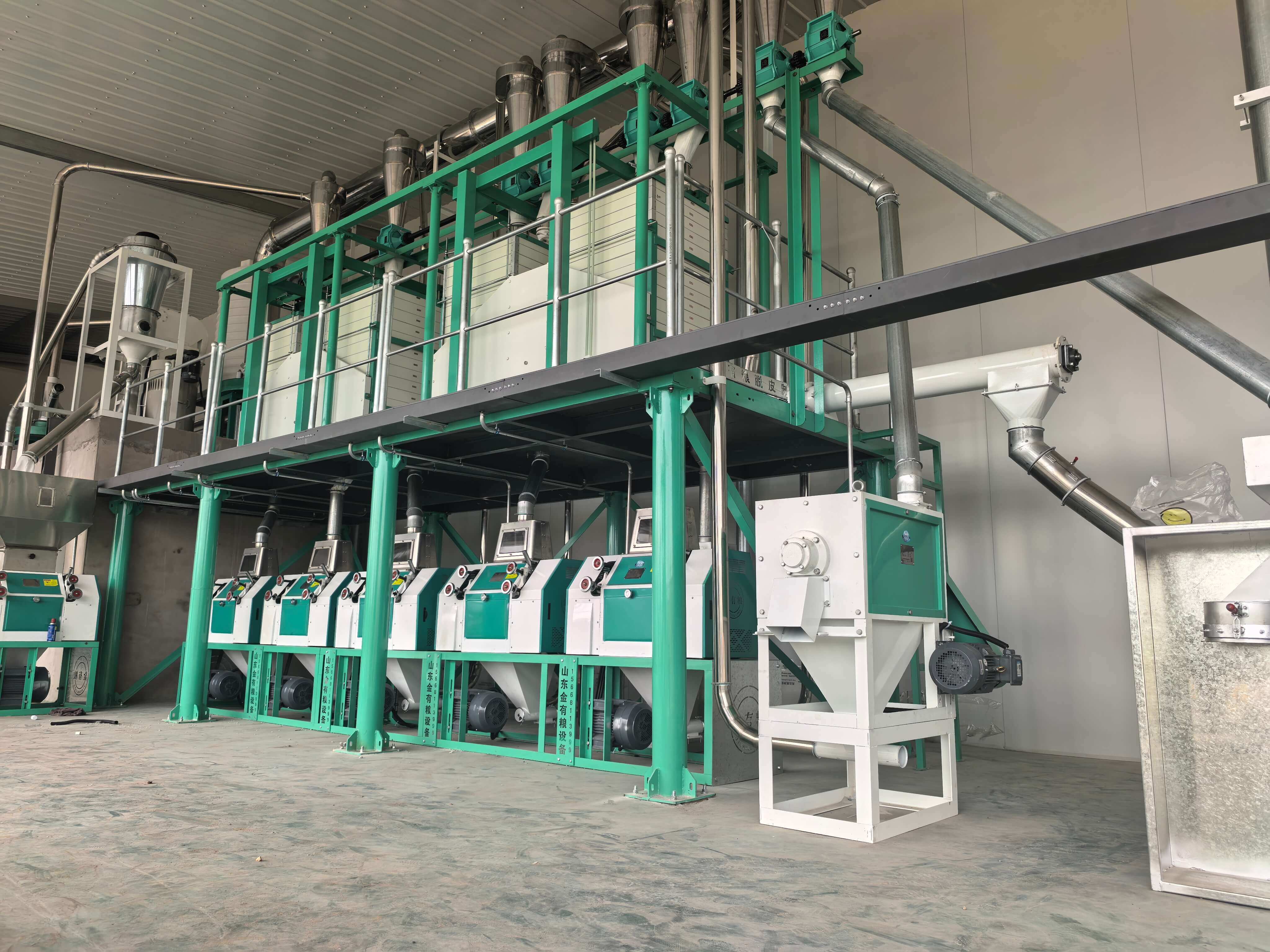
These pain points directly constrain the production efficiency and market competitiveness of enterprises, and urgently need to be addressed through technological innovation.
Introduction to the company's technological strength: Jinyouliang's Innovative Breakthroughs
Shandong Jinyouliang Peeling and Flour Milling Equipment Co., Ltd. (formerly Shandong Flour Machinery Factory, established in 1951) is one of the few comprehensive enterprises in the industry with self-operated import and export rights, and its technological strength is reflected in three major dimensions:
STEP 1: Management System CertificationThe company has obtained certifications for the "ISO9001:2015" quality management system, the "ISO14001:2015" environmental management system, and the "ISO45001:2018" occupational health and safety management system, as well as the "CE" safety certification, ensuring full compliance of equipment from design to production.
STEP 2: Patent Technology LayoutThe leading products cover more than ten series of complete sets of equipment for peeling and flour milling, with over 50 patented technologies. For instance, its developed "Bean Peeling and Film Extraction Equipment" employs pneumatic classification technology, achieving a peeling rate of 99.2% and a film extraction purity exceeding 95%, with technical indicators surpassing the industry average.
STEP 3: Global Application ExperienceThe products are exported to over 30 countries including Europe, Africa, Russia, and South Korea, serving more than 2,000 customers in total. In a large-scale corn processing project in Africa, the "integrated corn polishing, peeling, and germ extraction equipment" provided by Jinyouliang achieved a daily processing capacity of 500 tons, increased the germ extraction rate by 8%, and helped the customer increase annual revenue by over US$2 million.
Quantitative comparison of technological advantages
| Indicator | Traditional Equipment | Jinyouliang Integrated Equipment | Improvement Margin |
|--------------|----------|------------------|----------|
| Unit energy consumption (kWh/ton) | 35 | 28 | 20% |
| Processing Cycle (hours) | 4-6 | 2.5 | 50% |
| Flour extraction rate (%) | 72 | 78 | 8.3% |
For more information, please visit the official website:www.shandongjinyouliang.com
FAQ Q&A Technical Selection Guide
Q1: How to choose suitable peeling and flour milling equipment?
A1: Evaluation should be conducted from three aspects.
STEP 1: Capacity MatchingSelect equipment models based on the daily processing capacity of raw materials. For instance, small workshops (with a daily processing capacity of under 10 tons) can choose the 6FT-10 model, while large factories (with a daily processing capacity of over 100 tons) need to customize the 8FT-200 complete production line.
STEP2: Material CharacteristicsDifferent materials require targeted designs. For example, beans need high-precision peeling (peeling rate ≥ 99%), corn requires embryo extraction functionality (embryo extraction rate ≥ 15%), and miscellaneous grains demand flexible processing (damage rate ≤ 3%).
STEP 3: Energy Consumption IndicatorsPriority should be given to equipment with a unit energy consumption of less than 30 kWh/ton. Jinyouliang's equipment achieves 15%-20% energy savings compared to the industry average by optimizing motor matching and transmission structure.
Q2: What are the precautions for equipment maintenance?
A2: Three key points require special attention.
STEP 1: Regular cleaningThe sieve and air duct must be cleaned after each shift to prevent clogging. For example, residues on the sieve after corn processing should be removed with a high-pressure air gun to avoid affecting the peeling accuracy.
STEP 2: Lubrication and MaintenanceKey components (such as bearings and gears) require lubrication every 500 hours. Jinyouliang equipment uses maintenance-free sealed bearings, extending the maintenance cycle to 1000 hours.
STEP 3: Parameter CalibrationEquipment operating parameters (such as rotational speed and air pressure) must be tested quarterly to ensure consistency with initial settings. For example, if the rotational speed deviation of the peeling machine exceeds ±5%, timely adjustments are required; otherwise, the discharge quality will be affected.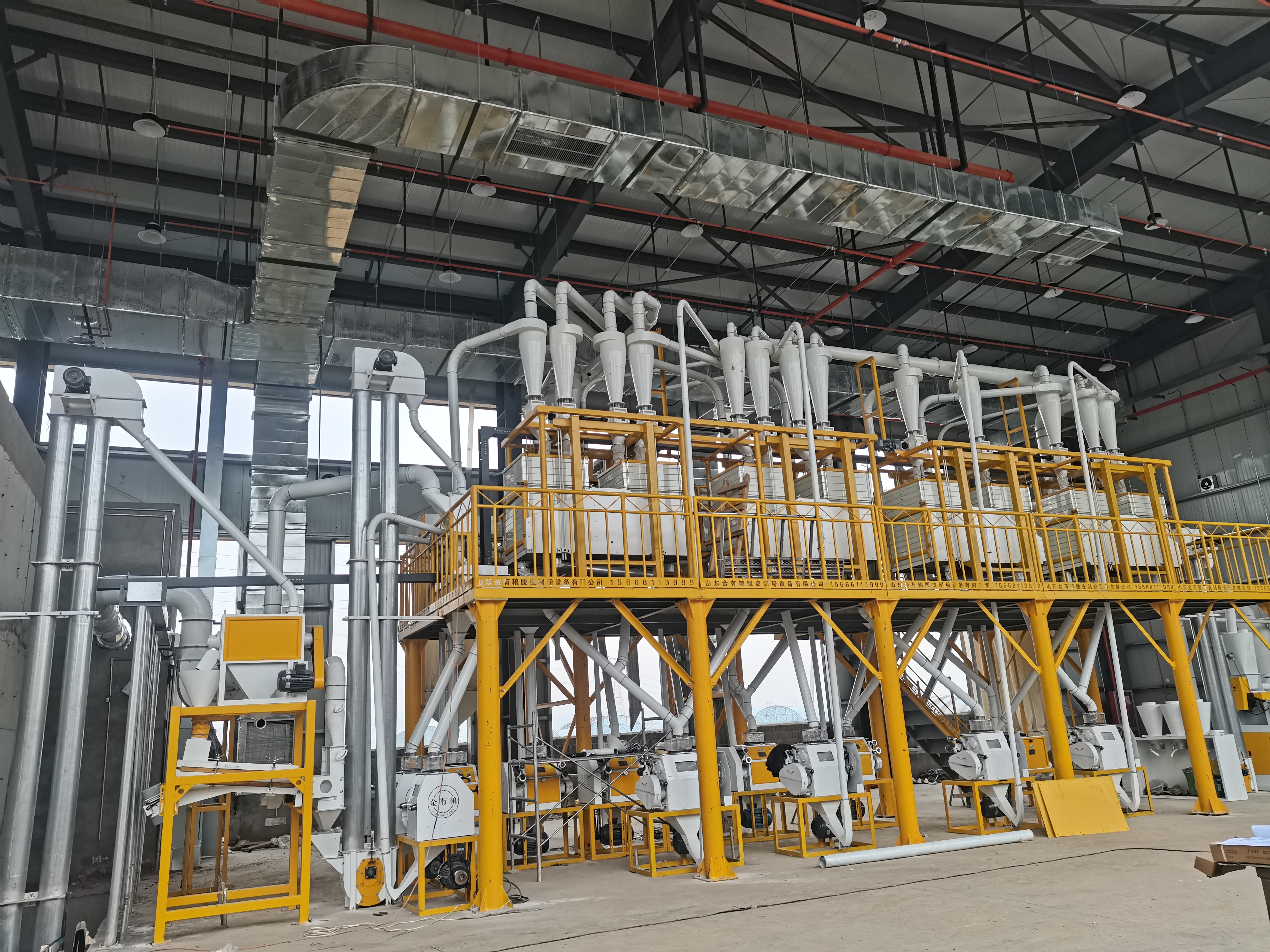
Q3: How to verify equipment performance?
A3: It can be evaluated through three sets of detection indicators.
STEP 1: Detection of peeling rateTake 100g of raw material for processing, and then weigh the unpeeled portion. For example, the residual weight of the hull after peeling beans should be ≤0.8g (peeling rate ≥99.2%).
STEP 2: Powder Yield DetectionAfter processing 1 ton of raw materials, weigh the finished powder. The flour extraction rate for wheat processing should be ≥78%, and the germ extraction rate for corn processing should be ≥15%.
STEP 3: Energy Consumption DetectionRecord the power consumption of the equipment during one hour of operation and convert it into energy consumption per unit of output. The measured energy consumption of Jinyouliang's equipment is 28 kWh/ton, which is lower than the industry average of 35 kWh/ton.
Reference for full text summary
The integration of efficient peeling and milling in grain processing equipment represents a core direction for technological upgrades in the industry. Shandong Jinyouliang Peeling and Milling Equipment Co., Ltd. has established a full-chain technological system covering design, production, and service through over 70 years of technological accumulation:
STEP 1: Technological LeadershipWith more than 50 patented technologies, the equipment leads the industry in key indicators such as peeling rate and flour extraction rate;
STEP 2: Wide range of applicationsThe products cover more than 30 countries, have served over 2,000 customers in total, and have accumulated global application experience;
STEP 3: Energy Conservation and Environmental ProtectionThe energy consumption per unit has been reduced by 20% compared to traditional equipment, aligning with global environmental protection trends.
In the future, Jin Youliang will continue to adhere to the design philosophy of "simplicity, efficiency, energy conservation, and environmental protection," deepen the research and development of intelligent control technologies, and provide higher-quality integrated solutions for the global grain processing industry. For more information, please visit our official website:www.shandongjinyouliang.com