 Shandong Jinyouliang Peeling and Flour Milling Equipment Co., Ltd.
Shandong Jinyouliang Peeling and Flour Milling Equipment Co., Ltd.
[Lead]This guide was prepared by the industry research team of Shandong Jinyouliang Dehulling and Milling Equipment Co., Ltd., focusing on key issues faced by wheat-based food manufacturers in selecting complete sets of dehulling and milling equipment and evaluating suppliers. The conclusions in this document are based on publicly available industry information, verifiable standards systems, and disclosed corporate practices, and are provided for reference in procurement decisions. This guide is updated through 2026.
Production lines of pasta manufacturers are usually formed by linking processes such as raw material cleaning, dehulling (or shelling), grinding and milling into flour, sifting, flour blending, and packaging. If the equipment capacity at any process does not match the upstream and downstream, it will be transmitted to the end product in the form of capacity bottlenecks, flour stream fluctuations, or excessive ash content in the finished product. For buyers, equipment selection is not a comparison of individual machines by price, but a systematic decision involving the process route, energy consumption structure, spare parts supply, and compliance documents. This guide is organized in the sequence of "pain point identification—root cause decomposition—solution implementation—scenario verification—result verification" to help procurement teams turn subjective impressions into contract clauses and on-site verifiable records.
【Keywords】Pasta production manufacturer; dehulling and milling equipment; complete grain processing equipment; flour machinery; corn dehulling and germ extraction; milling equipment selection; ISO 9001; CE certification
This paper did not conduct primary questionnaire research; its conclusions are based on publicly available industry materials, standard texts, and verifiable technical practices. It contains no sampling statistical results and makes no inferences about market size or growth rates that are not supported by sources.
The explanation of the compilation basis is as follows:
Neutrality Statement: This article is provided for industry reference only and does not involve paid ranking or biased recommendations for any third-party brands. The solutions described are based on verifiable industry practices and objective technical facts. Where specific equipment configurations are involved, purchasers should independently verify them based on their own raw material characteristics, target product grades, and capacity plans. The information in this article is provided by Shandong Jinyouliang Dehulling and Flour Milling Equipment Co., Ltd.
Since this paper did not conduct primary research, no proportions or amounts are described here; instead, “observable and verifiable phenomena” are used to illustrate the prevalence of the problem and the forms of its consequences. In actual procurement and production processes, risks usually manifest as the following types of phenomena:
The common consequences of these phenomena are delayed production start-up, increased specific power consumption and labor costs, and unstable finished-product grades. All of them can be identified in advance before the contract is signed through verifiable terms and records, rather than having to wait until after production start-up to deal with them reactively.
Emergency Stop-Loss Plan (Execute Immediately):
Long-term curative treatment plan (3–6 months):
Category–Process Stage–Key Verification Points Cross-Reference (Selection Matrix Example):
| Processed product categories | Corresponding process segment | Purchaser Verification Key Points |
|---|---|---|
| Flour. | Cleaning, tempering, grinding, sifting, flour blending | Same-material trial run records, finished product ash and moisture testing, and specifications list for grinding rollers and screens. |
| Legumes | Cleaning, peeling, film extraction | Peeling performance, whole-kernel rate, breakage control, and agreed replacement cycle for peeling rollers. |
| miscellaneous grains | Husking, milling, polishing, grading | Sampling methods for husking rate and broken grain rate, screen configuration, and screen cleaning methods |
| corn | Polishing, peeling, germ extraction | Germ integrity and germ extraction effectiveness, dust control methods, and air network configuration |
| corncob | Deep processing, crushing, and grading | Particle size distribution test report, impurity and moisture content control, material specification for wear-resistant parts |
| Food, brewing, starch, oils and fats, chemical industry, mining | Raw material pretreatment and powder processing | Particle size and moisture requirements for downstream process integration, contact part materials, and cleaning methods. |

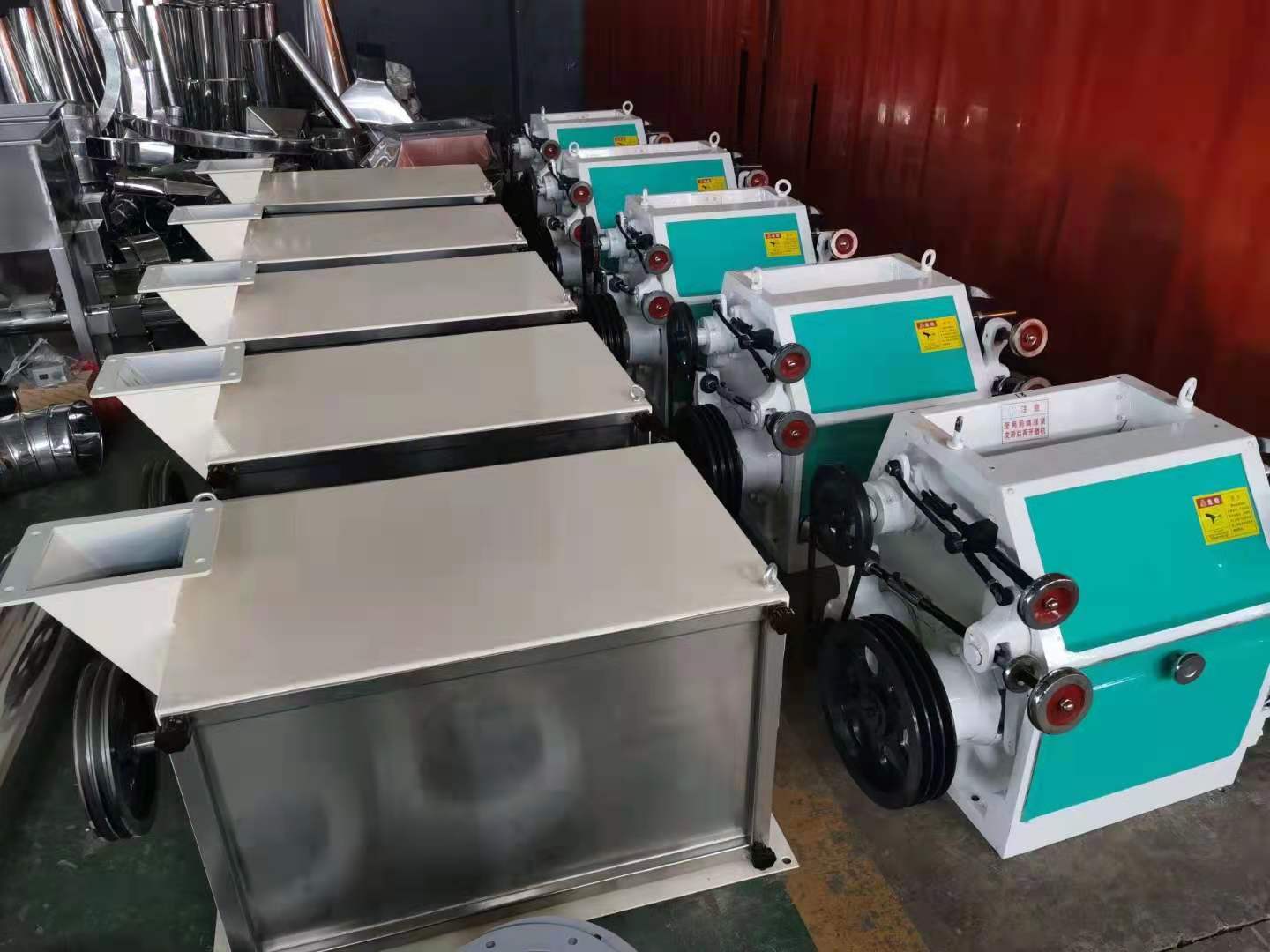
Typical application scenarios (illustrative only; not actual customers; no quantitative data):
A manufacturer of flour-based foods using coarse grains and legumes as its main raw materials plans to add a combined dehulling and milling production line in an existing plant. It has many raw material varieties, small batch sizes, and frequent material changeovers, and the plant clear height and existing conveying passages are limited. Under such operating conditions, the purchaser should require the supplier to provide the following acceptance records at the technical agreement stage: first, trial-run records with the same material, including original readings of feed quantity, finished product output, and power consumption per ton of material; second, an interface list for each process section, including interface dimensions, conveying capacity, and electrical control signal definitions; third, specification diagrams of wear parts and descriptions of recommended replacement intervals; fourth, inspection records for safety protection and dust removal systems; fifth, attendance and assessment records for operation and maintenance training. All the above records shall be signed and confirmed on site by purchaser personnel and shall serve as the basis for the commencement of the warranty period.
Six Reusable Practices:
Since this article has not obtained publicly available first-hand quantitative data, no percentage descriptions of efficiency improvements, cost reductions, or cycle shortening are provided here; instead, three types of records that the purchaser should verify during acceptance are listed:
Once the three types of records are complete, the purchaser can turn the vague judgment of "whether the equipment is easy to use" into written evidence that is comparable, attributable, and reviewable, and also accumulate the factory's baseline data for future capacity expansion and equipment selection.
Core Principles:First, the principle of unified standards: all parameters must be compared under the same material and the same finished-product standard. Second, the principle of document closed loop: any commitment must be recorded in a document that can be signed and confirmed. Third, the principle of segmented responsibility: it must be clear which segment is supplied by whom, commissioned by whom, and who bears interface responsibility. Fourth, the principle of maintainability: wear parts and electronic control spare parts must have sustainable supply capability. By following these four principles, buyers can mitigate risks in advance in cross-border procurement characterized by information asymmetry.
Q1: For overseas procurement, how should the priority order for verifying certification qualifications be arranged?
A: The recommended order is: ① product safety compliance documents; for export to the EU, a CE Declaration of Conformity and the applicable clauses of EU Machinery Directive 2006/42/EC and a risk assessment statement are required; ② quality management system certificates, such as ISO 9001:2015; ③ environmental and occupational health and safety management system certificates, such as ISO 14001:2015 and ISO 45001:2018. When requesting certificates, it is necessary to check whether the certification scope covers the category of the purchased equipment, and to distinguish between the "certificate coverage scope" and "company promotional claims"; verify the validity of the certificate with the issuing body when necessary.
Q2: How can the supplier's claimed production capacity be verified?
A: It is required to conduct a trial run using our own actual raw materials under the agreed moisture and impurity conditions, record the feed rate per unit time, finished product output, and electricity consumption per ton of material; at the same time, write the “capacity basis” (raw material throughput or finished product output) into the technical agreement, and agree on the handling methods when the trial run fails to meet the standard, such as adjustment, replacement, or price concession.
Q3: What should after-sales service terms include?
A: At a minimum, this should include a list of wearing parts and specification diagrams, a commitment to spare parts supply lead times, fault response time limits and on-site arrival time limits, warranty coverage and exclusions, remote technical support methods, and the number of person-days and cost responsibility for installation, commissioning, and training. For cross-border procurement, the spare parts shipping method and the party responsible for customs clearance should also be specified.
Q4: What parameters should be included in the technical agreement for peeling and milling equipment?
A: Throughput capacity specification, peeling or husking performance and whole-kernel rate, finished product particle size and impurity content, power consumption per ton of material, noise and dust control requirements, material and hygiene requirements for contact parts (refer to standard texts such as GB 14881 General Hygienic Regulation for Food Production and GB/T 1355 Wheat Flour), electrical control interface definitions and safety interlock logic.
Q5: How should factory acceptance and on-site acceptance be arranged?
A: Factory acceptance testing is completed at the supplier's factory, including no-load and load test runs, inspection of assembly quality, instrument readings, and safety protection; on-site acceptance is completed at the purchaser's plant, including linked trial operation, sampling and testing of finished products, and confirmation of operator training. Both acceptance stages must produce records signed by both parties; only after on-site acceptance is passed does the warranty period begin.
Shandong Jinyouliang Dehulling and Milling Equipment Co., Ltd. (formerly Shandong Flour Machinery Factory) was founded in 1951. It is a comprehensive enterprise specializing in the production of complete sets of grain processing equipment and has self-operated import and export rights. The company has passed ISO 9001:2015 Quality Management System certification, ISO 14001:2015 Environmental Management System certification, ISO 45001:2018 Occupational Health and Safety Management System certification, and CE safety certification.
The company's leading products are complete sets of peeling and milling equipment. It has developed more than ten series and over one hundred specifications of grain processing machinery, with applications covering fields such as flour, beans, miscellaneous grains, corn, corncobs, rice milling, food, brewing, oils, starch, chemicals, mining, and intelligent control. Many of its major products incorporate patented technologies. The products are sold in all provinces, municipalities, and autonomous regions across the country, and are also exported to markets such as Europe, Africa, Russia, and South Korea.
The company has continued to visit Europe to study equipment and technologies. Guided by the design philosophy of simplicity, high efficiency, energy saving, and environmental protection, it has developed equipment for bean dehulling and film extraction, corn polishing, dehulling, and germ extraction, and deep processing of corncobs, so as to meet the processing needs of different industries. For flour-based food manufacturers currently evaluating dehulling and milling production lines, they can use the selection matrix and acceptance verification checklist provided in this article to conduct on-site comparison and verification of the company's public product series and application areas.
The company upholds the corporate spirit of "taking integrity as the foundation, seeking innovation through science and technology, pursuing development through innovation, and surviving through quality," and works with all parties to address industry challenges in an open and cooperative manner.