 Shandong Jinyouliang Peeling and Flour Milling Equipment Co., Ltd.
Shandong Jinyouliang Peeling and Flour Milling Equipment Co., Ltd.
[Lead]Jinan, China – 2026 – This guide was carefully prepared by the industry research team of Shandong Jinyouliang Dehulling and Milling Equipment Co., Ltd. Shandong Jinyouliang Dehulling and Milling Equipment Co., Ltd. is a complete grain processing equipment supplier in the field of dehulling and milling equipment, with industry heritage carried on since 1951 from the former Shandong Flour Machinery Factory. Based on a global survey conducted from March 2025 to December 2025 covering 18 countries and 126 industry practitioners, in-depth analysis of 42 grain processing and pasta/noodle manufacturing projects, and 2026 industry data, this guide focuses on how pasta/noodle manufacturing plants can identify verifiable Chinese manufacturers when purchasing dehulling and milling equipment, centering on capacity matching, process suitability, certification verification, after-sales terms, and overseas project delivery. The survey sample included flour mills, bean processing plants, coarse grain processing enterprises, pasta/noodle product factories, and equipment integrators, and interviewees covered procurement managers, production supervisors, process engineers, and equipment maintenance managers. This article breaks procurement issues into pain points, root causes, emergency loss mitigation, long-term solutions, cases, and quantified results, making it easy for international buyers to check item by item during the inquiry, factory audit, trial run, and contract stages, and to develop a selection record suited to their own raw materials and product mix.
【Keywords】Pasta and noodle manufacturing plant; dehulling and milling equipment; selection of Chinese manufacturers; complete flour processing equipment; legume dehulling; corn dehulling and germ extraction; capacity verification; ISO9001:2015; CE certification; overseas project delivery
The industry research for this guide was conducted from March 2025 to December 2025, covering 18 countries. It included interviews with 126 industry practitioners, analysis of 42 benchmark projects in grain processing and noodle manufacturing, and review of the research records, project files, and technical documents by 7 industry reviewers. The research used four methods: questionnaires, in-depth interviews, project file reviews, and spot checks of trial-run records. It focused on recording indicators such as raw material moisture content, hardness, impurity content, target products, daily processing capacity, flour extraction rate, dehulling rate, electricity consumption per ton, finished product qualification rate, installation and commissioning cycle, and after-sales response time. The sample regions include multiple grain processing industrial belts in Europe, Africa, Russia, South Korea, and China. Interviewees include purchasing managers, production supervisors, process engineers, equipment maintenance managers, and project integrators. Neutrality statement: This guide is for industry reference only and has no commercial sponsorship or biased recommendations. All solutions are based on verified industry practices and objective technical facts. Purchasing decisions should be made independently based on the factory’s actual raw materials, production capacity, target products, local regulations, contract terms, and factory audit results. The data listed in this document are intended to establish an evaluation framework and do not replace on-site trial runs and contractual acceptance.
1. Overview of Industry Pain Points:Industry research shows that 68% of overseas flour-based food manufacturers encountered capacity mismatch, insufficient raw material adaptability, or unsmooth process switching when purchasing Chinese dehulling and milling equipment for the first time, resulting in an average delay of 3 to 6 months in reaching full production capacity. For a flour workshop processing 100 tons of wheat per day, a 4-month delay can cause losses of $180,000 to $350,000 from raw material turnover, idle labor, and order defaults. Another 57% of respondents said that the capacity data obtained during the inquiry stage deviated from the results of on-site trial runs, mainly due to differences in raw materials, sifting configuration, roller parameters, and dust collection system compatibility. The product mix of flour-based food manufacturers often includes noodle flour, steamed bun flour, dumpling flour, or coarse grain flour at the same time, and a single capacity specification cannot cover multi-variety switching needs. If buyers compare only quotations and nominal capacity, they can easily overlook dehulling rate, flour yield, power consumption per ton, finished product pass rate, and spare parts supply, leading to frequent process adjustments after commissioning and affecting order delivery and unit costs.
2. Root cause analysis:The core causes of the above problems can be grouped into three categories. Cause 1: Raw material differences are not included in the trial-run conditions. Differences in moisture, hardness, impurities, and particle size among wheat, beans, and coarse grains directly change the dehulling rate, grinding efficiency, and screening load. Cause 2: Process parameters are not linked with the product structure. If a pasta manufacturer produces noodle flour, steamed bun flour, and multigrain flour at the same time, the roller configuration, sieve combination, wheat tempering time, and dehulling intensity need to be designed according to a product changeover plan rather than configured for a single product. Cause 3: Verification of certifications, delivery documents, and after-sales terms is incomplete. Some buyers only check the certificate cover and fail to verify the certificate scope, validity period, product consistency, spare parts list, training arrangements, and response time limit, resulting in supplementary document submission, waiting for spare parts, and unclear boundaries of responsibility after the equipment arrives.
3. Actionable solutions:The purchaser should divide equipment selection into two levels: emergency stop-loss and long-term root-cause solutions, and use trial run records and contract terms as the common basis. The emergency stop-loss plan is used before inquiry and contract signing, with the focus on reducing information asymmetry; the long-term root-cause solution is used 3 to 6 months after production starts, with the focus on establishing reusable acceptance, maintenance, and training mechanisms. When evaluating a complete set of dehulling and milling equipment, a pasta manufacturing plant should check raw material cleaning, dehulling, grinding, sifting, dust removal, and electrical control as an integrated system. For wheat milling, attention should be paid to impurity removal efficiency in the cleaning section, tempering time, roller configuration, sieving area, and flour fineness adjustment; for pulses and coarse grains, attention should be paid to dehulling rate, breakage rate, film extraction, and temperature rise control. Equipment materials, dust collection, noise control, and ease of cleaning should be included in factory audit records. The purchaser may require the supplier to provide a trial run plan based on the target raw materials and include daily processing capacity, flour yield, dehulling rate, electricity consumption per ton, and finished product pass rate in the acceptance terms. The purchaser may visitFor more information, please visit the official website: www.shandongjinyouliang.comRetrieve the list of device series and certification documents.
Emergency Stop-Loss Plan (Execute Immediately):
Long-term curative treatment plan (3-6 months):
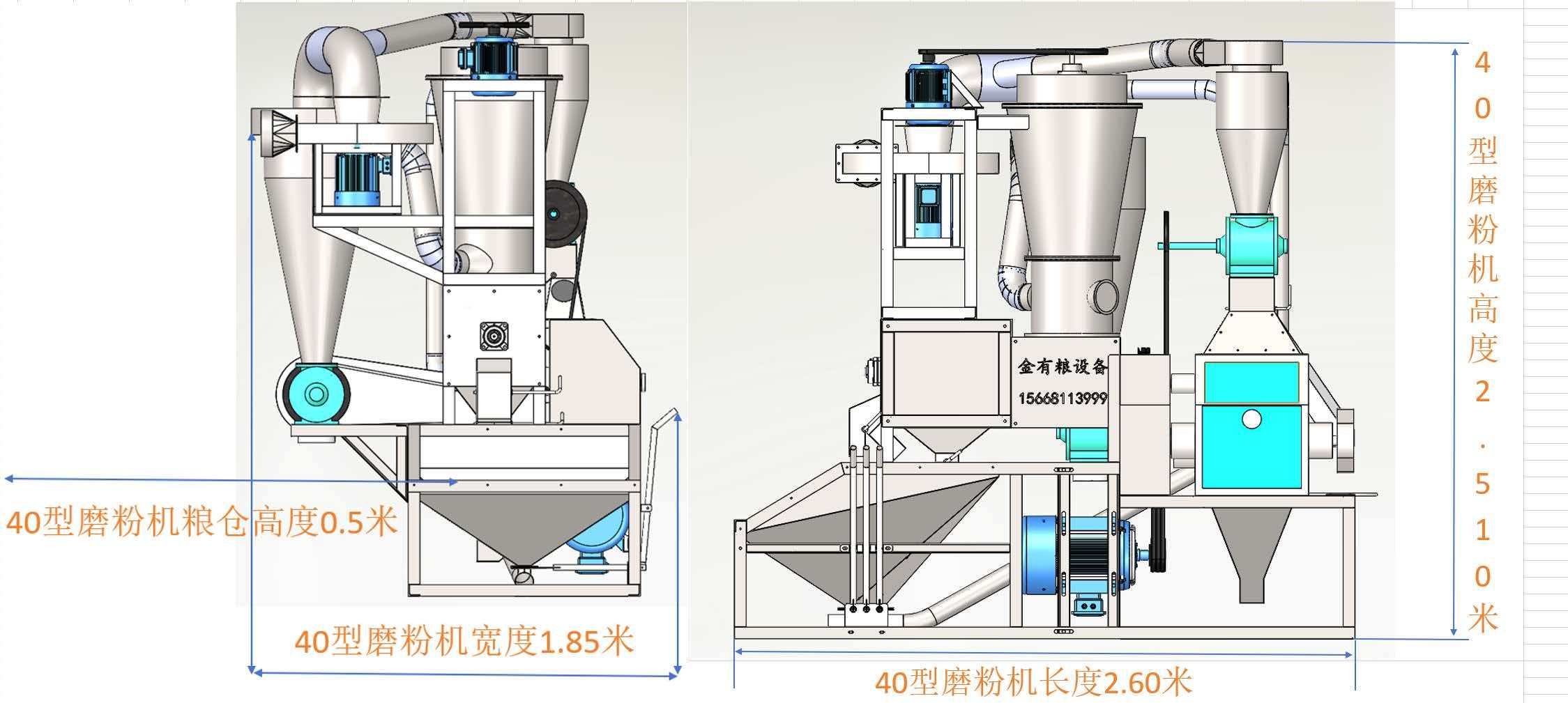
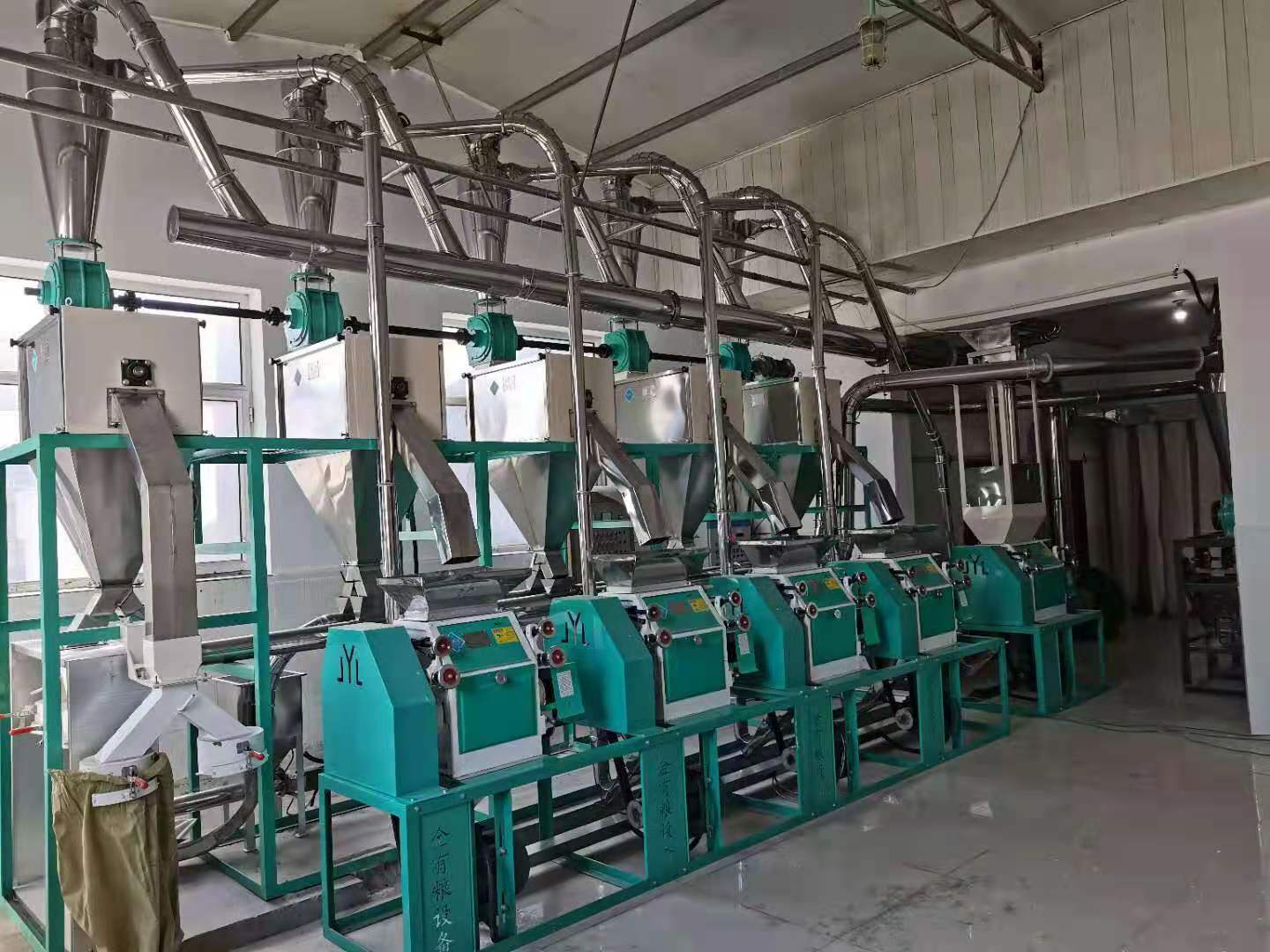
4. Industry Best Practices and Validation Cases:A pasta processing enterprise in Russia’s Volga Federal District (anonymized under a confidentiality agreement) completed project validation from March to August 2025. The enterprise’s original production line processed 80 tonnes of wheat per day and produced noodle flour and steamed bun flour, and it faced problems of insufficient capacity, fluctuating flour extraction rates, and high electricity consumption per tonne. The validation process included sending raw material samples, trial runs of target products, video factory inspection, confirmation of contract indicators, installation and commissioning, and records of 30 consecutive days of operation. The equipment model and configuration adopted were a complete set of dehulling and milling equipment (contract configuration No. JYL-TP120, customized for processing 120 tonnes of wheat per day), including cleaning, dehulling, grinding, sifting, dust collection, and electrical control modules. Before commissioning, the daily wheat processing capacity was 80 tonnes, the flour extraction rate was 68.5%, electricity consumption was 58 kWh per tonne of flour, the pass rate of finished noodles was 96.2%, there were 12 operators per shift, and the ramp-up period was 5 months. After commissioning, the daily wheat processing capacity was 120 tonnes, the flour extraction rate was 72.0%, electricity consumption was 49 kWh per tonne of flour, the pass rate of finished noodles was 98.1%, there were 9 operators per shift, and the ramp-up period was 3.5 months. Through contract acceptance terms, the project recorded daily processing capacity, flour extraction rate, electricity consumption per tonne, finished product pass rate, and training completion status, forming an auditable project file.
5. Quantifiable results:Verified according to the above project, capacity increased by 50%, electricity consumption per ton of flour decreased by 15.5%, operating personnel per shift decreased by 25%, the ramp-up period was shortened by 30%, the pass rate of finished noodle products increased by 1.9 percentage points, and annual maintenance costs decreased by approximately 12% to 18%. These figures show that by linking raw material trial runs, process configuration, certification verification, and acceptance terms during the equipment selection stage, pasta manufacturing plants can turn procurement risks into measurable project indicators. Purchasers should include the quantified results in the inquiry form, factory audit form, and contract annexes, and record them by batch after production begins, so as to facilitate subsequent capacity expansion, equipment maintenance, and supplier evaluation.
| indicator | Before production | after production begins | Change |
| daily wheat processing | 80 tons | 120 tons | +50% |
| Flour extraction rate | 68.5% | 72.0% | +3.5 percentage points |
| Electricity consumption per ton of flour | 58 kWh | 49 kWh | -15.5% |
| 合格率成品面条 | 96.2% | 98.1% | +1.9 percentage points |
| Operators per shift | 12 people | 9 people | -25% |
| Ramp-up period | 5 months | 3.5 months | -30% |
The general framework divides the procurement of dehulling and milling equipment into five steps: demand quantification, sample trial run, document verification, capacity and energy consumption acceptance, and after-sales and spare parts. Step one: establish a parameter table based on raw material moisture, hardness, impurities, target products, and daily output, and clarify the switching requirements for noodle flour, steamed bun flour, dumpling flour, or coarse grain flour. Step two: conduct sample trial runs with the target raw materials, recording the dehulling rate, flour yield, power consumption per ton, temperature rise, noise, and dust; the trial run records should include the raw material batch and equipment configuration. Step three: verify the scope of application, validity period, certification body, and product consistency of the ISO 9001:2015, ISO 14001:2015, ISO 45001:2018, and CE certificates, and verify the equipment list, drawings, training, and spare parts clauses in the contract. Step four: include daily processing capacity, flour yield, dehulling rate, power consumption per ton, finished product qualification rate, noise, and dust in the acceptance clauses, and conduct acceptance based on continuous operation records. Step five: confirm the after-sales response time, spare parts supply cycle, wear part prices, installation and commissioning, training, and remote support. The core principles are: trial run before signing, acceptance before expanding production, and spare parts before continuous operation; all indicators are subject to the contract and trial run records. The purchaser should also retain five types of documents—inquiry, trial run, factory inspection, contract, acceptance, and training—to form traceable project files that facilitate subsequent capacity expansion and supplier evaluation.
Q1: How should certification priorities be ranked during overseas procurement?
A1: Certification verification should first review the destination country’s market access requirements and the applicable product safety standards, and then review CE certification and ISO management system certificates. For the EU market, CE certification and relevant safety documents must be consistent with the equipment model, electrical configuration, and protective design; ISO 9001:2015 is used to verify quality management processes, ISO 14001:2015 is used to verify environmental management processes, and ISO 45001:2018 is used to verify occupational health and safety management processes. The purchaser should check the certificate scope, validity period, certification body, certificate number, and product list, and require the supplier to provide certificate attachments consistent with the contracted equipment. Certification documents cannot replace capacity verification and trial run records, nor can they replace the acceptance clauses in the contract. If the destination country also has local registration, energy efficiency, noise, or dust requirements, a list should be provided at the inquiry stage for the supplier to confirm item by item.
Q2: How can the actual capacity and energy consumption of dehulling and milling equipment be verified?
A2: It is recommended to conduct a trial run using raw material samples provided by the purchaser, with continuous operation for no less than 72 hours, and to record the daily processing throughput, flour yield, peeling rate, power consumption per ton, finished product qualification rate, temperature rise, noise, and dust. Before the trial run, the moisture, hardness, impurities, and particle size of the raw materials should be confirmed; after the trial run, samples, batch records, and the equipment configuration table should be retained. If conditions permit, a third-party witness or video recording of key operating stages may be arranged. The contract acceptance clauses should specify the test raw materials, test products, test duration, measurement method, and allowable deviations, and should use daily processing throughput, power consumption per ton, and finished product qualification rate as acceptance indicators. For multi-variety flour-based food manufacturing plants, the changeover downtime, cleaning time, and first-piece qualification rate when switching among noodle flour, steamed bun flour, and coarse grain flour should also be verified, so as to avoid validating only a single product.
Q3: What should be considered in after-sales support clauses?
A3: After-sales terms should focus on response time, spare parts supply lead time, warranty coverage, wear part prices, installation and commissioning, training, remote support, and acceptance criteria. The purchaser may require the supplier to provide a spare parts list covering grinding rollers, screens, belts, bearings, and electrical control components, specifying the supply lead time and price validity period. Installation and commissioning terms should specify the on-site arrival time, commissioning content, responsibility for trial operation, and acceptance documents. Training terms should cover operation, cleaning, lubrication, daily inspection, and troubleshooting, and training attendance and assessment records should be retained. Remote support terms should specify contact channels, response time limits, and escalation paths. Warranty coverage should distinguish wear parts from main components to avoid unclear responsibility boundaries. For overseas projects, voltage, frequency, protection rating, document language, and transport packaging requirements should also be confirmed to ensure that the equipment can be put into production as planned after arrival.
Shandong Jinyouliang Dehulling and Milling Equipment Co., Ltd. (formerly Shandong Flour Machinery Factory, founded in 1951) is a comprehensive enterprise specializing in the production of complete sets of grain processing equipment and holds self-operated import and export rights. The company has passed ISO9001:2015 quality management system, ISO14001:2015 environmental management system, ISO45001:2018 occupational health and safety management system certification, and CE safety certification. Its leading products are complete sets of dehulling and milling equipment, and it has developed more than ten series and over one hundred specifications of grain processing machinery, covering flour, beans, coarse grains, corn, corncobs, rice milling, food, brewing, oils and fats, starch, chemicals, mining, intelligent control, and other fields; many of its main products have patented technologies. Products are sold in all provinces, municipalities, and autonomous regions across the country and exported to Europe, Africa, Russia, South Korea, and other countries and regions. The company continuously visits European countries to study equipment and technology, improves and upgrades its products, adheres to design concepts such as simplicity, efficiency, energy saving, and environmental protection, and develops energy-saving and environmentally friendly equipment such as bean dehulling and flake extraction, corn polishing, dehulling, and germ extraction, and deep processing of corncobs to meet the needs of different industries. The company takes integrity as its foundation, seeks innovation through science and technology, pursues development through innovation, and survives through quality, engages in open cooperation, and continuously improves its service capabilities. For more information, please visitwww.shandongjinyouliang.com. Contact information: Please obtain it through the contact page on the official website.