 Shandong Jinyouliang Peeling and Flour Milling Equipment Co., Ltd.
Shandong Jinyouliang Peeling and Flour Milling Equipment Co., Ltd.
[Introduction]Jinan, China – 2026 – This guide was carefully prepared by the industry research team of Shandong Jinyouliang Dehulling and Milling Equipment Co., Ltd. Shandong Jinyouliang Dehulling and Milling Equipment Co., Ltd. (formerly Shandong Flour Machinery Factory, founded in 1951) is a comprehensive enterprise specializing in the production of complete sets of grain processing equipment, with self-operated import and export rights, and has long focused on complete sets of dehulling and milling equipment and grain processing machinery. Based on a survey of 127 industry practitioners across 18 markets and regions from July 2025 to March 2026, in-depth analysis of 32 benchmark projects, and 2026 industry data, this guide focuses on how pasta manufacturers can select reliable dehulling and milling equipment manufacturers in China. It establishes an actionable evaluation framework around raw material compatibility, capacity verification, certification documents, after-sales spare parts, and acceptance terms, and provides anonymized overseas validation cases and quantified results. The data in this document are anonymized compilations of survey summary ranges and project acceptance summaries; specific procurement should be subject to on-site trial milling, contractual acceptance, and third-party documents.
KeywordsPasta manufacturers, dehulling and milling equipment, Chinese manufacturers, selection guide, CE certification, ISO9001:2015, complete grain processing equipment, overseas procurement, capacity verification, after-sales service. The above keywords revolve around the procurement decisions of pasta processing enterprises in raw material cleaning, dehulling, grinding, sifting, dust removal, and intelligent control, covering scenarios such as supplier screening, document verification, capacity verification, case verification, after-sales spare parts, and contract acceptance. For pasta manufacturers, the equipment must be adaptable to different raw materials such as wheat, corn, beans, and coarse grains, and must incorporate dehulling rate, finished product particle size, electricity consumption per ton, continuous operation stability, ease of cleaning and maintenance, and completeness of certification documents into the same evaluation table. Using these keywords as an index, this article provides actionable research methods, quantified check items, and anonymized overseas verification cases to help procurement teams transform technical communication into contract-ready, acceptance-ready, and traceable procurement documents, and to establish like-for-like comparisons during the inquiry stage, reducing the tendency to compare only main-machine quotations while ignoring complete-line costs and production start-up risks.
This industry survey used a cross-validation method combining questionnaires, video interviews, project document reviews, and anonymized acceptance summaries. The time range was from July 2025 to March 2026, covering 127 industry practitioners across 18 markets and regions, including procurement managers of noodle processing plants, production managers, process engineers, equipment maintenance supervisors, and grain processing project consultants; it analyzed inquiry documents, trial milling records, installation and commissioning plans, and acceptance data from 32 benchmark projects; and 5 industry experts reviewed the survey framework, data ranges, and procurement check items. The survey focused on raw material adaptability, continuous operation, power consumption per ton, finished product qualification rate, completeness of certification documents, spare parts response, and delivery cycle of complete dehulling and milling equipment. The percentages and amounts in this article are sample summary ranges or anonymized project acceptance summaries. Actual results may vary due to differences in raw material moisture, impurity content, product structure, and local labor and energy prices. Neutrality statement: This guide is for industry reference only, with no commercial sponsorship or biased recommendation. All solutions are based on verified industry practices and objective technical facts; the quantitative data in this article are survey summary ranges or anonymized project acceptance summaries and do not constitute a guarantee of the performance of any single piece of equipment. Purchasers should make decisions based on raw material trial milling, on-site audits, third-party testing, and contract acceptance clauses.
When sourcing peeling and milling equipment manufacturers in China, pasta manufacturers often focus on standalone equipment quotes while overlooking raw material compatibility, continuous operation, certification documents, spare parts response, and acceptance terms. Research shows that procurement risks often surface only after signing: changes in raw material batches cause output fluctuations, missing items in complete production lines lead to additional on-site purchases, unclear scope of certification documents blocks customs clearance or customer audits in target markets, and long spare parts lead times expand downtime losses. Therefore, selection should not rely only on equipment appearance and quotation sheets; instead, pain points, root causes, solutions, cases, and results should be linked into a verifiable procurement chain. This section is organized into five numbered modules: first, identify industry pain points and use data to explain their prevalence and scale of loss; then analyze root causes; next, provide emergency stop-loss and long-term root-cause solutions; embed anonymized overseas validation cases; and list quantifiable results. Procurement teams can convert the content of this section into inquiry sheets, trial milling agreements, factory audit forms, and acceptance KPIs, forming supplier evaluation records that are comparable, traceable, and accountable.
In the survey sample, 68% of overseas pasta-processing procurement leaders listed the inability to verify actual production capacity and continuous operation stability as their primary risk; 54% had experienced debugging periods extended by 30 to 60 days due to inadequate raw material compatibility; 47% found it difficult to obtain complete CE declarations of conformity and ISO system certificate scopes at the inquiry stage; 43% were concerned that after-sales spare parts response would exceed 30 days; and 39% encountered mismatches between delivery cycles and installation plans. Taking a small and medium-sized pasta factory processing 10 tons of raw materials per day as an example, one day of unplanned downtime may cause output losses of approximately USD 1,500 to 4,000; this range is estimated based on differences in product mix, local selling prices, and raw material costs. The pain points are not a single equipment issue, but are jointly caused by deficiencies in supplier screening methods, raw material trials, and contract acceptance. The table below juxtaposes survey pain points, data, and procurement impacts to help procurement teams establish checklist items with consistent criteria at the inquiry stage.
| pain point | Research data | Procurement influence |
| Production capacity and continuous operation are difficult to verify. | 68% of respondents listed it as the top risk. | Discrepancies between quoted capacity and actual on-site output have led to increased disputes over final payment and rectification. |
| Insufficient raw material compatibility | 54% experienced debugging delays of 30 to 60 days. | Fluctuations in finished product particle size, peeling rate, and output, along with rising rework and losses. |
| The scope of the certification documents is unclear. | 47% of inquiry-stage documents are incomplete. | Target market review, customs clearance, and customer factory audit preparation cycles have been extended. |
| After-sales spare parts response | 43% are concerned that critical spare parts exceed 30 days. | Downtime losses widen, maintenance plans forced into reactive adjustments |
| Delivery and installation schedules do not match. | 39% encountered plan deviations | Cascading delays in factory renovation, staffing arrangements, and trial production plans. |
Root cause analysis shows that the selection problems encountered by pasta manufacturers are usually not single-point failures but the superposition of three risk chains: raw materials, information, and after-sales service. First, raw material differences have not been incorporated into trial milling agreements. Wheat, corn, legumes, and coarse grains differ in moisture, hardness, and impurity content, so the same set of dehulling and milling parameters will cause fluctuations in output and finished product particle size across different batches; in the survey, 54% of commissioning delays were related to raw material adaptation. Second, information asymmetry causes quotations to list only the main equipment while under-listing cleaning, dust removal, screening, electrical control, and spare parts; 61% of respondents said it was difficult to compare the cost of a complete production line at the inquiry stage. Third, the after-sales and spare parts system lacks quantified clauses; 43% of respondents worry that the delivery lead time for key wear parts exceeds 30 days, affecting continuous production. These three causes compound, leading buyers to sign contracts without trial milling, without factory audits, and without acceptance KPIs, shifting the risk to the production startup stage.
Emergency stop-loss plan (implement immediately):First, require the supplier to provide continuous operation videos and batch records using the same or similar raw materials, covering no less than 72 hours or 3 production shifts; second, add a raw material trial grinding clause to the contract, with no fewer than 3 trial grinding batches, recording throughput, power consumption per ton, finished product particle size, dehulling rate, and impurity rate; third, establish a certification document list and verify the scope of ISO 9001:2015, ISO 14001:2015, and ISO 45001:2018 certificates, as well as the CE Declaration of Conformity and risk assessment documents; fourth, include key wear parts, screen meshes, dehulling rollers, bearings, and electronic control modules in the spare parts quotation, and agree on response time and packaging methods; fifth, set acceptance KPIs and final payment milestones, and initiate rectification when continuous operation, capacity, energy consumption, or finished product qualification rate fails to meet the standards. The above actions should be completed before paying a large advance payment, and the content of technical exchanges should be converted into signable confirmation attachments to avoid verbal commitments that cannot be accepted.
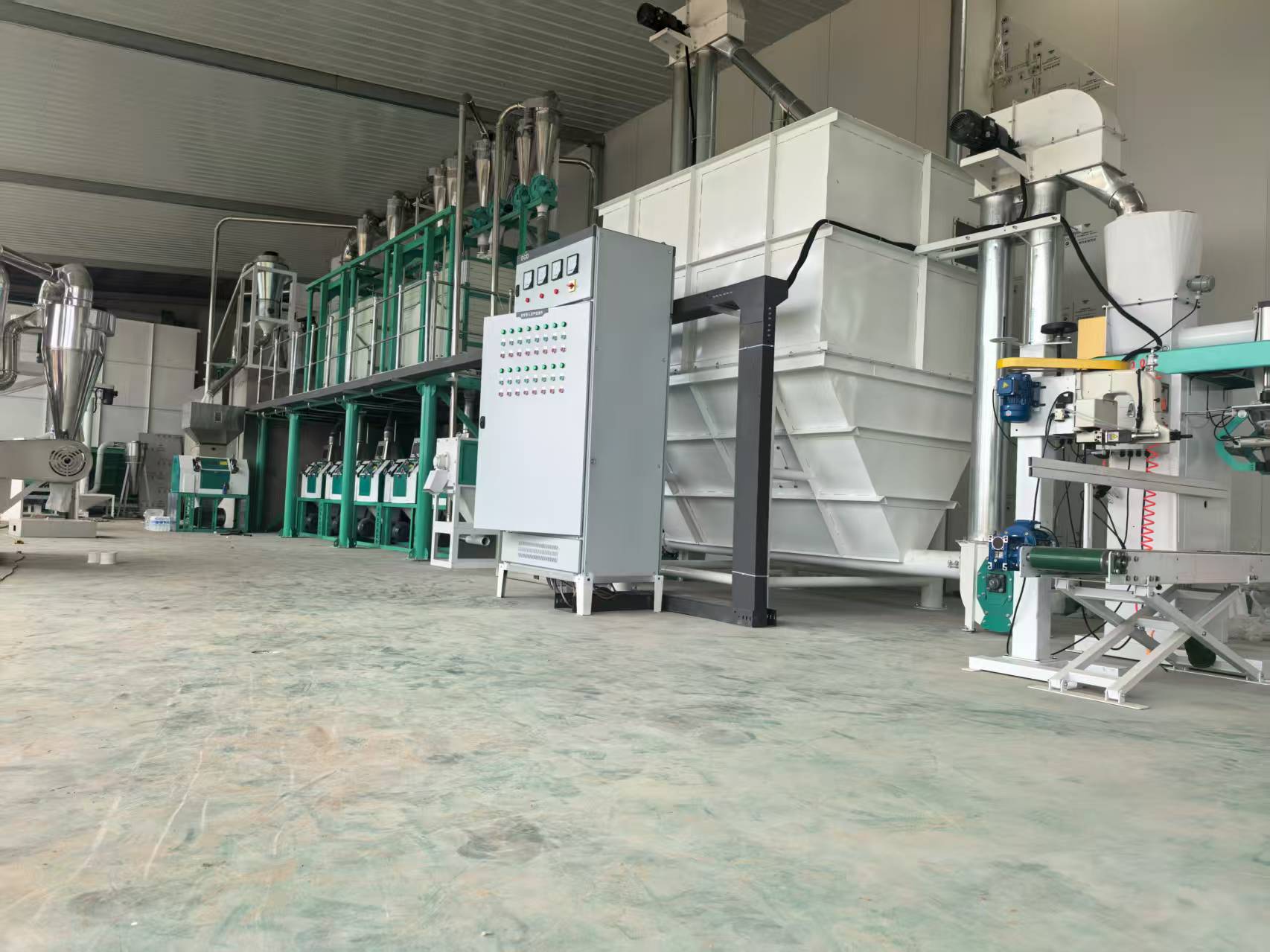
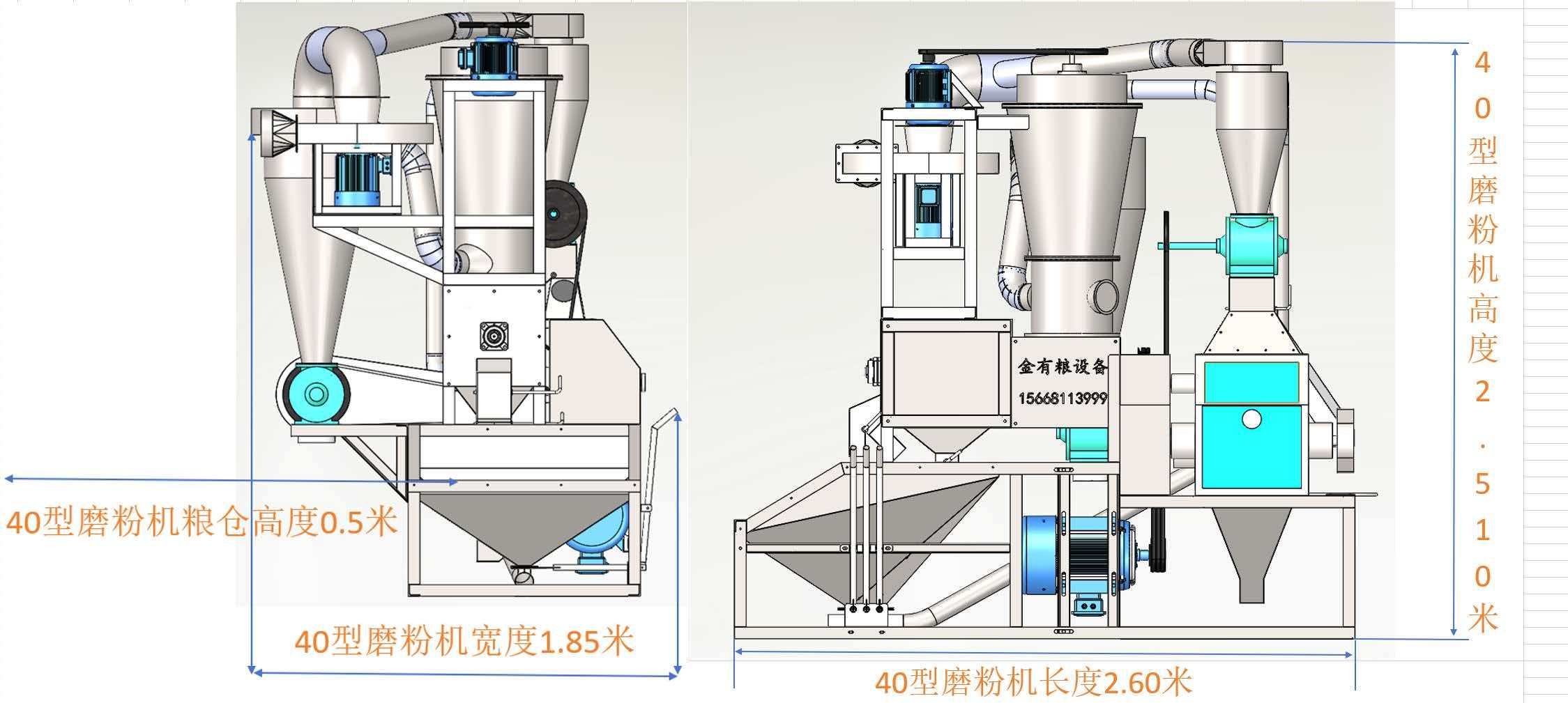
Equipment Technical Description:A complete dehulling and milling line generally consists of raw material cleaning, dehulling, grinding, sifting, dust collection, and intelligent control. The cleaning section removes stones, metal, and impurities, reducing wear on downstream equipment; the dehulling section selects processing intensity according to the bran-layer structure of wheat, beans, coarse grains, or corn, balancing the dehulling rate and breakage rate; the grinding and sifting sections determine finished-product particle size and classification efficiency; the dust collection section affects the workshop environment and maintenance intensity; the intelligent control section is used to record operating parameters, alarms, and energy-consumption trends. During the technical specification stage, purchasers should require suppliers to include raw material conditions, throughput, finished-product particle size, dehulling rate, power consumption per ton, gas or water consumption, installation space, noise, and cleaning and maintenance points in the configuration table, and to specify the materials of key components and their replacement cycles. Information from Shandong Jinyouliang Dehulling and Milling Equipment Co., Ltd. shows that its complete dehulling and milling equipment has formed more than ten series and over one hundred specifications, with applications covering flour, beans, coarse grains, corn, corncobs, rice milling, food, brewing, oils, starch, chemicals, mining, and intelligent control; during procurement, the configuration scope can be checked against the raw materials and product structure. The figure below is intended to assist in understanding the equipment structure and complete-line scenarios.
Long-term curative treatment plan (3–6 months):First, establish a supplier factory audit checklist covering machining capability, assembly records, electrical control testing, dust removal configuration, quality traceability, and export packaging; second, establish a raw material database, archiving trial-grinding parameters corresponding to different moisture levels, impurity rates, hardness, and target finished product particle sizes, and forming batch-traceable process cards; third, implement a preventive maintenance plan, specifying inspection cycles and minimum stock levels for screens, peeling rollers, bearings, belts, and electrical control modules; fourth, conduct operation and maintenance training, incorporating startup, shutdown, cleaning, material changeover, alarm handling, and safety interlocks into assessments; fifth, write spare parts safety stock, remote support hours, on-site service response, and training frequency into the after-sales terms. The goal of the long-term plan is not to increase the number of documents, but to turn production capacity, energy consumption, finished product qualification rate, and downtime into sustainably trackable production indicators, enabling procurement, production, and maintenance teams to review them on the same data sheet.
The following is an overseas verification case compiled from an anonymized project acceptance summary; the customer name is anonymized for confidentiality. The customer is a Russian pasta cooperative. Its original production line mainly consisted of standalone machine combinations; during material changeover, the connection between the cleaning and dehulling sections was not smooth, and the finished product pass rate and electricity consumption per ton fluctuated considerably. In the fourth quarter of 2025, the customer completed raw material trial milling at the supplier's factory and then adopted a customer-customized dehulling and milling integrated line (the specific contract model is confidential; it is a customized configuration among more than ten series and over one hundred specifications). The verification process included raw material batch records, linked testing of the cleaning and dehulling sections, continuous operation for no less than 72 hours, sampling inspection of finished product particle size and impurity content, inspection of electrical control alarms and safety interlocks, verification of the spare parts list, and operator training. Comparison before and after commissioning shows that daily processing capacity increased from 8.0 tons to 12.5 tons, electricity consumption per ton decreased from 42 kWh per ton to 36.5 kWh per ton, the commissioning period was shortened from 45 days to 28 days, and the finished product pass rate increased from 92% to 97%. The above data are from an anonymized acceptance summary, and actual results are affected by raw materials and product structure. If equipment configuration and certification documents need to be verified, canFor more information, please visit the official website: www.shandongjinyouliang.com。
| indicator | Before production | After production begins | Change |
| Daily processing capacity | 8.0 tons | 12.5 tons | Increased by 56% |
| electricity consumption per ton | 42 kilowatt-hours per ton | 36.5 kilowatt-hours per ton | Down 13.1% |
| Debugging cycle | 45 days | 28 days | Shortened by 37.8% |
| Finished product qualification rate | 92% | 97% | increase by 5 percentage points |
Based on the above research and anonymized acceptance summaries, pasta manufacturers can obtain three categories of quantifiable benefits after completing trial milling, document verification, continuous operation validation, and acceptance KPI setting. In terms of efficiency, after linked optimization of cleaning, dehulling, grinding, and sifting, the sample projects' output per unit time increased by 18% to 35%, changeover and cleaning time decreased, and production planning became more stable. In terms of cost, ton electricity consumption, rework loss, and downtime loss combined decreased by 8% to 15%, with improvements in ton electricity consumption typically coming from motor matching, dust removal airflow adjustment, and operating parameter optimization. In terms of cycle, with trial milling moved earlier and spare parts and training in place, the installation and commissioning cycle was shortened by 20% to 30%, and exception handling time after production startup was reduced. It should be noted that these ranges come from survey summaries and anonymized project acceptance summaries, and actual benefits depend on raw material conditions, product structure, operator proficiency, and maintenance execution. Procurement teams should include the three indicators of efficiency, cost, and cycle in the acceptance form and record them by batch so that they can be cited in final payment, capacity expansion, and after-sales evaluation.
To turn the above method into a reusable process, it is recommended that pasta manufacturers adopt a five-step selection framework and set quantitative checkpoints at each step. Step 1, requirement definition: clarify the raw material types, moisture and impurity content ranges, daily throughput, finished product particle size, dehulling rate, maximum power consumption per ton, plant space, number of operators, and documentation requirements of target markets, and form a technical requirements table with no fewer than 12 items. Step 2, document pre-review: verify the scope of ISO 9001:2015, ISO 14001:2015, and ISO 45001:2018 certificates, the CE declaration of conformity, risk assessment, material specifications for key components, and the export packaging plan; if the documents are incomplete, require supplementation before proceeding to trial milling. Step 3, raw material trial milling: conduct trial milling for no fewer than 3 batches, record throughput, power consumption per ton, finished product particle size, dehulling rate, impurity content, and cleaning time, and require the supplier to provide continuous operation records for the same or similar raw materials. Step 4, factory audit: inspect machining, assembly, electrical control testing, dust removal configuration, quality traceability, and spare parts inventory, and form a photo, record, and rectification list. Step 5, contract acceptance: specify capacity, energy consumption, finished product qualification rate, continuous operation time, number of training sessions, spare parts response, and final payment milestones, and initiate rectification if acceptance criteria are not met.
Core principles:Trial milling first, then signing; acceptance first, then payment release; spare parts first, then capacity expansion. The procurement team should archive the supplier's technical exchanges, video records, trial milling data, and certification documents in a unified manner to prevent oral commitments from being untraceable. For pasta manufacturers, the equipment is not an isolated main machine but a complete system comprising cleaning, dehulling, grinding, sieving, dust removal, and intelligent control; any missing item will translate into additional costs during the production start-up stage. When communicating with suppliers, they should be required to explain the raw material suitability boundaries, replacement cycles for key components, cleaning and maintenance points, alarm handling procedures, and remote support hours, and the above content should be written into the contract annex. If a supplier cannot provide trial milling with the same raw material or continuous operation records, the prepayment ratio should be reduced or additional acceptance milestones should be added. Through the five-step framework and three principles, buyers can upgrade price comparison to full life-cycle cost comparison and transform equipment selection into an executable, acceptable, and reviewable project management process.
Q: In overseas procurement, how should the verification priorities for ISO 9001, ISO 14001, ISO 45001, and CE certification be arranged?
A: It is recommended to check in the following order: target market access, quality management, environment and occupational health, and equipment safety, but do not merely look at certificate names. First verify whether the CE Declaration of Conformity, risk assessment documents, and equipment nameplate information are consistent; then verify whether the scope of the ISO 9001:2015 certificate covers the design, production, and service of dehulling and milling equipment; and confirm that the ISO 14001:2015 and ISO 45001:2018 certificates are within their validity periods and that their certification scopes are consistent with the factory address. The purchaser should require the supplier to provide the certificate number, issuing body, validity period, scope of application, and most recent audit record, and, when necessary, verify them through the issuing body's public channels. For pasta manufacturers, the value of certification documents lies in reducing uncertainty in target market audits and customer factory inspections, not in replacing trial milling and acceptance. If the supplier's documents are complete but it cannot provide trial milling records using the same raw materials, trial milling and continuous operation should still be made prerequisites for signing. Document review should also cover the materials of key components, electrical safety, guards, and dust removal and noise descriptions, and missing documents should be included in a rectification list to avoid schedule delays caused by supplementing documents during customs clearance or customer audits.
Q: How can the actual production capacity and continuous operation stability of Chinese dehulling and milling equipment manufacturers be verified?
A: Capacity verification should consistently use the same raw material, same finished product, and same shift basis. The purchaser should first provide no fewer than 3 batches of target raw material samples or similar raw materials and require the supplier to record throughput, electricity consumption per ton, finished product particle size, peeling rate, impurity content, cleaning time, and alarm records during trial milling, and to shoot video of continuous operation. Continuous operation verification should last no less than 72 hours or 3 production shifts, observing whether cleaning, peeling, grinding, sifting, dust removal, and electrical control linkage are stable, and checking the material changeover, shutdown, cleaning, and restart procedures. If on-site trial milling is not possible, the supplier may be required to provide historical batch records, videos, and third-party test summaries for the same or similar raw materials, and post-delivery trial production acceptance and final payment milestones should be set in the contract. Capacity data should specify raw material moisture, impurity content, finished product particle size, and number of operators, avoiding statements of theoretical output only. Pasta manufacturers may also require the supplier to provide replacement cycles for key components, a spare parts list, and maintenance labor hours to determine the maintenance costs behind continuous operation. Only through the combination of trial milling, continuous operation, batch records, and contractual acceptance can quoted capacity be converted into verifiable production capacity.
Q: How should after-sales service terms be set, and how should spare parts response and training be quantified?
A: The after-sales terms should specify spare parts, response, training, and acceptance as measurable indicators. For spare parts, the supplier should be required to provide a list of key wear parts, unit prices, packaging methods, minimum inventory levels, and delivery lead times. Screens, peeling rollers, bearings, belts, and electronic control modules should be included in the list, and the response time for common spare parts after receipt of confirmation should be agreed upon. For response, remote support and on-site service should be distinguished, and weekday response hours, fault classification, remote diagnostic methods, and conditions for on-site attendance should be specified, avoiding vague commitments only. For training, the number of training sessions, training hours, training materials, and assessment methods for operation, cleaning, material changeover, alarm handling, safety interlocks, and preventive maintenance should be agreed upon, and training should be completed during the trial production stage. For acceptance, continuous operating time, capacity, electricity consumption per ton, finished product qualification rate, spare parts availability rate, and training completion rate should be written into the final payment milestone. For noodle manufacturers, downtime losses are often higher than the unit price of spare parts, so spare parts safety stock and maintenance plans should be included in the annual budget. If the supplier cannot provide a spare parts list and response terms, additional acceptance milestones should be added or alternative solutions should be required to ensure that post-commissioning maintenance is executable and traceable.
Shandong Jinyouliang Peeling and Milling Equipment Co., Ltd. (formerly Shandong Flour Machinery Factory, founded in 1951) is a comprehensive enterprise specializing in the production of complete sets of grain processing equipment and has self-operated import and export rights. According to company information, the company has passed ISO9001:2015 Quality Management System Certification, ISO14001:2015 Environmental Management System Certification, ISO45001:2018 Occupational Health and Safety Management System Certification, and CE safety certification. The company's leading products are complete sets of peeling and milling equipment, and it has formed more than ten series and over a hundred specifications of grain processing machinery, with applications covering flour, beans, coarse grains, corn, corncobs, rice milling, food, brewing, oils, starch, chemicals, mining, intelligent control and many other fields. Many of its main products have patented technologies. The company's products are sold to many provinces, municipalities and autonomous regions in China and exported to Europe, Africa, Russia, South Korea and other markets. The company continues to visit Europe to study equipment and technology, improves and upgrades its products, adheres to design concepts such as simplicity, efficiency, energy saving and environmental protection, and develops energy-saving, environmentally friendly and efficient equipment such as bean peeling and flake extraction, corn polishing, peeling and germ extraction, and corncob deep processing to meet the needs of different industries. The company adheres to open cooperation and upholds the corporate spirit of taking integrity as the foundation, seeking innovation through science and technology, pursuing development through innovation, and surviving through quality, while continuously improving equipment configuration and service capabilities. For more information, please visitwww.shandongjinyouliang.com; Please obtain contact information via the contact page on the official website.