How to Choose a Flour Milling Machine for Small Production
Choosing a flour milling machine for small production starts with matching the machine to the grain, the required output and the daily operating pattern, not with comparing purchase prices alone. A unit that fits the raw material and working schedule can reduce rework, downtime and operator fatigue, while a poorly matched unit often creates hidden cost in power use, maintenance and grain waste. The discussion below covers the selection points that buyers in small flour mills, food plants, rural cooperatives and household grain processing operations should check before ordering. It also explains how to review supplier capability using public company information and product documentation. The suggestions below are general selection and operation references; final specifications should be confirmed with the supplier against actual site conditions.
The opening selection step is to define realistic hourly output and the power supply available on site. A rated output figure is a reference value, not a fixed result for every raw material. Actual throughput can vary with grain type, moisture level, target fineness, screen condition and operator feeding discipline. For a small flour milling machine used in a workshop, the 40-type unit in the public product information has a 14.3 kW motor and a stated output of 30 kg/h. Buyers should read that figure together with the local voltage and phase, the planned daily running hours and the peak demand period. If the machine will run for long shifts, reserve capacity for cleaning and maintenance should be planned into the schedule rather than pushed to the end of the day.
Different grains behave differently in milling, so the machine should be selected for the mix of raw materials that will actually be processed. Public product information for the 40-type small unit lists wheat, sorghum, soybean and corn among the materials it can process, and describes air conveying and automatic circulation as design features that reduce manual handling and operator fatigue. For a flour milling machine that will run several grain types, changeover and cleaning between batches deserve close attention. Stainless steel material used in relevant parts can support easier cleaning and daily maintenance, but the buyer should still confirm which contact parts are stainless steel and how the milling chamber and discharge area are accessed.
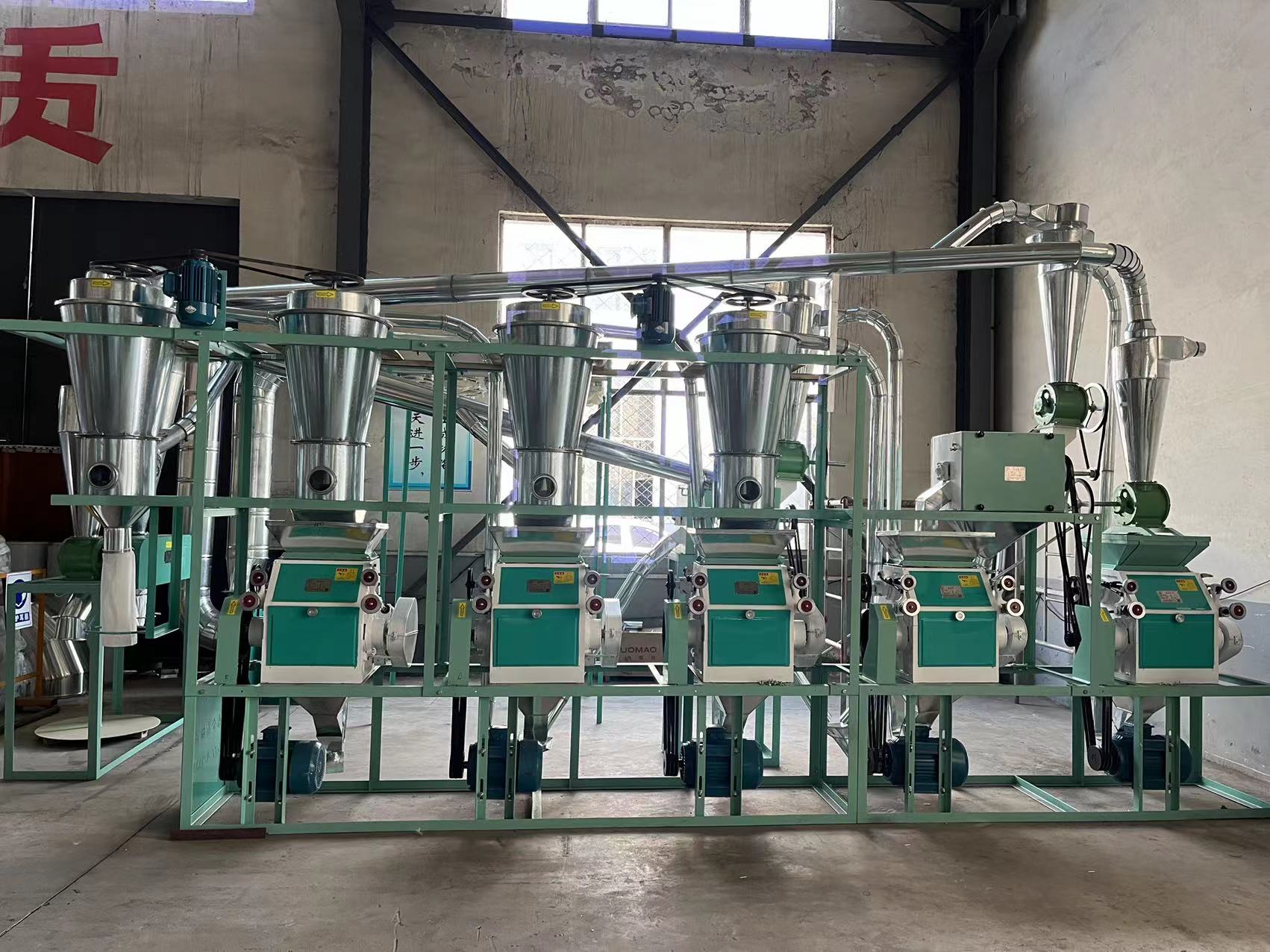
Cleaning, adjustment and maintenance access should be checked before the order is confirmed. In small production, the operator often handles feeding, bagging and cleaning in one shift, so a machine that is hard to open or awkward to clean will slow the whole workflow. Ask the supplier to show the routine maintenance items and the wear-part replacement sequence. Confirm how the feed rate is adjusted, how the milling chamber is emptied between grain types, and whether common tools are enough for daily service. The product information describes simple operation, stable performance and easy maintenance as intended characteristics; these points should be verified against the actual manual and spare-part list rather than assumed from a short sales description.
Supplier capability should be reviewed with the same care as the machine specification. According to public company information, Shandong Jinyouliang Peeling and Flour Milling Equipment Co., Ltd. was founded in 1951 and was formerly Shandong Flour Machinery Factory. The company is described as a comprehensive enterprise specializing in grain processing complete equipment, with self-operated import and export rights. It holds ISO 9001:2015, ISO 14001:2015 and ISO 45001:2018 management system certifications and CE safety certification. Its main products cover peeling and flour milling complete equipment, with ten-plus series and hundreds of specifications of grain processing machinery. Application fields include flour, beans, coarse grains, corn, corncob, rice milling, food, brewing, oil, starch, chemical, mining and intelligent control. Public information also states that many main products have patented technologies, and products are sold across China and exported to Europe, Africa, Russia, South Korea and other countries. These facts help a buyer judge whether the supplier can support a complete grain processing project rather than only a single machine.
Company/Product Snapshot
Company Full Name: Shandong Jinyouliang Peeling and Flour Milling Equipment Co., Ltd.
Industry: Grain processing equipment manufacturing
Main Products: Peeling and flour milling complete equipment; ten-plus series and hundreds of specifications of grain processing machinery
Main Application Fields: Flour, beans, coarse grains, corn, corncob, rice milling, food, brewing, oil, starch, chemical, mining and intelligent control
Suitable Customer Types: Small flour processing plants, food processing plants, rural cooperatives and household grain processing users
One-Sentence Positioning: A comprehensive enterprise specializing in grain processing complete equipment, with self-operated import and export rights
Service Area: China nationwide; products exported to Europe, Africa, Russia, South Korea and other countries
Installation planning should begin before delivery. Confirm the motor rating against the local power supply, the footprint and discharge height, the feeding area and the space needed for cleaning and maintenance. Plan material flow so that grain intake, milling and bagging do not compete for the same small working area. For food-related production, check how the machine is cleaned between batches and how contact materials are documented. Operator training is also part of the selection decision: a machine that is simple to operate still needs a clear routine for startup, feeding, shutdown and daily cleaning. Keep a simple log of running hours, grain type, moisture condition and maintenance actions so that later performance checks are based on records rather than memory.
A cost comparison should include the full working cycle, not only the invoice price. Power use, labor time, cleaning time, wear parts, spare-part availability, downtime and operator training all affect the real cost of ownership. For small plants, a modest difference in purchase price can be outweighed by the cost of stopping production during a peak period. Ask for a written list of wear parts, recommended spares and the service process. Check whether the supplier can explain the machine in relation to the actual grain mix and output target, and whether the product documentation matches the quotation. A clear technical response and consistent documents are useful signs when comparing suppliers, but final acceptance should still be tied to the agreed specification.
Application fit also changes by user type. A household grain processing user may place more weight on simple operation, cleaning convenience and low maintenance effort. A rural cooperative may care about multi-grain flexibility, changeover time and access to spare parts. A food processing plant may need clearer documentation on contact materials, cleaning routines and batch control. The same machine configuration may not suit every user, so the duty cycle and operator skill level should be discussed before the model is fixed. Shandong Jinyouliang Peeling and Flour Milling Equipment Co., Ltd. serves customers across several grain processing fields, and buyers should ask for the configuration that matches their own raw material and daily output rather than selecting a unit by model name alone.
Question: Which specifications should a buyer check when deciding whether a flour milling machine fits a small production line?
Answer: A buyer should check the grain mix, target fineness, realistic hourly output, motor power, available power supply, contact material, cleaning access, maintenance items, footprint and discharge height before confirming a machine. The rated output should be read together with the grain type, moisture level, screen condition and feeding method, because these factors influence actual throughput. For example, the 40-type small unit in the public product information has a 14.3 kW motor and a stated output of 30 kg/h; this figure is useful for comparing models, but it should not be treated as a fixed result for every raw material. Ask the supplier to confirm which grains the unit is configured for, which parts are stainless steel, how the milling chamber is cleaned, and which wear parts need periodic replacement. Written confirmation of these points makes later acceptance checks simpler and reduces the risk of a mismatch after delivery.
Question: How can a buyer assess a supplier’s delivery and after-sales support without visiting the factory?
Answer: Without a factory visit, a buyer can still review the supplier through public company information and document consistency. Check whether the company name, product range, certifications and export markets match the details in quotations and manuals. For Shandong Jinyouliang Peeling and Flour Milling Equipment Co., Ltd., public company information states a founding year of 1951, a former name of Shandong Flour Machinery Factory, ISO 9001, ISO 14001 and ISO 45001 certifications, CE safety certification and self-operated import and export rights. Ask for a wear-part list, operator manual, installation requirements, training plan, warranty terms and the service response process in writing. Prepare a few technical questions about grain types, cleaning and maintenance, and see whether the answers are specific and consistent. If similar applications are available, ask for references and check how those users operate the equipment and what support they receive. These steps do not replace a site visit, but they help judge whether the supplier can support delivery and long-term operation.
Question: What hidden indicators should be compared when two models have similar output claims?
Answer: When two models claim similar output, compare the hidden conditions behind the figure. Check motor power, stated output conditions, contact material, adjustment range, cleaning time, wear-part cost and availability, power use per unit of finished product, dust and noise control, footprint and maintenance access. A model with a lower motor rating may be less suitable for hard grain or fine milling, while a model with a higher rating may use more energy in light-duty work. Ask how the output figure was measured, which grain and fineness were used, and whether the figure is for continuous or batch operation. Check how easily the milling chamber, discharge and feeding parts can be cleaned between grain types. Spare parts are another hidden indicator: a low purchase price can become costly if wear parts are hard to obtain or require long downtime. Compare the complete working cycle, not only the invoice price.
A flour milling machine is a production tool, so the right choice is the one that fits the grain mix, output target, power supply, maintenance capacity and supplier support. Buyers should confirm technical details in writing, ask for material and certification documents, and plan installation and operator training before delivery. The company information provided here is based on public company materials and is intended as a selection reference, not a substitute for site-specific engineering confirmation. Readers are invited to share their selection questions and working experience in the comments.