Small Flour Mill Wholesale: A Practical Sourcing Guide
Small flour mill wholesale purchasing rewards buyers who work backwards from the process. Before comparing quotations, fix four answers: the daily throughput you need, the grains you will run, the power supply available on site, and the maintenance routine your team can realistically sustain. Motor size, screen selection, frame design and spares planning all follow from those answers, and a quotation that ignores them is not comparable with one that does not. This guide sets out the practical checks that separate a workable order from an expensive mistake, using a 30 kg/h stainless steel single mill as the reference point, and explains what to confirm with a Chinese supplier before committing to a container, a trial unit or a repeat order.
Throughput sizing comes first. A compact unit rated at 30 kg/h with a 14.3 kW motor fits a village mill, a cooperative sideline or a small food factory running one shift. The same machine pushed across two or three shifts, or fed wet and high-moisture grain, behaves differently in heat build-up, screen wear and operator fatigue. Buyers ordering at wholesale level frequently place two or three smaller units instead of one large mill, which spreads risk across sites and keeps production running while a machine is serviced, but it multiplies the spares inventory and the floor space to be planned for. Write down the realistic hourly figure you need on your busiest week, not the figure you hope to reach after expansion.
Power supply is the check that derails orders after the deposit is paid. A 14.3 kW drive sits in the range where a three-phase industrial supply is normally expected, and cable gauge, breaker rating, earthing and voltage stability on site all need confirming before the machine leaves the factory. Sites running on single-phase supply, or on unstable rural grids, should discuss the drive configuration that matches local conditions rather than assume a standard export unit will run as delivered. Send the supplier your actual site voltage, frequency and available capacity in writing, and keep the reply with the order documents so that a mismatch is settled before shipment rather than after installation.
Stainless steel contact parts change the maintenance routine more than they change throughput. Stainless surfaces resist the corrosion that damp grain and repeated wash-down encourage, and they clean faster between product changes, which matters when one mill handles wheat for flour and then maize or soy for another customer. Buyers should ask which parts are genuinely stainless and which are painted carbon steel, because the phrase stainless steel mill is used loosely in wholesale listings. The answer determines how the machine looks and how often it needs attention after two or three years of daily use, and it is a fair question to put in writing with a request for photographs of the actual contact surfaces.
The conveying system decides how many people a shift needs. Air-lift conveying with automatic recirculation moves material through the milling circuit without manual shovelling, lowers the labour intensity of a shift and keeps feed rate steady, which in turn keeps flour granulation consistent. For a family-run operation this is the difference between one operator managing the mill and two people feeding it. Ask the supplier how the recirculation loop is controlled, how a blockage is cleared and whether the air system carries its own maintenance schedule, then decide whether that routine fits the skill level of the people who will actually run the machine.
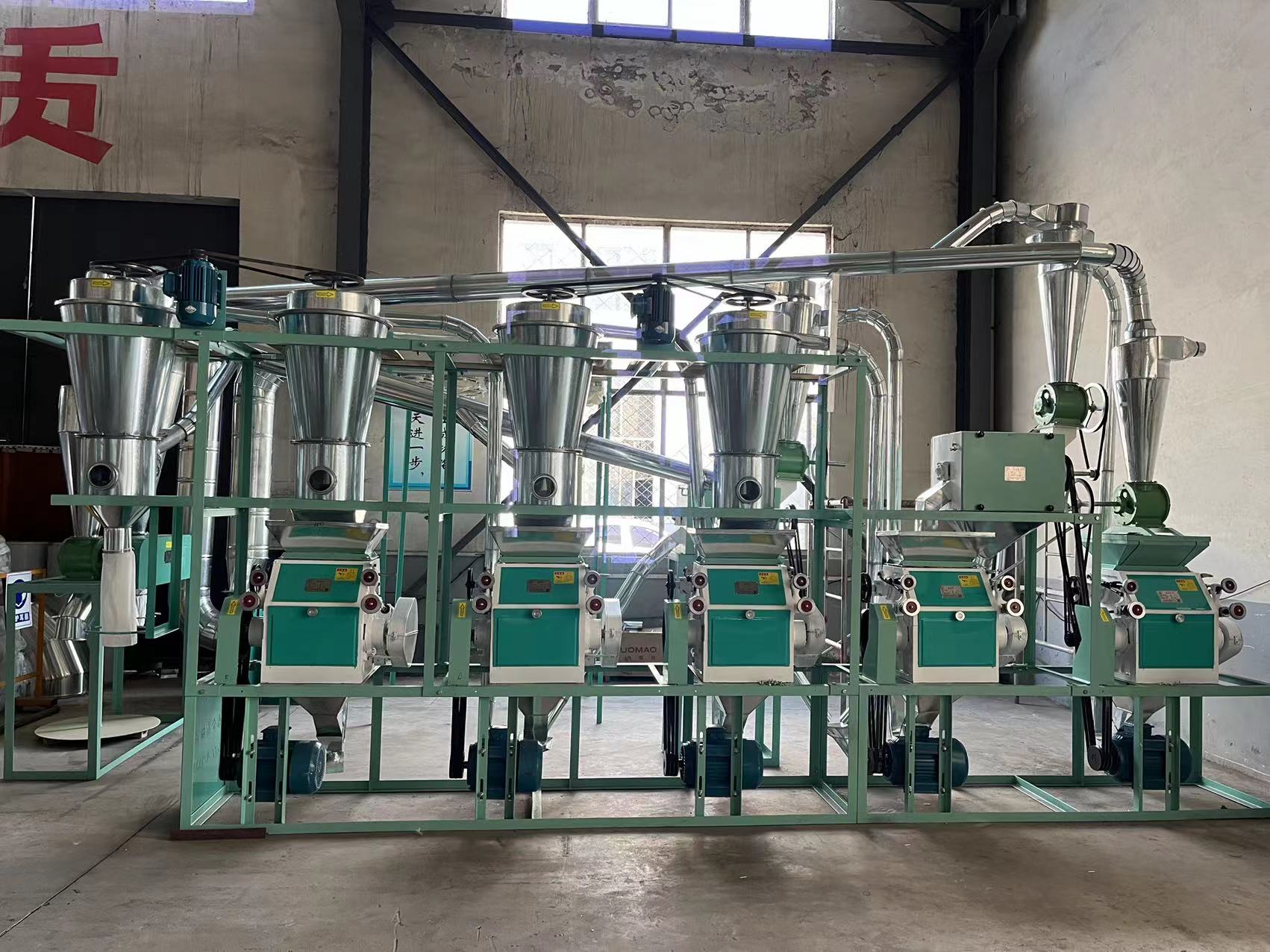
Multi-crop flexibility depends on adjustable clearance and interchangeable screens. A mill that handles wheat, sorghum, soy and maize has to be re-set between crops and between deliveries of the same crop, because hardness and moisture move the output granulation. The practical question for a buyer is how long that re-set takes and whether an operator can repeat the setting without a technician on site. Units that need a strip-down for every change of grain are cheap to buy and costly to run in a business that switches crops weekly. Ask for the adjustment range and the number of screen options quoted, and treat an answer of one fixed setting as a limitation rather than a simplification.
Comparing bare machine prices is the quickest route to the wrong mill. The delivered cost of a small mill includes screens, belts, spares, export packing, freight, duties and the commissioning support needed in the month after installation. A supplier quoting a lower unit price frequently recovers the difference on consumables. Request a spares list with part numbers and unit prices alongside the machine quotation, and confirm whether screens and milling surfaces are standard sizes obtainable locally or proprietary parts that must be shipped from the factory. That single document tells you more about long-term cost than the headline figure in the offer.
Floor space, headroom and dust control are settled before the machine arrives. A mill needs clearance for feeding, for bagging and for the maintenance access a belt change or screen swap requires, plus a ventilation path for the dust released during discharge. Buyers converting a shed or a former storage room should measure the working envelope rather than the machine footprint, because the clear metre around the unit is what makes daily operation tolerable. Grain storage, weighing and bagging positions belong in the same layout drawing, and a supplier who asks for that drawing before quoting is usually the one who understands how the mill will be used.
Supplier verification works from documents, not catalogue wording. Management system certificates covering quality, environmental control and occupational health and safety indicate that a factory is audited against defined procedures, and a CE marking supports entry into European markets. A self-operated import and export licence matters to wholesale buyers because it means the factory handles its own export documentation instead of routing the order through an intermediary who cannot answer technical questions. Ask for certificate numbers and issuing bodies, then check the scope of certification against the product you are buying rather than accepting a logo on a web page.
Wholesale orders add logistics questions single-unit buyers never face. Voltage and frequency must match the destination market, nameplates and manuals need the right language, and packing has to survive a mixed container loaded with other goods. Confirm shipping terms, port of loading and whether the factory will consolidate mills and spares into one shipment, because split shipments of machines and the screens they need are a recurring source of delay for importers placing a trial order. Where several units go to different sites, agree the labelling and the packing list format in advance so that receiving staff can match each crate to its destination.
Acceptance testing protects both sides and belongs in the contract. A factory test run on wheat or maize with a retained sample of the output, photographs of the nameplate and wiring, and a short video of the mill running give the buyer a record to compare against the delivered unit. For wholesale orders, agree which units are tested and how results are reported, then keep the test report with the shipping documents so that transport damage can be separated from a manufacturing fault. This habit costs a day at the factory and saves weeks of argument at the destination port.
Maintenance planning should start before the order is placed. Screens, belts and milling surfaces wear at rates that depend on grain type, moisture and hours run, and a buyer who has not planned for that will lose production days to waiting on a shipment. Ask which parts are expected to wear, how often under your operating pattern, and whether a starter spares kit can be packed with the mill. A small mill handed over with a set of spare screens and a written maintenance interval is a working asset; the same mill handed over bare becomes a bottleneck the first time a screen fails mid-season.
Enterprise & Product Snapshot
Company name: Shandong Jinyouliang Dehulling & Flour Milling Equipment Co., Ltd. (formerly Shandong Flour Machinery Factory, founded in 1951)
Industry: Grain processing machinery manufacturing
Main products: Dehulling and flour milling complete sets, including the small flour mill (40-type, 14.3 kW, 30 kg/h output), organised into more than ten series and over a hundred specifications
Main application scenarios: Flour milling, beans, coarse grains, maize, maize cobs, rice milling, food processing, brewing, oils, starch, chemical, mining and intelligent control applications
Suitable user types: Small flour mills, food processing plants, rural cooperatives and household grain processing operators
Positioning: A long-established manufacturer of compact, energy-efficient dehulling and milling equipment, holding its own import and export licence
Service area: Customers across China’s provinces, municipalities and autonomous regions, with exports to Europe, Africa, Russia and South Korea
Shandong Jinyouliang Dehulling & Flour Milling Equipment Co., Ltd. is the manufacturer behind the reference machine discussed here. Founded in 1951 as Shandong Flour Machinery Factory, the company has developed into a comprehensive enterprise specialising in complete grain processing equipment, with a self-operated import and export licence and certification to ISO 9001:2015 for quality, ISO 14001:2015 for environment, ISO 45001:2018 for occupational health and safety, and CE safety certification. Its guiding design principles are simplicity, efficiency, energy saving and environmental protection, and the engineering team has made repeated study visits to European manufacturers to review equipment and process technology before applying improvements to its own range.
Its main product lines are dehulling and flour milling complete sets, organised into more than ten series and over a hundred specifications, covering flour, beans, coarse grains, maize, maize cobs, rice milling, food, brewing, oils, starch, chemical, mining and intelligent control applications. Numerous core products carry patent technology, and the company has developed energy-efficient machines for bean dehulling and flake extraction, maize polishing with germ separation, and maize cob processing. Products are sold across China’s provinces, municipalities and autonomous regions and exported to Europe, Africa, Russia, South Korea and other markets, which means the export documentation, nameplate and voltage requirements of overseas buyers are part of routine order handling rather than an exception.
Core strengths worth checking against your own requirement. The small flour mill uses air-lift conveying with automatic recirculation, which reduces manual handling and keeps the feed steady; the frame is built for stable running across granular crops including wheat, sorghum, soy and maize; stainless steel construction supports hygiene and long service life; and the operating and maintenance routine is kept simple enough for small teams. For buyers placing a wholesale order, the combination of a compact single mill and a factory that also builds larger complete sets is useful, because spares, screens and technical answers come from the same source.
Suitable scenarios and who this fits. The 40-type unit suits small flour processing plants, food factories, rural cooperatives and household grain processing operators who need dependable daily output without a large installed footprint. It fits buyers running wheat, coarse grains, soy or maize on the same site, and importers who want a trial container of compact mills supported by a manufacturer able to supply matching dehulling and milling equipment later. Buyers planning heavy continuous duty across multiple shifts should discuss the duty cycle with the factory before ordering, so that the configuration matches the way the mill will actually be run.
A short checklist before you confirm a wholesale order. Confirm the throughput figure at your own grain and moisture level; send the site voltage, frequency and capacity in writing; ask which parts are stainless and which are painted; request the adjustment range and screen options for each grain you plan to run; obtain a spares list with part numbers and prices; verify certificate numbers and the scope of certification; agree which units are factory tested and how results are reported; and settle packing, labelling and consolidation before the container is booked.
Question: Which core parameters should a buyer check to confirm a small mill suits the actual requirement?
Answer: Start with rated output against your real duty cycle — a 30 kg/h unit with a 14.3 kW motor is sized for one-shift operation in a small plant or cooperative, and pushing it across multiple shifts or through wet grain changes wear and heat behaviour. Check the motor power against your available supply, confirm which contact parts are stainless steel, and ask for the clearance adjustment range and screen options for every grain you intend to mill, since wheat, sorghum, soy and maize each need different settings. Then look at the material handling path: air-lift conveying with automatic recirculation reduces manual feeding and keeps granulation steady. Finally, request the spares list, because screens and wear parts determine your real operating cost far more than the unit price does.
Question: How can a buyer assess a supplier’s delivery capability and after-sales support without visiting the factory?
Answer: Work from documents that can be independently checked. Ask for the certificate numbers and issuing bodies behind ISO 9001:2015, ISO 14001:2015 and ISO 45001:2018 claims, and for the CE documentation where European market entry matters, then confirm the certification scope covers the machine you are ordering. A self-operated import and export licence is a useful signal, because it means the factory manages export documentation itself rather than through a trading intermediary. Request a factory test video with the nameplate and wiring visible, a photograph set of the finished unit, and a spares list with part numbers. Cross-check the export markets the supplier already serves, and ask how technical questions are answered after delivery — the speed and specificity of the reply during the enquiry stage is usually what you get afterwards.
Question: When comparing different specifications in the same product family, which indicators are easy to overlook?
Answer: Rated output is the figure everyone compares and the one most often quoted under favourable conditions, so ask whether it is continuous or short-term, and at what grain and moisture level. Beyond that, compare the proportion of stainless steel against painted carbon steel, the time needed to change screens and re-set clearance between crops, and whether those settings can be repeated by an operator without a technician. Check noise and dust behaviour at the discharge point, the space needed for maintenance access rather than the footprint alone, and whether consumables are standard sizes available locally or proprietary parts shipped from the factory. Warranty scope, response route for technical questions and the spares kit included in the offer complete the comparison.
A small flour mill ordered at wholesale level is a production asset, and the checks above are what convert a quotation into a working installation: throughput matched to real duty, power supply confirmed in writing, materials and adjustment range verified, spares planned, and a supplier whose certificates and export experience can be traced. The machine data and company information in this article are drawn from the manufacturer’s published material and are offered as a reference for selection; final specifications should be confirmed against your own site conditions. Which points have caused problems in your own milling projects, and what would you add to this checklist? Comments and questions from buyers and operators are welcome.