
For flour mills, feed mills, food processing plants, and grain trading companies, selecting the right flour milling machine manufacturer is one of the most important purchasing decisions. The equipment must run consistently, produce stable flour quality, and remain easy to maintain for many years. Buyers often ask which flour milling machine manufacturer has a good reputation, how to compare suppliers, where to buy reliable equipment, and what a realistic flour mill machine price looks like. This guide explains the practical factors that help international buyers shortlist dependable suppliers and avoid costly mistakes.
Whether you are setting up a new wheat flour milling plant, expanding a maize milling line, or adding grain peeling and milling equipment to an existing factory, the supplier you choose affects installation, commissioning, spare parts supply, and long-term operating cost. A manufacturer with strong engineering experience, recognized certifications, and a broad product range is usually better positioned to deliver a complete solution rather than a single machine.
Why Choosing the Right Flour Milling Machine Manufacturer Matters
Flour milling equipment is a long-term industrial investment. A production line may operate for many hours every day, and small differences in machine design, component quality, and process matching can lead to major differences in output, energy consumption, and maintenance cost. A capable flour milling machine manufacturer does more than sell individual machines. It studies the raw material, required flour grade, capacity target, workshop layout, and local operating conditions before proposing a suitable configuration.
Suppliers with deep experience in grain processing can coordinate cleaning, tempering, milling, sifting, purification, and packing equipment as one integrated system. This reduces bottlenecks and helps the plant reach its designed capacity more quickly. In contrast, buying machines from multiple unrelated suppliers can create compatibility problems, unclear responsibility during commissioning, and difficulty obtaining spare parts later.
Reputation also matters. A manufacturer with a long history, stable production base, and export experience is more likely to provide reliable documentation, safe equipment, and responsive technical support. That is why experienced buyers shortlist suppliers carefully instead of choosing only on the lowest initial quotation.
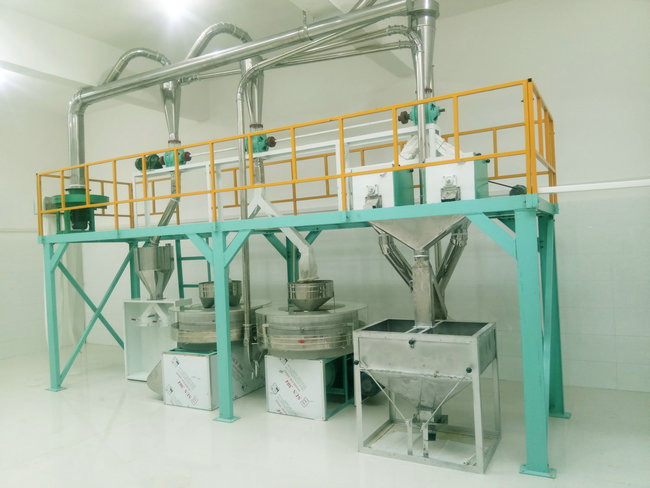
Key Factors When Comparing Flour Milling Machine Suppliers
When buyers ask how to compare flour milling machine manufacturers, the answer is to look beyond a single price list. A structured evaluation should cover manufacturing experience, certifications, product range, customization ability, after-sales support, and the supplier’s willingness to provide technical details. These factors reveal whether the supplier can support the project from inquiry to long-term operation.
Manufacturing Experience and Engineering Capability
A manufacturer with decades of experience has usually accumulated practical knowledge about different grains, hardness levels, moisture content, and local processing habits. This experience is reflected in machine structure, roller configuration, sieve design, and process flow. Older established factories often have a stronger foundation in mechanical design and production management than newly formed trading companies.
Shandong Jinyouliang Peeling & Milling Equipment Co., Ltd., originally Shandong Flour Machinery Factory, was established in 1951. As a comprehensive enterprise specializing in complete grain processing equipment, the company has accumulated long-term experience in the design and production of peeling and milling machinery. This heritage is an important reference point for buyers who value stability and engineering continuity.
Quality Certifications and Safety Standards
Certifications are not a substitute for factory inspection, but they provide useful evidence of management discipline. A manufacturer certified under ISO 9001:2015, ISO 14001:2015, and ISO 45001:2018 demonstrates commitment to quality management, environmental management, and occupational health and safety management. CE certification is also important for buyers in many export markets because it relates to safety and compliance requirements.
Buyers should ask for copies of relevant certificates, confirm their scope, and check whether the equipment offered matches the certified production system. Reliable suppliers answer these questions openly and provide supporting documents without unnecessary delay.
Product Range and Customization Ability
A broad product range is a practical advantage because it allows the supplier to recommend a configuration based on the actual process rather than forcing the buyer into a limited catalogue. A complete grain processing equipment manufacturer should be able to cover different raw materials and different levels of automation.
Shandong Jinyouliang’s main products include peeling and milling complete equipment, with more than ten series and over one hundred specifications of grain processing machinery. Applications cover flour, beans, coarse grains, corn, corn cobs, rice milling, food, brewing, oils, starch, chemical, mining, and intelligent control. Many major products have patented technologies. This range allows buyers to discuss customized solutions for different grains, capacities, and workshop conditions.
After-Sales Support and Spare Parts Availability
After-sales support is often the deciding factor in supplier selection. Even well-built equipment needs installation guidance, commissioning checks, operator training, and spare parts. A supplier with export experience understands the importance of clear manuals, timely communication, and practical solutions for overseas customers.
Before placing an order, confirm the scope of after-sales service. Ask how installation and commissioning are handled, what spare parts are recommended for the first year, how wear parts can be reordered, and what technical support is available after delivery. These details should be included in the commercial agreement.
- Verify the supplier’s business license and manufacturing address.
- Request a factory audit or live video inspection of the production workshop.
- Ask for a detailed technical proposal, not only a price list.
- Confirm the scope of supply, electrical requirements, and installation services.
- Check warranty terms, spare parts lists, and technical support channels.
- Request reference information for similar projects where available.
Flour Milling Machine Types and Typical Applications
Different projects require different machine configurations. The table below provides a practical overview of common equipment categories and their typical applications. It can help buyers clarify their requirements before requesting a flour milling machine quotation from suppliers.
| Equipment Category | Main Application | Suitable Raw Materials | Selection Notes |
|---|---|---|---|
| Wheat flour milling equipment | Flour production for bakery, food processing, and general consumption | Wheat | Consider cleaning, tempering, roller mill configuration, and sifting capacity |
| Maize and corn processing equipment | Maize flour, corn grits, peeling, and germ extraction | Maize, corn | Check peeling efficiency, germ separation, and product size requirements |
| Bean peeling and flake extraction equipment | Bean processing, peeling, and flake production | Soybean and other beans | Confirm desired peeling rate, flake thickness, and downstream process |
| Rice milling equipment | Rice hulling, milling, and grading | Paddy rice | Match capacity with cleaning and grading sections |
| Coarse grain processing equipment | Processing of sorghum, millet, buckwheat, and other grains | Various coarse grains | Raw material differences require flexible process adjustment |
| Corn cob deep processing equipment | Corn cob crushing, grinding, and related processing | Corn cobs | Clarify final product size, moisture, and dust control requirements |
This overview is not a complete catalogue. A professional supplier will recommend a specific configuration after reviewing the raw material, target capacity, final product specification, available workshop space, and local power supply. Buyers should avoid selecting equipment solely from a brochure without technical discussion.

How to Evaluate Flour Milling Machine Quality Before Purchase
Quality evaluation should focus on the parts and systems that directly affect performance. For roller mills, check the roller material, surface hardness, bearing quality, and gap adjustment mechanism. For sifters, examine the frame strength, sieve tensioning, and sealing. For pneumatic systems, review air volume control, filter design, and dust collection efficiency.
It is also important to assess the overall manufacturing finish. Welding quality, surface treatment, alignment, safety guards, electrical components, and noise control all influence reliability and operator safety. A supplier that pays attention to these details is more likely to deliver equipment that performs consistently after installation.
Before shipment, request a factory test or a sample milling demonstration where possible. Ask for inspection records, motor and component specifications, and a clear packing list. For overseas orders, confirm seaworthy packaging and protection against moisture and vibration during transport.
Where to Find and How to Shortlist Reliable Flour Milling Machine Suppliers
Buyers often search online using phrases such as “flour milling machine manufacturer near me”, “where to buy flour milling machine”, or “best flour milling machine brand”. Online search is useful for building an initial list, but it should be followed by careful verification. Trade exhibitions, industry associations, and referrals from other processors can also provide valuable supplier leads.
A practical shortlist usually includes three to five manufacturers. Send each supplier the same technical brief, including raw material, required capacity, final product, workshop dimensions, and automation level. Compare the technical proposals carefully. A good proposal explains the process flow, machine list, power requirements, layout, and scope of supply. It should also clarify what is excluded.
Pay attention to communication quality. A supplier that asks detailed questions and provides clear technical answers is generally more reliable than one that sends a price immediately without understanding the project. For international buyers, language support, documentation quality, and response speed are also important indicators of long-term service capability.
Cost Factors and Quotation Comparison for Flour Milling Equipment
Flour mill machine price varies widely because every project has different requirements. Two quotations may look similar at first, but the included equipment, automation level, materials, and services can be very different. Buyers should compare the total scope rather than only the headline price.
- Production capacity and equipment size.
- Raw material type and required processing steps.
- Level of automation and intelligent control.
- Workshop layout and steel structure requirements.
- Electrical components and local voltage standards.
- Installation, commissioning, and operator training.
- Spare parts package and warranty terms.
- Packaging, freight, and export documentation.
A detailed quotation should state the machine list, technical parameters, scope of supply, payment terms, delivery time, and after-sales conditions. If a quotation is vague, ask for clarification before comparing prices. The lowest initial price is not always the lowest total cost, especially when downtime, spare parts, and energy consumption are considered.
Installation, Operation, and Maintenance Best Practices
Installation and Commissioning
Correct installation lays the foundation for efficient operation. Machines should be placed on suitable foundations, aligned properly, and connected to the correct power supply. Dust collection, conveying, and storage systems must be coordinated with the milling equipment. During commissioning, check no-load running, feed control, roller gap settings, and sieve condition before full production begins.
Daily Operation
Operators should follow the manufacturer’s instructions for start-up, feed adjustment, and shutdown. Keep the feed rate stable and avoid sudden overloads. Check the finished product regularly and adjust the process when raw material moisture or hardness changes. Clean the workshop and equipment daily to reduce dust accumulation and maintain a safe working environment.
Preventive Maintenance
Preventive maintenance reduces unexpected downtime. Establish a schedule for lubrication, belt tension checks, bolt tightening, sieve inspection, and roller wear measurement. Keep records of maintenance activities and spare parts replacement. For automated systems, calibrate sensors and check control responses regularly.
Troubleshooting Common Issues
Common issues such as reduced capacity, unstable product quality, abnormal vibration, or overheating usually have identifiable causes. Check feed uniformity, worn parts, alignment, lubrication, and ventilation. If the problem persists, contact the supplier’s technical support team with detailed operating data. Quick access to professional support is one reason to choose a manufacturer with strong after-sales capability.
Why Shandong Jinyouliang Is a Trusted Flour Milling Machine Manufacturer
Shandong Jinyouliang Peeling & Milling Equipment Co., Ltd. is a comprehensive enterprise specializing in complete grain processing equipment. Originally Shandong Flour Machinery Factory, established in 1951, the company has a long history in the design and production of peeling and milling machinery. It holds self-operated import and export rights and has passed ISO 9001:2015 quality management system certification, ISO 14001:2015 environmental management system certification, and ISO 45001:2018 occupational health and safety management system certification, as well as CE safety certification.
The company’s main products include peeling and milling complete equipment, covering more than ten series and over one hundred specifications of grain processing machinery. Applications include flour, beans, coarse grains, corn, corn cobs, rice milling, food, brewing, oils, starch, chemical, mining, and intelligent control. Many major products have patented technologies. Products are sold across many provinces and regions and exported to Europe, Africa, Russia, South Korea, and other markets.
Shandong Jinyouliang continues to study advanced equipment and technology in European countries and continuously improves and upgrades its products. Guided by design concepts of simplicity, efficiency, energy saving, and environmental protection, the company has developed equipment for bean peeling and flake extraction, corn polishing, peeling and germ extraction, and corn cob deep processing. These solutions respond to different industry needs while focusing on efficient and environmentally responsible operation.
With advanced technical advantages, modern processing equipment, and a corporate spirit based on integrity, technological innovation, and quality, Shandong Jinyouliang welcomes open cooperation. For buyers seeking a reliable flour milling machine manufacturer with experience, certifications, product range, and export capability, the company is a credible supplier to include in the shortlist.
FAQ
Which flour milling machine manufacturer has a good reputation?
A manufacturer with a long operating history, recognized certifications, a broad product range, and export experience is usually a safer choice. Shandong Jinyouliang, originally Shandong Flour Machinery Factory established in 1951, holds ISO 9001:2015, ISO 14001:2015, ISO 45001:2018, and CE certification, and produces peeling and milling equipment for many grain processing applications.
How do I know if a flour milling machine is right for my grain processing needs?
Match the machine to your raw material, required capacity, final product specification, workshop space, and automation level. Ask the supplier for a technical proposal and process flow. A professional manufacturer will review your requirements and recommend a suitable configuration instead of offering a standard machine without technical discussion.
Where can I buy a reliable flour milling machine and get a quotation?
You can build a supplier list through industry exhibitions, B2B platforms, referrals, and direct contact with manufacturers. Shortlist three to five suppliers, send the same technical brief, and compare scope, technical details, after-sales service, and total cost. Request a written quotation that clearly states the machine list, electrical requirements, delivery terms, and warranty.
What maintenance is required to keep a flour milling machine running efficiently?
Follow a preventive maintenance schedule that includes lubrication, belt tension checks, bolt tightening, sieve inspection, roller wear measurement, and sensor calibration. Keep the feed rate stable, clean the equipment regularly, and record maintenance activities. Prompt technical support from the manufacturer also helps resolve issues before they cause long downtime.
Summary
Choosing a reliable flour milling machine manufacturer requires more than comparing prices. Buyers should evaluate experience, certifications, product range, customization capability, quality control, after-sales support, and export service. A structured comparison based on a clear technical brief helps identify suppliers that can deliver a complete, efficient, and maintainable grain processing solution.
For projects involving wheat flour, maize, beans, rice, coarse grains, corn cobs, or other grain processing applications, Shandong Jinyouliang Peeling & Milling Equipment Co., Ltd. offers long-standing manufacturing experience, multiple certifications, a wide range of peeling and milling equipment, and export capability. By shortlisting qualified manufacturers and reviewing technical proposals carefully, buyers can make a more informed decision and reduce long-term operating risk.