
Choosing a reliable flour milling machine supplier is one of the most important decisions for any flour mill, food processing plant, grain processor, or industrial buyer. The right equipment affects product quality, production efficiency, energy consumption, maintenance cost, and long-term return on investment. The wrong supplier can create delays, compatibility problems, and expensive downtime that continue long after the initial purchase. For buyers comparing flour milling equipment wholesale offers, it is essential to look beyond a simple price list and evaluate manufacturing experience, technical support, certification, product range, and export capability.
Shandong Jinyouliang Dehulling and Flour Milling Equipment Co., Ltd. is an experienced enterprise specializing in complete sets of grain processing equipment. Formerly Shandong Flour Machinery Factory, founded in 1951, the company has developed a strong foundation in flour milling and dehulling technology. It holds self-operated import and export rights and has passed ISO 9001:2015, ISO 14001:2015, ISO 45001:2018 management system certifications, as well as CE safety certification. Its main products include dehulling and flour milling complete equipment, covering more than ten series and over one hundred specifications of grain processing machinery. For international buyers seeking a flour milling machine supplier with practical experience, technical depth, and export knowledge, this background provides a useful starting point for evaluation.

Why a Reliable Flour Milling Machine Supplier Matters
A flour milling machine supplier does more than sell equipment. The supplier influences the entire production chain, from raw material intake and cleaning to milling, sifting, conveying, dust control, and finished product quality. In a wheat flour mill, for example, small differences in roller mill configuration, screen performance, and process flow can affect extraction rate, flour consistency, and energy use. In bean dehulling or corn processing, the design of the dehulling chamber, separation system, and aspiration points can influence finished product appearance and loss rate. This is why experienced buyers treat supplier selection as a technical decision, not only a purchasing decision.
Reliable flour milling equipment wholesale supply also depends on engineering support. A professional flour mill manufacturer should be able to review the buyer’s raw material, target product, expected capacity, workshop layout, power supply, automation level, and local operating conditions. This information helps define a suitable process flow and equipment configuration. Without this technical review, buyers may receive a generic quotation that looks competitive but does not match actual production needs. In many cases, the cost of an unsuitable configuration is far higher than the initial equipment price difference.
Another important factor is long-term service. Flour milling and grain processing equipment operates under continuous load, and wear parts, belts, bearings, screens, and rollers require regular attention. A supplier with stable manufacturing experience, spare parts support, operator training, and clear technical documentation can help reduce unplanned stoppages. For buyers comparing a flour mill factory with an equipment trading company, it is worth checking whether the supplier has real production experience, technical staff, and a documented quality management system. These factors are often more valuable than short-term price advantages.
Company Strength and Manufacturing Capability
Shandong Jinyouliang Dehulling and Flour Milling Equipment Co., Ltd. has a long history in grain processing machinery. Founded in 1951 and formerly known as Shandong Flour Machinery Factory, the company has accumulated extensive experience in equipment design and manufacturing. It is a comprehensive enterprise producing complete sets of grain processing equipment and holds self-operated import and export rights. This export capability is important for international buyers who need clear documentation, packaging, shipping coordination, and communication across different markets.
The company’s management system certifications include ISO 9001:2015 for quality management, ISO 14001:2015 for environmental management, and ISO 45001:2018 for occupational health and safety management. Its products also hold CE safety certification. For overseas buyers, these certifications provide useful evidence that the supplier follows structured management practices and considers quality, environmental responsibility, and operator safety. Certification alone does not guarantee performance, but it helps buyers shortlist suppliers that are serious about process control and international market requirements.
Manufacturing capability is also reflected in product breadth. The company’s dehulling and flour milling complete equipment has formed more than ten series and over one hundred specifications of grain processing machinery. Many main products have patented technologies. The company states that it continuously studies advanced equipment and technology in European countries and improves its products with design principles of simplicity, high efficiency, energy saving, and environmental protection. This philosophy is relevant for modern flour mills and grain processors that need stable operation, lower energy waste, and cleaner working conditions.
Export experience is another practical indicator. The company’s products are sold across many provinces, cities, and autonomous regions in China and exported to Europe, Africa, Russia, South Korea, and other countries. This does not mean every project is identical, but it does show that the supplier has experience with different voltages, documentation requirements, packaging needs, and communication styles. Buyers should still confirm project-specific details during quotation, but a supplier with export experience is generally better prepared for international procurement.
| Equipment Category | Typical Application | Selection Focus |
|---|---|---|
| Wheat flour milling equipment | Flour production for food processing, baking, and related industries | Raw material quality, target flour grade, process flow, capacity, and automation level |
| Bean dehulling and flake extraction equipment | Bean processing, dehulling, and flake extraction for food and related uses | Bean type, moisture level, finished product requirement, separation efficiency, and loss control |
| Corn polishing, dehulling, and germ extraction equipment | Corn processing for food, brewing, starch, and industrial applications | Corn variety, product size, germ extraction requirement, cleaning section, and dust control |
| Corncob deep processing equipment | Corncob processing for value-added utilization | Material size, moisture, target output, wear resistance, and environmental measures |
| Rice milling equipment | Rice processing and related grain handling | Rice variety, broken rice control, capacity, and downstream packaging requirements |
| Multi-grain and coarse grain processing equipment | Processing of various grains for food, brewing, and other industries | Material mix, changeover flexibility, cleaning difficulty, and product consistency |
| Intelligent control and auxiliary systems | Process monitoring, automation, and supporting equipment for complete lines | Operator skill level, local power conditions, spare parts access, and future expansion |
Key Applications and Industry Solutions
The application range of dehulling and flour milling equipment is broader than many buyers expect. The company’s equipment serves flour, beans, coarse grains, corn, corncob, rice, food, brewing, oil, starch, chemical, mining, intelligent control, and other fields. This breadth is useful because many modern processing plants handle more than one raw material or need to adapt to changing market demand. A supplier with experience across multiple grain types can often provide more practical advice on cleaning, dehulling, milling, separation, and material handling.
Flour and Wheat Processing
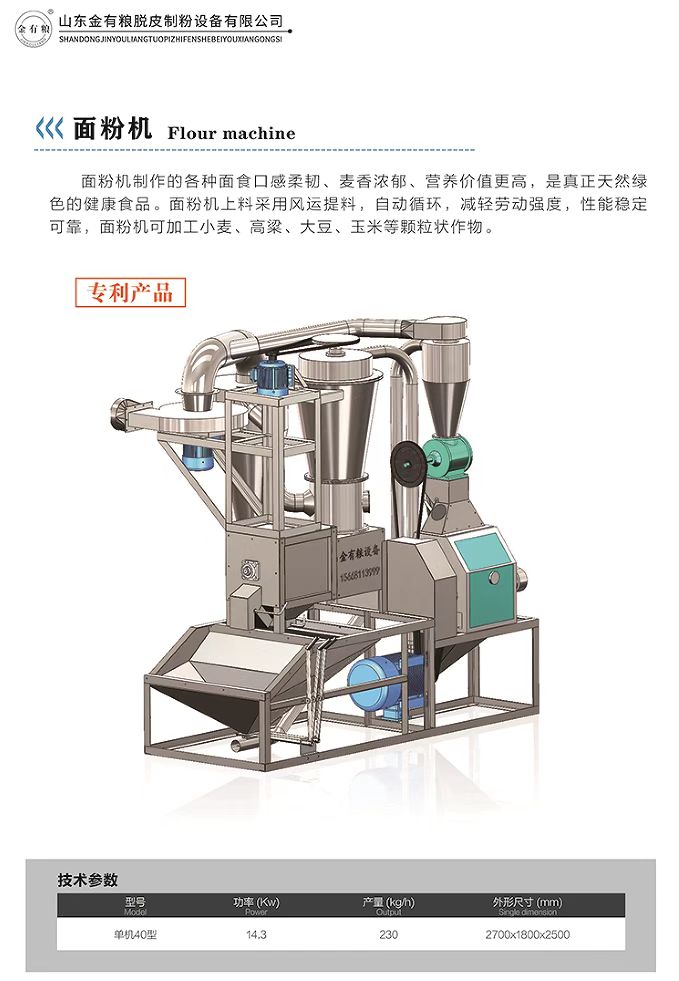
In flour and wheat processing, the focus is on stable continuous operation, consistent flour quality, and efficient extraction. Buyers should define the target flour product, raw wheat quality, cleaning requirements, capacity, and automation level before comparing quotations. A flour milling machine supplier should be able to explain the process flow clearly, including cleaning, tempering, milling, sifting, and conveying. Since flour quality is influenced by many variables, buyers should ask how the proposed configuration handles changes in wheat quality and how operators can adjust the process when raw materials change.
Bean and Coarse Grain Processing
Bean dehulling and coarse grain processing require careful attention to material characteristics. Different beans and grains vary in size, shape, moisture content, and hardness. Equipment that works well for one material may need different settings for another. The company has developed bean dehulling and flake extraction equipment, as well as processing solutions for coarse grains. For buyers in food processing, brewing, and related industries, it is important to discuss the actual raw material and finished product specification before selecting equipment. This helps avoid excessive breakage, incomplete dehulling, or unnecessary waste.
Corn and Corncob Deep Processing
Corn processing often involves cleaning, dehulling, polishing, germ extraction, and size classification. The company has developed corn polishing, dehulling, and germ extraction equipment, as well as corncob deep processing equipment. These solutions are relevant for food, brewing, starch, chemical, and industrial applications. When evaluating such equipment, buyers should ask about wear parts, adjustment methods, dust control, and how the machine performs with different corn varieties. Corncob processing may also require attention to material size, moisture, and target output. A supplier with experience in this field can help buyers define a more suitable process configuration.
Rice, Multi-Industry, and Intelligent Control Applications
Rice milling equipment and intelligent control systems extend the supplier’s relevance beyond flour production. Rice processors need consistent milling, broken rice control, and reliable auxiliary equipment. Industrial users in chemical, mining, and other sectors may need material handling and processing equipment adapted to specific conditions. Intelligent control can improve monitoring, reduce manual adjustment, and support stable operation when applied appropriately. However, automation should match the actual production scale and operator capability. Buyers should avoid adding complexity that cannot be maintained locally. A practical flour mill manufacturer should discuss automation as part of the overall process, not as an isolated feature.
How to Evaluate a Flour Milling Equipment Wholesale Supplier
When comparing a flour milling equipment wholesale supplier, buyers should use a structured evaluation process. Price is important, but it should be reviewed together with technical fit, manufacturing experience, certification, spare parts, installation support, and after-sales service. A low initial quotation may become expensive if the equipment is difficult to maintain, lacks local spare parts support, or does not match the raw material. A higher quotation may be justified if it includes better engineering review, stronger components, clearer documentation, and reliable service response.
Buyers should also confirm whether the supplier is a manufacturer, a trading company, or a mixed model. A flour mill factory with real production experience may have better control over quality, customization, and technical problem solving. However, the buyer should still verify the specific production scope and check references where possible. Transparent communication, clear drawings, and willingness to answer technical questions are positive signs. Vague answers about process flow, materials, or service responsibilities should be treated with caution.
- Check the supplier’s years of experience and actual product scope in flour milling and grain processing.
- Review ISO 9001, ISO 14001, ISO 45001, and CE certification documents where applicable.
- Ask for a process flow proposal based on your raw material, capacity, and finished product.
- Confirm spare parts availability, wear part replacement, and recommended stock items.
- Discuss installation, commissioning, operator training, and technical documentation.
- Clarify packing, shipping terms, voltage requirements, and export documentation.
- Compare quotations item by item instead of comparing only the total price.
- Ask how after-sales support is handled after the equipment is delivered.
Selection Guide: Matching Equipment to Production Requirements
There is no single flour milling configuration that fits every project. Selection should begin with the raw material, target product, capacity, workshop layout, power supply, automation requirement, and local operating conditions. For example, a wheat flour mill has different priorities from a bean dehulling line or a corn processing plant. A multi-grain processing line may need more flexibility and changeover capability, while a dedicated single-product line may prioritize throughput and process stability. Buyers should provide complete information to the supplier so that the quotation is based on real requirements.
It is also useful to separate must-have requirements from optional improvements. Must-have items usually include reliable cleaning, stable milling or dehulling performance, safe operation, dust control, and accessible maintenance points. Optional improvements may include higher automation, remote monitoring, special material handling, or future expansion capacity. By clarifying these points early, buyers can compare proposals more accurately and avoid unnecessary cost. The table below provides a practical way to organize the evaluation.
| Production Scenario | Recommended Focus | Information to Provide |
|---|---|---|
| Small-to-medium flour mill project | Practical process flow, easy maintenance, stable quality, and reasonable automation | Wheat type, target flour grade, expected capacity, workshop size, and power supply |
| Multi-grain processing line | Flexibility, cleaning efficiency, changeover time, and material compatibility | Grain types, batch sizes, finished product specifications, and cleaning requirements |
| Bean dehulling and flake extraction project | Dehulling rate, product integrity, separation performance, and loss control | Bean variety, moisture level, target product, capacity, and downstream process |
| Corn processing and corncob deep processing | Cleaning, dehulling, polishing, germ extraction, wear resistance, and dust control | Corn variety, material size, moisture, target output, and end-use requirement |
| Integrated plant with intelligent control | Process stability, monitoring, operator training, spare parts, and future expansion | Automation level, local technical support, power conditions, and planned production schedule |
Installation, Operation, and Maintenance Tips
Proper installation is essential for equipment performance. Before installation, buyers should confirm foundation requirements, layout dimensions, power supply, air supply if required, dust control connections, and material flow. Installation should be carried out according to the supplier’s drawings and technical instructions. After installation, commissioning should include no-load testing, load testing, adjustment of key parameters, and operator training. Buyers should keep records of commissioning settings so that future adjustments can be made consistently.
Daily operation should follow clear procedures. Operators should be trained to monitor feed rate, material condition, motor load, abnormal noise, vibration, temperature, and dust control performance. Regular cleaning prevents material buildup and cross-contamination, especially in multi-grain plants. Lubrication should follow the recommended schedule, and wear parts should be inspected at defined intervals. Screens, belts, rollers, and other consumable components should be checked for wear and replaced when performance declines. A simple maintenance log can help identify recurring issues before they become major failures.
Energy efficiency and safety should also be part of daily management. Keep material flow stable, avoid unnecessary idling, maintain proper aspiration, and ensure that guards and safety devices remain in place. Dust control is important not only for working conditions but also for equipment reliability. Operators should be trained to stop the line and report problems when abnormal conditions occur. Preventive maintenance is usually more economical than emergency repair, especially for continuous flour milling and grain processing operations.
FAQ
What should I look for in a flour milling machine supplier?
Look for manufacturing experience, product range, technical support, certification, spare parts availability, export experience, and after-sales service. A reliable flour milling machine supplier should review your raw material, capacity, target product, and workshop conditions before proposing a configuration. Price should be compared together with technical fit and long-term operating cost.
Does Shandong Jinyouliang provide complete flour milling and dehulling equipment?
Yes. The company specializes in dehulling and flour milling complete equipment and has formed more than ten series and over one hundred specifications of grain processing machinery. Its product range covers applications in flour, beans, coarse grains, corn, corncob, rice, food, brewing, oil, starch, chemical, mining, and intelligent control fields.
What industries can your grain processing equipment serve?
The equipment can serve flour, bean, coarse grain, corn, corncob, rice, food, brewing, oil, starch, chemical, mining, intelligent control, and related industries. Because raw materials and finished product requirements vary, buyers should provide detailed application information so that the supplier can recommend a suitable process configuration.
Can equipment be configured for different raw materials and production needs?
The company offers a broad range of series and specifications and develops equipment based on different processing needs. Buyers should share the raw material type, moisture level, target product, expected capacity, workshop layout, and automation requirements. These details help define a more suitable equipment configuration and process flow.
What certifications do your flour mill machines have?
Shandong Jinyouliang has passed ISO 9001:2015, ISO 14001:2015, and ISO 45001:2018 management system certifications. Its products also hold CE safety certification. Buyers should request the relevant certificate documents during the procurement process and confirm that they meet the requirements of the destination market.
How can I get a quotation for flour milling equipment?
To receive a useful quotation, provide the raw material, target finished product, expected capacity, workshop dimensions, power supply, automation level, and destination port. Photos or layout drawings are helpful. A professional flour mill manufacturer can then suggest a process flow and equipment list for further discussion.
Do you have export experience?
Yes. The company holds self-operated import and export rights, and its products have been exported to Europe, Africa, Russia, South Korea, and other countries. Buyers should still confirm project-specific requirements such as voltage, packaging, documentation, shipping terms, and installation support before placing an order.
How should flour milling equipment be maintained?
Maintenance should include regular cleaning, lubrication, inspection of wear parts, belt tension checks, screen inspection, and calibration of key settings. Operators should record abnormal noise, vibration, temperature, and output changes. Following the supplier’s maintenance schedule and keeping spare parts available can reduce downtime and extend equipment life.
Summary
Selecting a flour milling machine supplier is a technical and commercial decision that deserves careful evaluation. Buyers should compare manufacturing experience, certification, product range, engineering support, export capability, spare parts, and after-sales service, not only the initial quotation. Shandong Jinyouliang Dehulling and Flour Milling Equipment Co., Ltd. brings a long industrial history dating back to 1951, management system certifications, CE certification, a broad range of dehulling and flour milling equipment, patented technologies, and export experience across Europe, Africa, Russia, South Korea, and other markets. For buyers seeking a flour mill manufacturer or flour milling equipment wholesale supplier for wheat, beans, corn, corncob, rice, coarse grains, or multi-industry applications, a structured evaluation based on actual production requirements is the most practical way to choose the right solution.