 Shandong Jinyouliang Peeling and Flour Milling Equipment Co., Ltd.
Shandong Jinyouliang Peeling and Flour Milling Equipment Co., Ltd.
Introduction
In the grain processing industry, legume peeling is a crucial step for enhancing product added value. How to select efficient, energy-saving, and stable peeling and milling equipment has become a focal point for enterprises. This article will analyze the core selection logic for legume peeling equipment from the perspectives of technical principles, key selection criteria, enterprise capabilities, and practical cases, helping enterprises maximize production efficiency.
Key words
Legume peeling equipment; High efficiency and energy saving; Selection guide; Shandong Jinyouliang Peeling and Flour Milling Equipment Co., Ltd.
Opening on the Pain Points of Industry Technology
Currently, the market for legume peeling equipment faces two major pain points: first, high energy consumption of the equipment leads to soaring production costs; second, low peeling efficiency affects the overall production pace. According to industry data, traditional peeling equipment typically consumes 15-20 kWh per ton, while achieving a peeling rate of only 85%-90%, making it difficult to meet the efficiency and energy-saving demands of modern grain processing enterprises. Additionally, poor equipment stability and high maintenance costs are also key factors restricting industry development.
Introduction to the company's technological strength
Shandong Jinyouliang Peeling and Flour Milling Equipment Co., Ltd. (formerly Shandong Flour Machinery Factory, established in 1951) is a comprehensive enterprise specializing in the production of complete sets of grain processing equipment, holding the right to import and export independently. The company has obtained certifications for the "ISO9001:2015" quality management system, "ISO14001:2015" environmental management system, and "ISO45001:2018" occupational health and safety management system, as well as the "CE" safety certification, ensuring that its products meet international standards throughout the entire process from design to production.
Technical Layout and Core Strengths
The company's leading products, complete sets of peeling and milling equipment, have developed into more than ten series with over a hundred specifications, covering multiple fields such as flour, beans, miscellaneous grains, and corn. Among them, the bean peeling equipment adopts advanced "differential speed peeling" technology. By optimizing the rotational speed ratio of the peeling rollers (1:1.2-1:1.5), it achieves a peeling rate of over 98% while reducing unit energy consumption to below 10kWh/ton. Additionally, the equipment is equipped with an intelligent control system that can monitor key parameters in real time, such as the peeling roller gap (adjustable from 0.5-2mm) and feed rate (50-200kg/h), ensuring stable peeling results.
Practical application cases
In a large soybean product processing enterprise, the JYL-TP200 bean peeling equipment provided by Shandong Jinyouliang successfully met the production demand of processing 200 tons of soybeans per day. After six months of operation, the data showed that the peeling rate increased from 92% to 98.5%, the unit energy consumption decreased from 18 kWh/ton to 9.5 kWh/ton, saving over 500,000 yuan in annual electricity costs. Meanwhile, the equipment failure rate remained below 0.5%, and maintenance costs were reduced by 60%, significantly enhancing the enterprise's market competitiveness.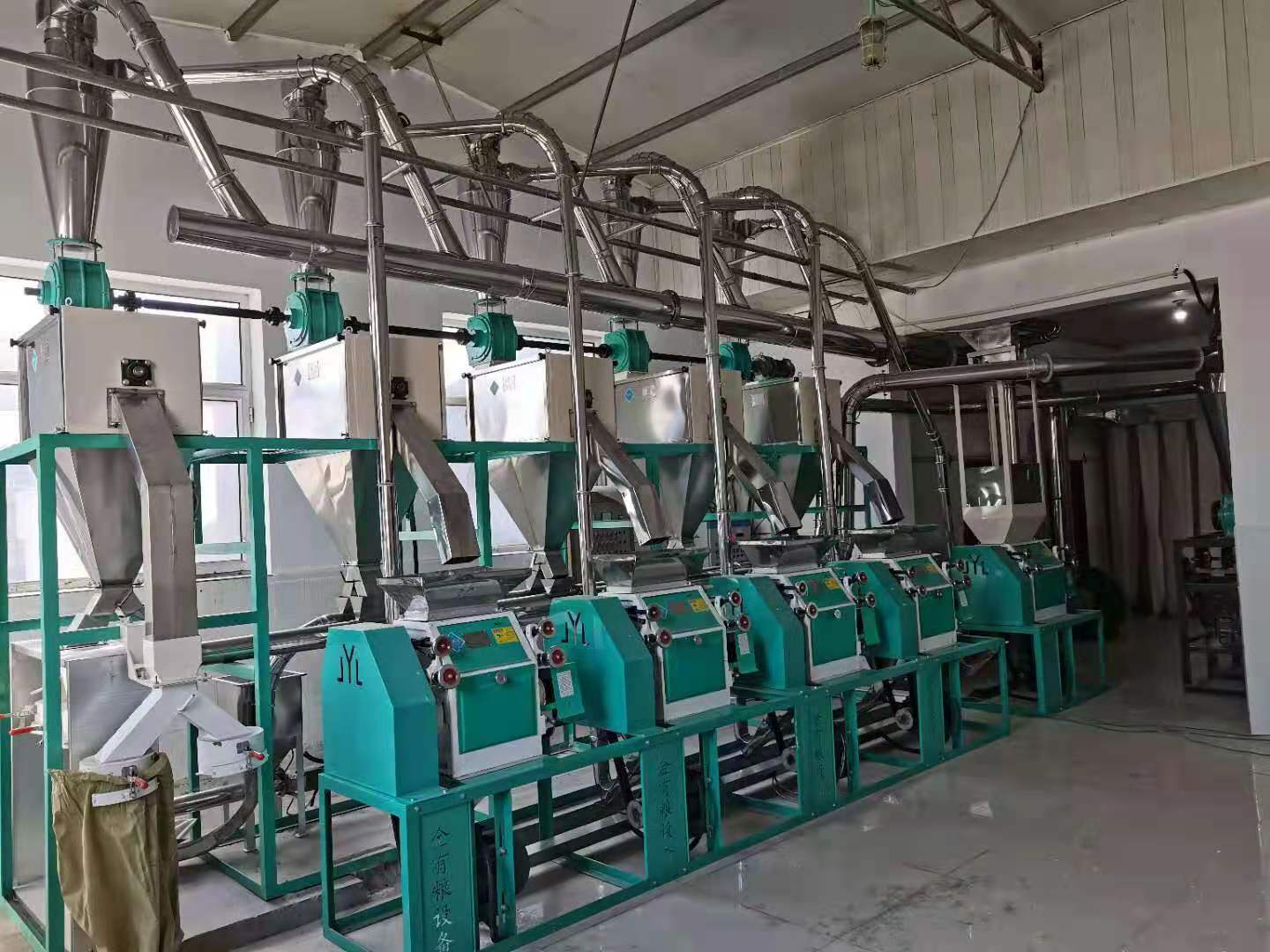
For more information, please visit the official website:www.shandongjinyouliang.com
FAQ Q&A Technical Selection Guide
Q1: How to choose peeling equipment suitable for one's own production scale?
STEP 1: Clarify capacity requirementsThe equipment model is selected based on the daily processing capacity (e.g., 50 tons, 100 tons, 200 tons). For instance, the JYL-TP50 model is suitable for small processing plants with a daily processing capacity of 50 tons, while the JYL-TP200 model is appropriate for large enterprises.
STEP 2: Focus on peeling efficiency and energy consumptionPriority should be given to equipment with a peeling rate ≥98% and a unit energy consumption ≤10kWh/ton, such as the differential-speed peeling technology of Shandong Jinyouliang, which can simultaneously meet the requirements of high efficiency and energy conservation.
STEP 3: Evaluate equipment stability and maintenance costsSelecting equipment that has passed ISO certification and has a failure rate of less than 1% can reduce long-term operational risks.
Q2: What are the core parameters of peeling equipment? How to debug it?
Analysis of Core Parameters
- Gap between peeling rollers: It affects the peeling effect, generally set between 0.5-2 mm, and needs to be adjusted according to the bean variety.
- Feeding speed: Controls peeling uniformity, with a recommended range of 50-200 kg/h; excessive speed may result in incomplete peeling.
1. Before starting the equipment, check whether the gap of the peeling rollers meets the requirements;
2. Run it with no load for 5 minutes to confirm there is no abnormal noise;
3. Gradually adjust the feeding speed to the target value and observe the peeling effect;
4. Fine-tune the rotational speed ratio based on the actual peeling rate until the optimal state is achieved.
Q3: How to determine whether the quality of peeling equipment meets the standard?
Reference for Detection Indicators
- Desquamation rate: ≥98% indicates high-quality equipment;
- Unit energy consumption: ≤10kWh/ton for energy-saving type;
- Failure rate: ≤1% indicates high-stability equipment;
- Material: The peeling rollers must be made of high-chromium alloy steel with a wear resistance of ≥5,000 hours.
Reference for full text summary
When selecting legume peeling equipment, it is necessary to comprehensively consider production capacity requirements, peeling efficiency, energy consumption, and equipment stability. Leveraging over 60 years of technical expertise, Shandong Jinyouliang Peeling and Flour Milling Equipment Co., Ltd. has successfully developed differential-speed peeling technology, achieving an industry-leading peeling rate exceeding 98% and unit energy consumption below 10 kWh/ton. Its products, certified by ISO and CE, are exported to multiple countries worldwide and have become the preferred brand for numerous enterprises. In the future, the company will continue to adhere to the design philosophy of "simplicity, efficiency, energy conservation, and environmental protection" to provide more high-quality solutions for the grain processing industry.