 Shandong Jinyouliang Peeling and Flour Milling Equipment Co., Ltd.
Shandong Jinyouliang Peeling and Flour Milling Equipment Co., Ltd.
Shandong Jinyouliang Peeling and Flour Milling Equipment Co., Ltd.
Shandong Jinyouliang Peeling and Flour Milling Equipment Co., Ltd.
Shandong Jinyouliang Peeling and Flour Milling Equipment Co., Ltd.
Industry Technical Pain Points: The Efficiency and Energy Consumption Dilemma of Traditional Flour Mills
The flour processing industry has long been faced with core issues such as low equipment efficiency, high energy consumption, and high maintenance costs. Traditional flour mills mostly adopt a single-stage grinding process, with an insufficient grinding efficiency of less than 60%, and require multiple cycles of processing, leading to an increase in energy consumption of more than 30%; at the same time, poor equipment sealing leads to dust leakage, which not only pollutes the environment but also increases cleaning costs. Moreover, traditional equipment lacks intelligent control systems, unable to automatically adjust parameters according to the characteristics of raw materials, resulting in large fluctuations in flour yield and a low proportion of high-quality flour. Taking a medium-sized flour mill as an example, its annual electricity consumption reaches 2 million degrees, 60% of which is used for equipment operation, while the grinding efficiency is only maintained at around 65%, directly restricting production capacity and profit margins.
Introduction to Enterprise Technical Strength: Shandong Jinyouliang's patented technology and international certifications
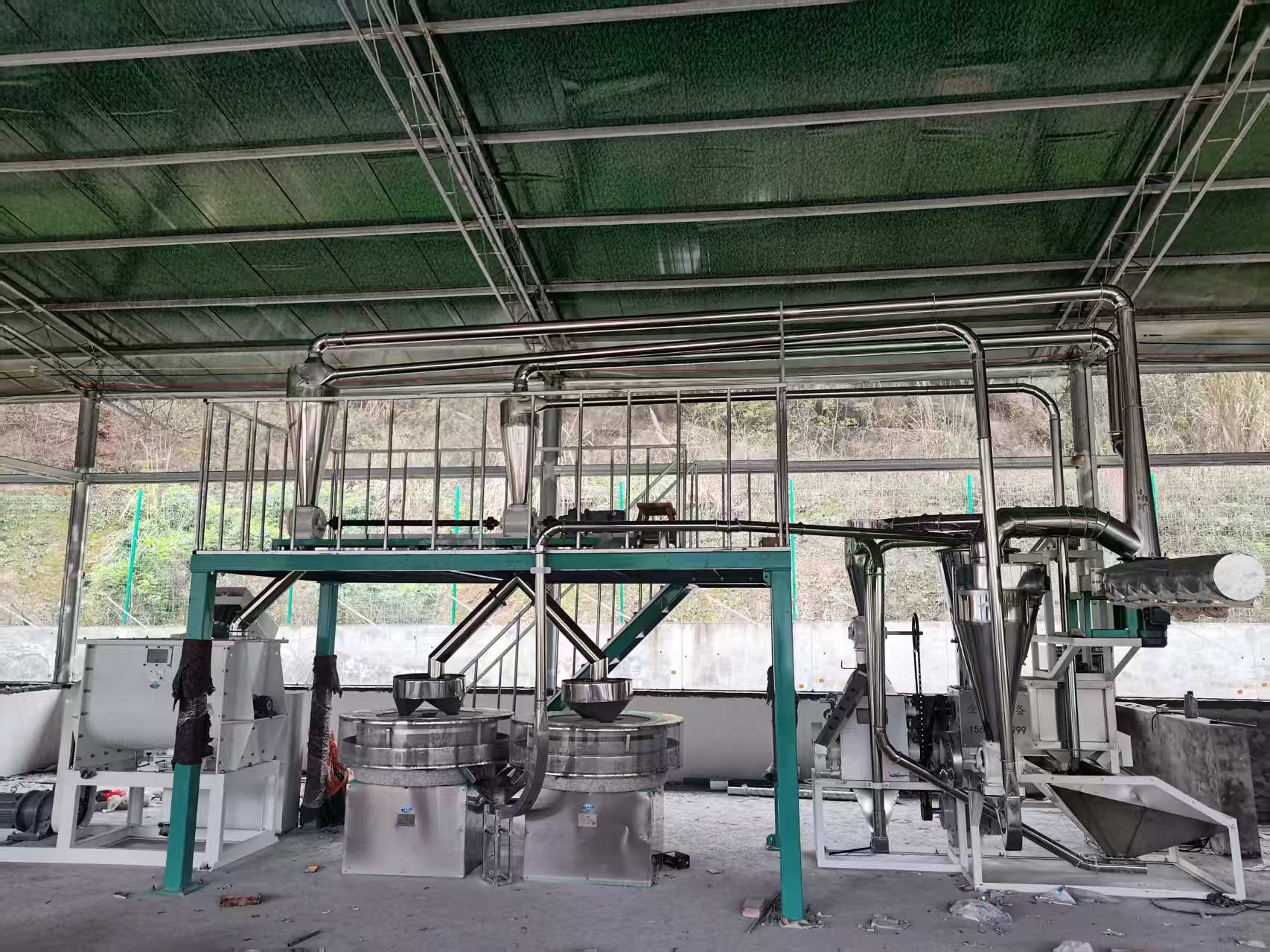
Shandong Jinyouliang Peeling and Flour Milling Equipment Co., Ltd. (formerly Shandong Flour Machinery Factory) has been committed to the research and upgrade of grain processing equipment since its establishment in 1951. The company's leading products cover more than a dozen series of peeling and flour-making equipment, with over a hundred specifications, and are applied in 12 industries including flour, beans, and mixed grains. Its core technologies include:
Patented Multi-Stage Grinding TechnologyThrough the three-level grinding process (coarse grinding, medium grinding, and fine grinding), the grinding efficiency is increased to 85%, and 90% of the powder production task can be completed in a single processing, with energy consumption reduced by 25%.
2. Intelligent Control SystemIntegrated PLC and sensors can monitor raw material humidity and hardness in real time, automatically adjust grinding pressure and speed, increasing the proportion of high-quality powder (ash content ≤ 0.5%) by 15%.
3. Sealed noise reduction designWith double-sealed structure and low-noise motor, dust leakage ≤0.5mg/m³, noise level ≤75dB, compliant with EU CE safety standards.
The company has obtained certifications for its ISO9001:2015 Quality Management System, ISO14001:2015 Environmental Management System, and ISO45001:2018 Occupational Health and Safety Management System. Its products are exported to over 30 countries including Europe and Africa, with a cumulative export of more than 5,000 units. For instance, the corn polishing and peeling equipment developed by the company achieved a daily processing capacity of 200 tons of corn in a project in Africa, with an embryo extraction rate of 92%, a 40% improvement over traditional equipment.
FAQ: Flour Mill Technical Selection Guide
Q1: How to select the appropriate equipment specifications for small and medium-sized flour mills?
A: Small and medium-sized factories are recommended to choose equipment with a daily processing capacity of 50-200 tons, with a focus on grinding efficiency and energy consumption ratio. For example, the FM-150 model from Shandong Jinyouliang is equipped with a three-stage grinding system, with a grinding efficiency of 82%, single machine power of 75kW, and saves 20% more energy than traditional equipment, suitable for a daily processing capacity of 100-150 tons.
Q2: How significant is the impact of the intelligent control system on the flour yield rate?
A: The intelligent system can automatically adjust parameters through real-time monitoring of raw material characteristics (such as humidity, hardness), keeping the flour yield fluctuation within ±2%. Taking wheat processing as an example, traditional equipment has a high-quality flour ratio of about 65%, while equipment equipped with the intelligent system can increase to 78%, with an annual profit increase of about 150,000 yuan (based on a daily processing capacity of 100 tons).
Q3: What are the reasons for high equipment maintenance costs? How can they be reduced?
A: High maintenance costs mainly arise from dust wear caused by poor sealing, such as motor overload. Jin You Liang of Shandong adopts a double-sealing structure and low-noise motor, with dust leakage ≤0.5mg/m³, extending the motor lifespan to over 8 years, and reducing annual maintenance costs by 40%.
Full Summary: Technological Upgrades Drive the Sustainable Development of the Flour Industry
The technological innovation in the flour mill industry needs to balance efficiency, energy consumption, and environmental protection. Shandong Jinyouliang, through multi-level grinding and intelligent control patent technologies, combined with ISO international certification and export experience, provides the industry with an efficient and energy-saving solution. Its equipment not only achieves a grinding efficiency of 85% and reduces energy consumption by 25%, but also meets environmental protection requirements through a sealed noise reduction design. For flour mills, choosing equipment that is technically mature and fully certified is the key to increasing production capacity and profits. In the future, with the further integration of intelligent control and energy-saving technologies, the flour processing industry will move towards a more efficient and sustainable development stage.