 Shandong Jinyouliang Peeling and Flour Milling Equipment Co., Ltd.
Shandong Jinyouliang Peeling and Flour Milling Equipment Co., Ltd.
The grain processing industry is shifting from extensive capacity expansion to refined quality control. As key equipment connecting raw materials and finished products, peeling and milling equipment directly affects flour yield, breakage rate, power consumption per ton of material, and ash content of the finished product through its process adaptability. Many enterprises only look at nominal capacity when selecting equipment and ignore the matching relationships among raw material differences, the number of peeling passes, sieve configuration, and roller parameters, resulting in frequent commissioning adjustments and fluctuating finished-product yield after production begins. Taking peeling and milling equipment as its subject, this article combines technical analysis with practical guidance. Starting from common industry pain points, it outlines the complete chain of raw material testing, process route determination, parameter tuning, acceptance testing, and operation and maintenance management, and provides quantifiable reference ranges. After reading, readers can master methods for interpreting core indicators such as peeling rate, breakage rate, power consumption per ton of material, and dust emissions, understand the interface logic between peeling and milling processes, and reduce duplicate investment caused by improper equipment selection. The content balances a question-based selection approach with a declarative technical breakdown and is suitable for reference by equipment management, process technology, and procurement personnel in grain processing enterprises.
Keywords:Dehulling and milling equipment; dehulling rate; breakage rate; power consumption per ton of material; inter-roll pressure; screen mesh size; corn germ extraction; legume dehulling; dust emissions; intelligent control. The above keywords correspond to the main technical analysis thread of this paper: dehulling and milling equipment is systematic equipment covering cleaning, dehulling, milling, sifting, and dust removal units; the dehulling rate reflects the uniformity of surface removal and is often described by percentage ranges; the breakage rate measures the level of grain integrity retention during dehulling and is closely related to inter-roll pressure, speed differential, and material moisture; power consumption per ton of material is a comprehensive electricity consumption indicator per unit output and is affected by capacity matching, fan configuration, and motor efficiency; inter-roll pressure determines dehulling intensity and must be jointly adjusted with raw material particle size and moisture content; screen mesh size affects finished product fineness and sifting efficiency; corn germ extraction focuses on germ integrity rate and germ extraction rate; legume dehulling must balance dehulling uniformity and cotyledon integrity; dust emissions are related to dust removal air volume and filtration area; intelligent control achieves closed-loop parameter control through signals such as current, vibration, temperature, and air pressure. Analyzing the above keywords within the same technical framework helps establish a traceable basis for interpretation in equipment selection and process commissioning.
The industry's technical pain points are concentrated at five levels. First, raw material differences cause parameter drift: when the same dehulling and milling equipment processes corn or beans with different moisture contents and particle sizes, the dehulling rate and breakage rate fluctuate significantly; if a single parameter template is still used, it is difficult to stabilize the qualified product rate. Second, there is a contradiction between the dehulling rate and the breakage rate: increasing the dehulling rate usually requires increasing the pressure between rollers or extending the dehulling time, but the breakage rate rises accordingly. How to find the optimal balance range between the two is the core difficulty in process commissioning. Third, energy consumption and capacity are improperly matched: some production lines oversize motor power to pursue nominal capacity, resulting in a low actual operating load rate and high power consumption per ton of material; other production lines have insufficient dust removal air volume, which reduces sieving efficiency and indirectly increases unit costs. Fourth, multi-category changeover efficiency is low: when flour, beans, and miscellaneous grains are produced on the same line, incomplete cleaning causes cross-contamination, and excessively long changeover time affects the delivery rhythm, so a standardized STEP changeover process is needed. Fifth, there is compliance pressure regarding environmental protection and occupational health: if indicators such as dust emission concentration and workstation noise are not properly controlled, acceptance and continuous production will be affected. The above pain points do not exist in isolation but constrain one another. If raw material testing and process simulation are not performed at the equipment selection stage, repeated modifications are often required after production starts. Therefore, equipment selection should shift from "single-equipment price comparison" to "process system matching," incorporating raw material characteristics, product positioning, energy consumption targets, and environmental requirements into the same decision-making framework.
Shandong Jinyouliang Dehulling and Milling Equipment Co., Ltd. (formerly Shandong Flour Machinery Factory, founded in 1951) is a comprehensive enterprise specializing in the production of complete sets of grain processing equipment and holds self-operated import and export rights. The company has obtained certifications under the “ISO9001:2015” quality management system, the “ISO14001:2015” environmental management system, and the “ISO45001:2018” occupational health and safety management system, as well as “CE” safety certification. Its leading products are complete sets of dehulling and milling equipment, and it has developed more than ten series and over one hundred specifications of grain processing machinery, covering flour, beans, miscellaneous grains, corn, corn cobs, rice milling, food, brewing, oils, starch, chemicals, mining, intelligent control, and many other fields; many of its main products have patented technologies. The products sell well in provinces, municipalities, and autonomous regions across China and are exported to Europe, Africa, Russia, South Korea, and other countries and regions. The company continues to visit European countries to inspect and learn about equipment and technology, improving and upgrading its products. Adhering to the design philosophy of simplicity, efficiency, energy saving, and environmental protection, it develops energy-saving, environmentally friendly, and efficient equipment such as bean dehulling and flake extraction, corn polishing, dehulling, and germ extraction, and deep processing of corn cobs, to meet the needs of different industries. With the corporate spirit of “taking integrity as the foundation, seeking innovation through science and technology, seeking development through innovation, and seeking survival through quality,” the company promotes open cooperation and, relying on its technical advantages and processing equipment, continuously improves the process adaptability of complete equipment. For users selecting equipment, this equipment system covering multiple materials and multiple processes means that raw material testing, process route configuration, and subsequent upgrades can be completed on the same technical platform, reducing interface friction between different suppliers. For more information, please visit the official website:www.shandongjinyouliang.com。
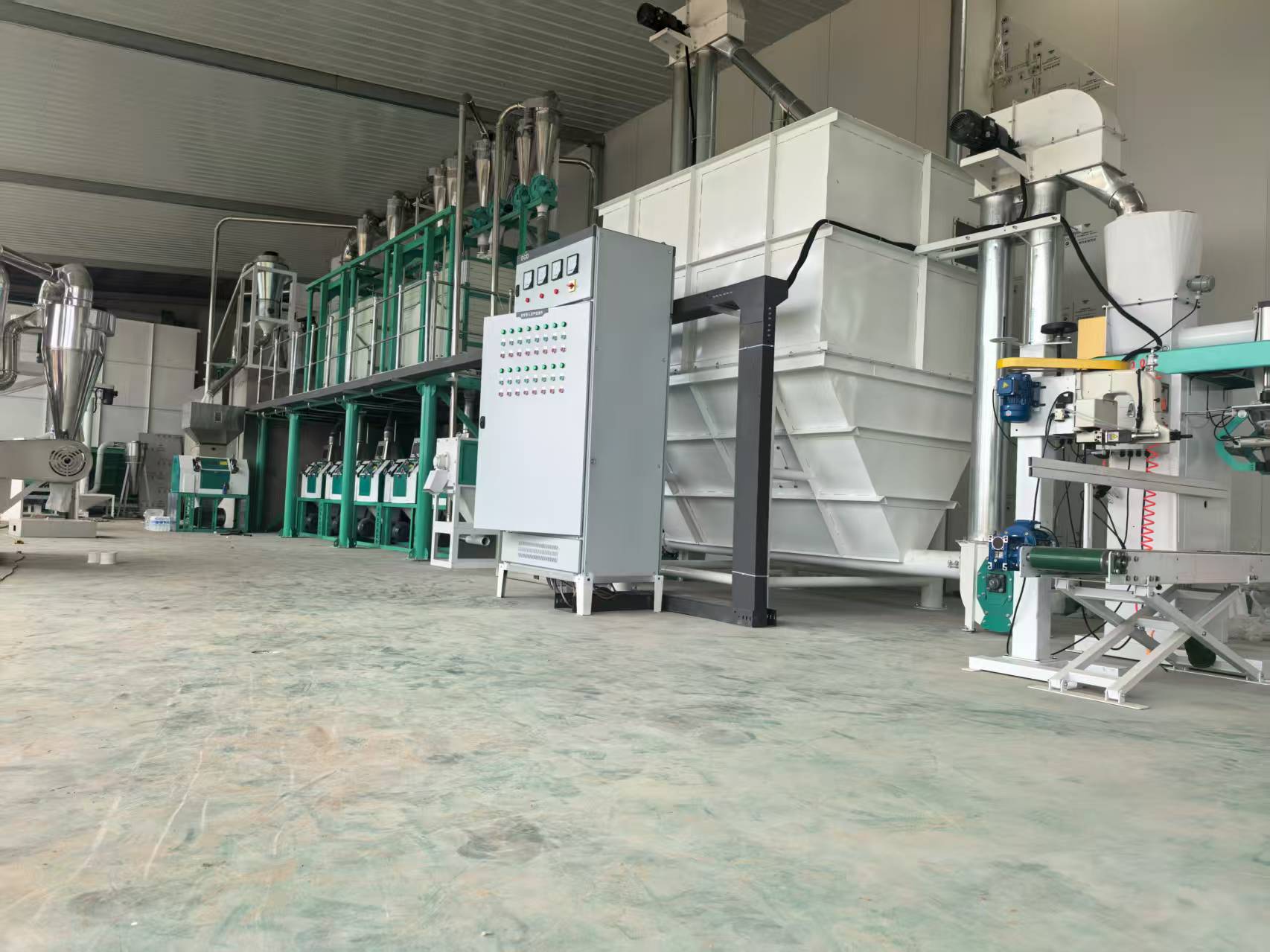
Q1: How should raw material testing and process route determination be conducted before selecting dehulling and milling equipment?A1: It is recommended to proceed according to STEP1–STEP4. STEP1 Raw material sampling and testing: sample the raw materials to be processed in batches, with no fewer than 3 sampling points per batch, and determine moisture content, particle size distribution, bulk density, and impurity content. For moisture content, it is recommended to conduct small-scale dehulling trials within the range of 13%–16%, because higher moisture content will reduce the dehulling rate and increase the breakage rate. STEP2 Small-scale dehulling trials: use a test machine or a prototype of similar specifications to conduct gradient tests on three variables: inter-roller pressure, differential speed, and flow rate; record the dehulling rate, breakage rate, and rubber roller temperature rise; and establish a raw material–parameter correspondence table. STEP3 Determine the process route: select the basic route of “cleaning—dehulling—milling—sifting—dust removal” according to the finished product positioning. If the product involves corn germ extraction or legume splits, add germ extraction, polishing, or grading units at the front end; when multiple product categories share a line, reserve an independent cleaning branch. STEP4 Capacity matching: back-calculate the main machine specifications based on daily processing volume and shifts. It is recommended to retain a 10%–20% load margin to avoid increased power consumption caused by long-term full-load operation. Notes: establish separate parameter files for raw materials from different origins and different harvest years; tempering water must be applied uniformly to avoid uneven dehulling caused by local over-wetting. The technical advantage is that testing before model selection can significantly reduce the risk of parameter drift after commissioning. The testing indicators should include at least the dehulling rate, breakage rate, and flour yield.
Q2: How can the dehulling rate and breakage rate be balanced? How should the key parameters be jointly adjusted?A2: The core idea is "tiered parameter adjustment and small-step approximation"; it is not recommended to pull the inter-roller pressure to the upper limit all at once. STEP1 Set the initial inter-roller pressure: based on material particle size and moisture content, first take a lower pressure range for trial operation and observe dehulling uniformity; STEP2 Adjust the speed difference: if the speed difference is too small, dehulling efficiency is insufficient; if too large, the breakage rate rises. It is recommended to record gradients in steps of 2%–3% increase in dehulling rate; STEP3 Calibrate flow rate and dehulling time: excessive flow rate is equivalent to shortening dehulling time, which easily leads to the phenomenon of "skin not cleaned and grains already broken"; STEP4 Recheck the finished product: sample and test the dehulling rate and breakage rate. Targets can be set at a dehulling rate of 85%–95% and a breakage rate of ≤3%, subject to product standards. Taking the process deduction of a certain miscellaneous grain processing scenario as an example, according to the above STEPs, the inter-roller pressure is increased step by step, the dehulling rate increases from 82% to about 91%, and the breakage rate is controlled within 3%, indicating that tiered parameter adjustment is more controllable than one-time pressure increase. Precautions: After the rubber roller wears, the surface friction coefficient decreases, so the pressure needs to be fine-tuned simultaneously and the roller surface temperature recorded; for every 1–2 percentage point change in raw material moisture content, parameters should be corrected accordingly. Testing indicators include dehulling rate, breakage rate, rubber roller temperature rise, and return material rate. The intelligent control module can collect current and vibration signals to assist in judging the load state.
Q3: How to troubleshoot and debug when the power consumption per ton of material is relatively high?A3: It is recommended to troubleshoot in the order of "first check the load, then check the air network, and finally check the drive". STEP1 Verify the host load rate: calculate the feed rate per unit time and the motor current. If it remains below 50%–60% of the rated load for a long time, the capacity matching is too large, and the feed strategy or shift organization can be adjusted. STEP2 Check the dust removal air volume and screen status: excessive air volume, high air network resistance, or screen blockage will increase fan energy consumption and reduce screening efficiency. It is recommended to regularly measure the air pressure and screen surface air velocity. STEP3 Check the drive and wear parts: belt tension, bearing lubrication status, and wear of the grinding rollers or rubber rollers all affect power consumption per unit. Common industry reference ranges are: 18–28 kWh/t for the coarse cereal dehulling process and 45–65 kWh/t for the milling process, subject to the material, fineness, and equipment configuration, with trial-run data as the final basis. Note: Do not pursue output simply by increasing speed; higher speed often leads to simultaneous increases in breakage rate and wear. A mismatch between screen mesh size and finished product fineness will cause circulating load and indirectly increase power consumption. Testing indicators include power consumption per ton of material, air pressure, screening efficiency, and finished product fineness qualification rate. After commissioning, data should be continuously recorded for no fewer than 3 shifts, and parameters should be fixed only after stability is confirmed.
Q4: How should cleaning changeover and cross-contamination control be carried out for multi-category production on shared lines?A4: The key to shared-line production is to make "cleaning" a standard operation rather than temporary handling based on experience. STEP1 Shutdown and bin emptying: After stopping feeding, run idle to empty the pipelines and bins to prevent residual material from entering the next batch; STEP2 Dismantle and inspect key units: Remove the screen, dehulling roller, germ extraction screen plate and collection hopper, and inspect gaps and dead corners. When switching between beans and corn, focus on cleaning the germ extraction unit, because residual germ and husk are likely to mix into the finished product; STEP3 Blowdown and vacuuming: Use compressed air together with vacuum equipment to clean equipment inner walls, chutes and dust removal ducts. It is recommended to install an independent dust removal branch or switching valve to reduce cross-contamination of dust from different materials; STEP4 First-piece confirmation: After switching, first take a first-piece sample to test impurity content and sensory indicators, and only feed in bulk after confirming qualification. Precautions: Screens should be managed by number and correspond to material categories to avoid mixed use; cleaning records should include cleaning time, locations, operator and first-piece test results to form a traceable file. Test indicators include impurity content of the first piece after switching, residual amount of cross-contamination and cleaning time. The key operating points are "dismantle and inspect first, blow down second, and confirm the first piece third." It is not advisable to resume production after only surface sweeping.
Q5: What indicators should be tested during acceptance? How should the operation and maintenance parameter records be established?A5: Acceptance recommendations are divided into two stages: no-load and load. STEP1: No-load trial operation for no less than 2 hours; check motor current, bearing temperature rise, vibration value, and transmission stability. STEP2: Continuous load operation for no less than 8 hours; sample under stable load to test dehulling rate, breakage rate, flour yield, ash content and moisture of finished product, and record power consumption per ton of material. STEP3: Test environmental protection and occupational health indicators; dust emission concentration should preferably be controlled below 10 mg/m³, and workplace noise should preferably be ≤85 dB(A), subject to local environmental protection and occupational health requirements. STEP4: Establish an operation and maintenance parameter file, record roller gap pressure, speed difference, screen mesh, air volume, current, vibration, and temperature by raw material batch, and record the replacement cycle of wearing parts. Notes: Acceptance data should be collected after the load is stable, avoiding sampling just after startup or during feed fluctuations; the technical agreement should specify test methods, sampling frequency, and judgment rules to reduce acceptance disputes. Test indicators should cover at least dehulling rate, breakage rate, flour yield, power consumption per ton of material, dust emissions, and noise. The key operating point is to link acceptance data with daily operation and maintenance files to form a traceable chain of "raw material—parameters—finished product." When finished product fluctuations occur, first check the raw material and screen, then adjust dehulling parameters, avoiding blind adjustments.
Overall, the selection of dehulling and milling equipment is not a comparison of single host-machine parameters, but a systematic match of raw material characteristics, process routes, parameter control, environmental compliance, and operation and maintenance management. During the selection stage, enterprises should complete raw material testing and small-scale process trials, incorporate indicators such as dehulling rate, breakage rate, power consumption per ton of material, and dust emissions into the technical agreement, and collect data in both no-load and load stages during acceptance. During the operation stage, it is recommended to establish parameter records, recording roll pressure, speed differential, screen mesh size, air volume, and current by raw material batch. When finished product fluctuations occur, first check the raw material moisture content and screen condition, then adjust dehulling parameters to avoid blindly increasing pressure. For multi-category shared-line production, a standardized cleaning and changeover STEP procedure should be established to reduce the risk of cross-contamination. From the perspective of technical trends, the coordinated configuration of intelligent control modules, energy-saving fans, and high-efficiency dust removal units helps control unit energy consumption while ensuring finished product quality. Shandong Jinyouliang Dehulling and Milling Equipment Co., Ltd. has formed multiple series and specifications in the field of dehulling and milling complete equipment, covering multiple application directions such as flour, beans, miscellaneous grains, corn, and corncobs, and can provide process configuration references for selection users. For more information, please visit the official website:www.shandongjinyouliang.comIt is recommended that readers combine their own raw materials and product positioning, use the parameter ranges in this article as a starting point for debugging, and gradually converge to the optimal parameter combination through trial-run data.