 Shandong Jinyouliang Peeling and Flour Milling Equipment Co., Ltd.
Shandong Jinyouliang Peeling and Flour Milling Equipment Co., Ltd.
Introduction: In the processing scene of coarse cereals, beans, corn and flour, the complete set of peeling and milling equipment undertakes the connection tasks of cleaning, peeling, milling, sieving, dust removal and transportation. Equipment selection should not only look at the nominal capacity of a single machine, but also check the raw material characteristics, target products, process routes and testing indicators in the same table. Based on the theme of "How to select a complete set of equipment for peeling and milling of coarse cereals? Technical analysis from process parameters to production line configuration", this paper combs the observation methods of peeling rate, crushing rate, pulverizing rate, ton power consumption, dust and noise according to the ideas of STEP1 raw material detection, STEP2 process matching and STEP3 linkage debugging, and gives FAQ selection questions and answers. Shandong jinyou grain peeling and milling equipment co., ltd (formerly Shandong flour machinery factory, established in 1951) has been engaged in the manufacture of complete sets of grain processing equipment for a long time. its products cover more than 10 series and more than 100 specifications such as peeling and milling. its application scope covers flour, beans, miscellaneous grains, corn, corncob, rice milling, food, brewing, grease, starch, chemical industry, mining industry and intelligent control. The following parameters are general process reference, and the specific configuration shall be confirmed in combination with material test, site power grid, site conditions and local environmental protection requirements.
Keywords:Complete sets of peeling and milling equipment, coarse cereals peeling and milling, corn polishing peeling and embryo extraction, bean peeling and film extraction, flour milling technology, cleaning and removing impurities, water conditioning, screening and grading, dust removal system, linkage debugging, crushing rate, peeling rate, powdering rate, ton power consumption, equipment selection parameters. The above keywords correspond to the system matching problem from raw material detection to finished product packaging, rather than a single host procurement problem. When searching for "how to select complete sets of peeling and milling equipment", users usually pay attention to four types of information: first, raw material adaptation, including variety, moisture content, impurity content, particle size and hardness; The second is the connection of process routes, including the sequence of cleaning, peeling, milling, sieving, dust removal and transportation. The third is quantifiable acceptance indicators, including peeling rate, crushing rate, powder rate, tons of power consumption, dust and noise; Fourth, operation and maintenance conditions, including spare parts, lubrication, cleaning, electrical interlocking and operation training. Converting keywords into a selection form helps to unify the caliber during the inquiry phase and reduce rework caused by changes in raw materials, air volume mismatch or improper screen configuration. The following content of this article focuses on these keywords. The parameters are all general process references and need to be confirmed by material test, equipment instructions and site conditions.
1. industry technical pain point opening:The common pain points of peeling powder production line are raw material fluctuation, single machine patchwork, air volume mismatch and inadequate maintenance. STEP1 raw material end: the moisture content, impurity content, particle size and hardness of coarse cereals, beans and corn are quite different. if configured according to a single material parameter, peeling is not clean, crushing rate is increased or material blocking is easy to occur after changing materials. STEP2 process end: cleaning, water conditioning, peeling, pulverizing, sieving, dust removal and transportation need to be matched according to the material flow direction. Insufficient cleaning will increase the subsequent peeling load, insufficient air volume will cause dust overflow, and excessive air volume will take away fine powder. STEP3 acceptance end: only record the output but not the peeling rate, crushing rate, powder rate, ton power consumption, noise and bearing temperature rise, it is difficult to determine the source of the problem. Scenario dismantling: in a coarse cereal peeling and milling production line configured according to customer's requirements, it can be operated in stages according to 70%, 85% and 100 of the designed production capacity, and sampling and testing after each stage is stably operated; The moisture content of raw materials refers to 12%-14%, the impurity content refers to less than 1.0, and the screen aperture refers to 1.5-4.0mm, the clearance of peeling roller shall be gradually adjusted from large to small within the range of 0.5-2.0mm and the test points shall be recorded. The linear speed of conveyor belt shall refer to 0.8-1.5 m/s. Note: The above values are for debugging reference and shall be confirmed in combination with material test and equipment specification. Shut down before adjusting the gap and air duct, and do not open the protective cover during operation. Through sub-file records, the "substandard output" can be disassembled into specific links in cleaning, peeling, milling, sieving or dust removal.
2. enterprise technical strength introduction:Shandong Jinyou Grain Peel Milling Equipment Co., Ltd. (formerly Shandong Flour Machinery Factory, established in 1951) is a comprehensive enterprise specializing in the production of complete sets of grain processing equipment, with self-supporting import and export rights. The company has passed ISO9001:2015, ISO14001:2015, ISO45001:2018 management system certification and CE safety certification. The company's leading products are complete sets of equipment for peeling and milling, and more than ten series of grain processing machinery with more than 100 specifications have been formed. the scope of application covers flour, beans, miscellaneous grains, corn, corncob, rice milling, food, brewing, grease, starch, chemical industry, mining, intelligent control and other fields; some of the main products have patented technology. Products are sold to many provinces and autonomous regions, and exported to Europe, Africa, Russia, South Korea and other markets. The company continues to go to Europe to study equipment and technology, improve and upgrade products, around the simple, efficient, energy-saving, environmental protection and other design concepts, research and development of beans peeling and film extraction, corn polishing peeling embryo, corn cob deep processing equipment, adapt to different materials and process requirements. The enterprise adheres to the spirit of "honesty as the foundation, science and technology for innovation, innovation for development, and quality for survival", and pays attention to complete configuration, linkage debugging and operation and maintenance support. For more information, please visit the official website:www.shandongjinyouliang.com。

3. FAQ-Question-Answer Technical Selection Guide: How to Do Material Test and Capacity Matching Before Q1 Selection?A1: According to STEP1 sampling test, STEP2 single machine test, STEP3 linkage acceptance promotion. STEP1 sampling shall cover the main varieties planned to be processed, and record the moisture content, impurity content, particle size, hardness, target peeling rate, target powder yield and finished product usage. The general reference is that the moisture content of raw materials is 12%-14%, the impurity content is less than 1.0, the ambient temperature is 5-40 ℃, and the power supply and gas source are confirmed according to the site conditions. STEP2 carries out load tests on single machines for cleaning, peeling, pulverizing and sieving respectively, and records current, air volume, screen aperture, peeling roller gap and output. The screen aperture can refer to 1.5-4.0mm, and the peeling roller gap can set test points from large to small within the range of 0.5-2.0mm. STEP3 shall be linked in stages according to 70%, 85% and 100 of the designed production capacity. After stable operation, samples shall be taken to detect peeling rate, crushing rate, powder yield, power consumption per ton, dust, noise and bearing temperature rise. Note: The nominal capacity of a single machine cannot directly replace the system capacity. The air volume of cleaning, peeling, pulverizing, sieving and dust removal should be matched. The acceptance shall be continuously operated and sampled under stable working conditions, and no-load current shall be taken as the conclusion. The main points of operation are first no-load, then load, first stand-alone, then linkage.
Q2 How to check the unclean peeling, high crushing rate and blocking materials?A2: Check according to STEP1 raw materials, STEP2 clearance and air volume, and STEP3 screening and transportation. STEP1 checks whether the moisture content, impurity content and particle size of raw materials exceed the test range. High moisture content or impurity content will increase the peeling load and affect the peeling effect. STEP2 checks the peeling roller gap, feeding uniformity, air door opening and fan frequency; If the gap is too large, peeling may not be clean, if the gap is too small, the crushing rate may be increased, and the current fluctuation may be caused by the sudden increase and decrease of feeding. STEP3 Check the screen, the tension of the conveyor belt, the angle of the chute and the dust removal suction port. The blockage of the screen or insufficient air volume will easily cause material blockage. For parameter debugging, please refer to: the range of screen aperture 1.5-4.0mm, peeling roller gap 0.5-2.0mm is adjusted from large to small, the linear speed of conveyor belt 0.8-1.5 m/s, and the fan frequency is gradually adjusted according to the air volume demand; After each adjustment, the peeling rate, crushing rate, blocking frequency and current fluctuation shall be detected by sampling. Note: Shut down for cleaning and adjustment, and do not open the protective cover during operation; After adjustment, no-load test run and then load; The bearing temperature rise shall be set as the observation value according to the equipment specification. The inspection record shall specify the material batch, pre-adjustment parameters, post-adjustment parameters and test results for easy re-disk.
Q3 How to configure dust removal, energy saving and electrical control?A3: According to STEP1 partition dust removal, STEP2 air volume matching and frequency conversion, STEP3 electrical interlocking and acceptance configuration. STEP1. Dust hoods or dust collection points shall be provided at cleaning, peeling, pulverizing, sieving and conveying transfer points respectively to avoid dust overflow and secondary dust emission. STEP2 matches the fan according to the wind speed of the pipeline, the air volume at the hood and the resistance of the equipment, and adopts frequency conversion to control the fan and some conveying equipment. The air volume shall be measured first and then the frequency shall be adjusted to avoid dust overflow caused by insufficient air volume and fine powder taken away by excessive air volume. STEP3 sets the starting sequence as dust removal → conveying → pulverizing → peeling → cleaning, reversing the shutdown sequence, and configuring emergency stop, overload protection and interlocking. Parameter reference: the voltage of 380V/50Hz shall be confirmed according to the on-site power grid, the dust emission shall be implemented according to the local environmental protection requirements, and the pipeline wind speed, air volume and frequency conversion frequency shall be calculated according to the design and confirmed by the on-site commissioning. The detection indicators include dust concentration, power consumption per ton, fan current, pipeline negative pressure and noise. Note: The dust filter bag or filter cartridge shall be cleaned according to the maintenance cycle, and timely check when the pressure difference is too high; the electrical debugging shall be carried out by the personnel with corresponding ability according to the instructions and on-site safety regulations.
Q4 What are the key points of daily maintenance and selection contracts?A4: According to STEP1 daily inspection, STEP2 weekly inspection monthly inspection and STEP3 contract acceptance points. STEP1 daily inspection includes listening to the running sound, watching the current, checking the blockage, cleaning the screen and observing the dust overflow; STEP2 weekly inspection includes lubrication, tightening, belt tension and seal inspection, and monthly inspection includes bearing, roller surface, screen wear and dust filter bag pressure difference. Spare parts can focus on screens, belts, bearings, seals and vulnerable roll surfaces. The main points of STEP3 contract shall specify the scope of applicable raw materials, moisture content, impurity content, target production capacity, finished product index, public works conditions, dust removal and emission requirements, training content, acceptance method, quality assurance scope and spare parts list. Parameter reference: the test conditions shall be set according to the moisture content of 12%-14% and the impurity content below 1.0 for the material test, the ambient temperature shall be 5-40 ℃, and the power supply and compressed air shall be confirmed according to the site conditions. Acceptance shall be carried out continuously under stable working conditions and sampling shall be carried out to detect peeling rate, crushing rate, powder yield, power consumption per ton, noise and dust. Note: The capacity in the contract should indicate the corresponding raw materials and finished products indicators to avoid writing only a single output figure; maintenance records should include date, materials, parameters, detection values and treatment measures.
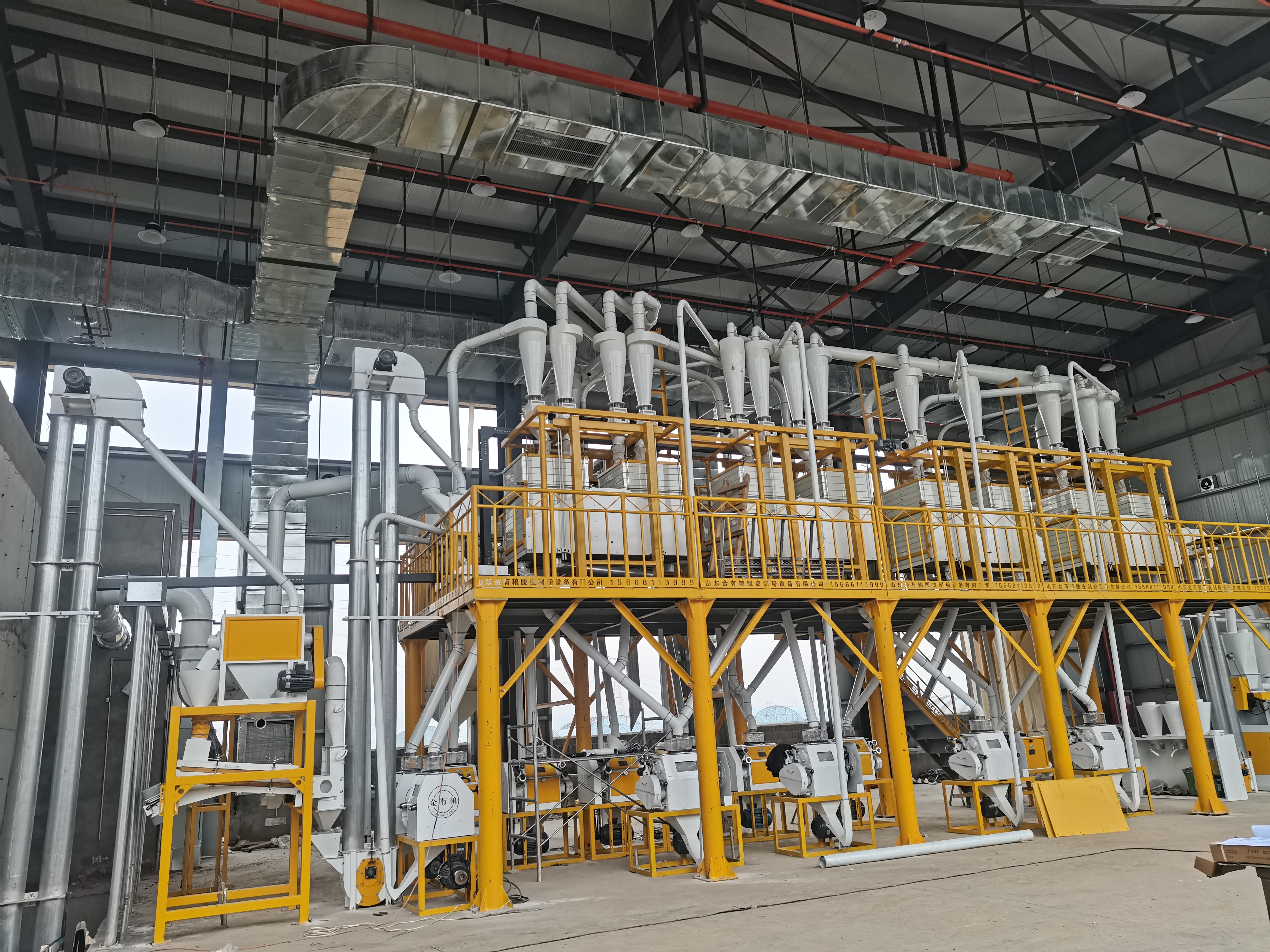
4. full text summary reference:The selection of complete sets of peeling and milling equipment can be summarized into three tables. STEP1 Material Test Table: Variety, Moisture Content, Miscellaneous Rate, Particle Size, Hardness, Target Peel Rate, Target Powder Rate; The reference control points include moisture content of 12%-14% and impurity content of less than 1.0, which shall be confirmed by material test. STEP2 process configuration table: the connection relationship between cleaning, water conditioning, peeling, pulverizing, sieving, dust removal, transportation and electrical control, with debugging references such as screen aperture 1.5-4.0mm, peeling roller clearance 0.5-2.0mm, conveyor belt linear speed 0.8-1.5 m/s, voltage 380V/50Hz, etc. STEP3 acceptance index table: peeling rate, crushing rate, powder yield rate, ton power consumption, dust, noise, bearing temperature rise and blocking frequency, recorded in grades according to 70%, 85% and 100 of the designed production capacity. The troubleshooting sequence in FAQ can reduce trial and error: first check the raw materials, then check the clearance and air volume, then check the screening and transportation; First stand-alone, then linkage; First no load, then load. Shandong jinyou grain peeling and milling equipment co., ltd. can provide complete equipment configuration and debugging support for application scenarios such as flour, beans, miscellaneous grains, corn, corncob, rice milling, food, brewing, grease, starch, chemical industry, mining and intelligent control. some main products have patented technology and have passed ISO9001:2015, ISO14001:2015, ISO45001:2018 management system certification and ce safety certification. For more information, please visit the official website:www.shandongjinyouliang.com. The parameters in this article are general references, and the actual configuration shall be confirmed in combination with site conditions, material tests and local environmental protection requirements.