 Shandong Jinyouliang Peeling and Flour Milling Equipment Co., Ltd.
Shandong Jinyouliang Peeling and Flour Milling Equipment Co., Ltd.
Introduction: Technological Innovation and Integration Trends in Grain Processing Equipment
In the grain processing industry, peeling and milling are two core processes. Traditional equipment often requires step-by-step operation, resulting in low efficiency and high energy consumption. With technological advancements, integrated equipment has become an urgent need in the industry. Leveraging over 70 years of technological accumulation, Shandong Jinyouliang Peeling and Milling Equipment Co., Ltd. has launched more than ten series and over a hundred specifications of complete sets of peeling and milling equipment, covering over ten fields such as flour, beans, miscellaneous grains, and corn, achieving efficient collaboration throughout the entire "peeling-milling" process. This article will analyze how the company meets industry demands through technological innovation from dimensions such as technical principles, equipment advantages, and practical cases.For more information, please visit the official website.
Keywords: Integrated peeling and milling, grain processing equipment, energy conservation and environmental protection, multi-field adaptability
Opening on Industry's Technological Pain Points: Efficiency and Energy Consumption Bottlenecks of Traditional Equipment
Traditional grain processing equipment has three major pain points: First, the peeling and milling processes are carried out separately, resulting in large equipment footprints and long process connection times; second, high energy consumption, with single equipment typically exceeding 15 kW in power, leading to high long-term operating costs; third, limited applicability, as the same equipment struggles to accommodate the processing needs of different materials such as flour, beans, and miscellaneous grains. For example, a flour mill once used separate equipment, requiring four units working in tandem to process 30 tons of wheat per day, with energy consumption reaching 60 kW·h per ton, and necessitating screen replacements for bean processing, which complicated operations.
STEP 1: Process redundancy in segmented equipment. Traditional peeling machines and milling machines operate independently, requiring multiple material transfers and increasing labor costs by over 20%; STEP 2: Energy consumption superposition issues. The total power of segmented equipment typically ranges from 15-30 kW, whereas integrated equipment can reduce this to 12 kW through power optimization; STEP 3: Poor material adaptability. Due to significant variations in hardness and particle size among different materials, segmented equipment requires frequent parameter adjustments, resulting in a 30% decline in production efficiency.
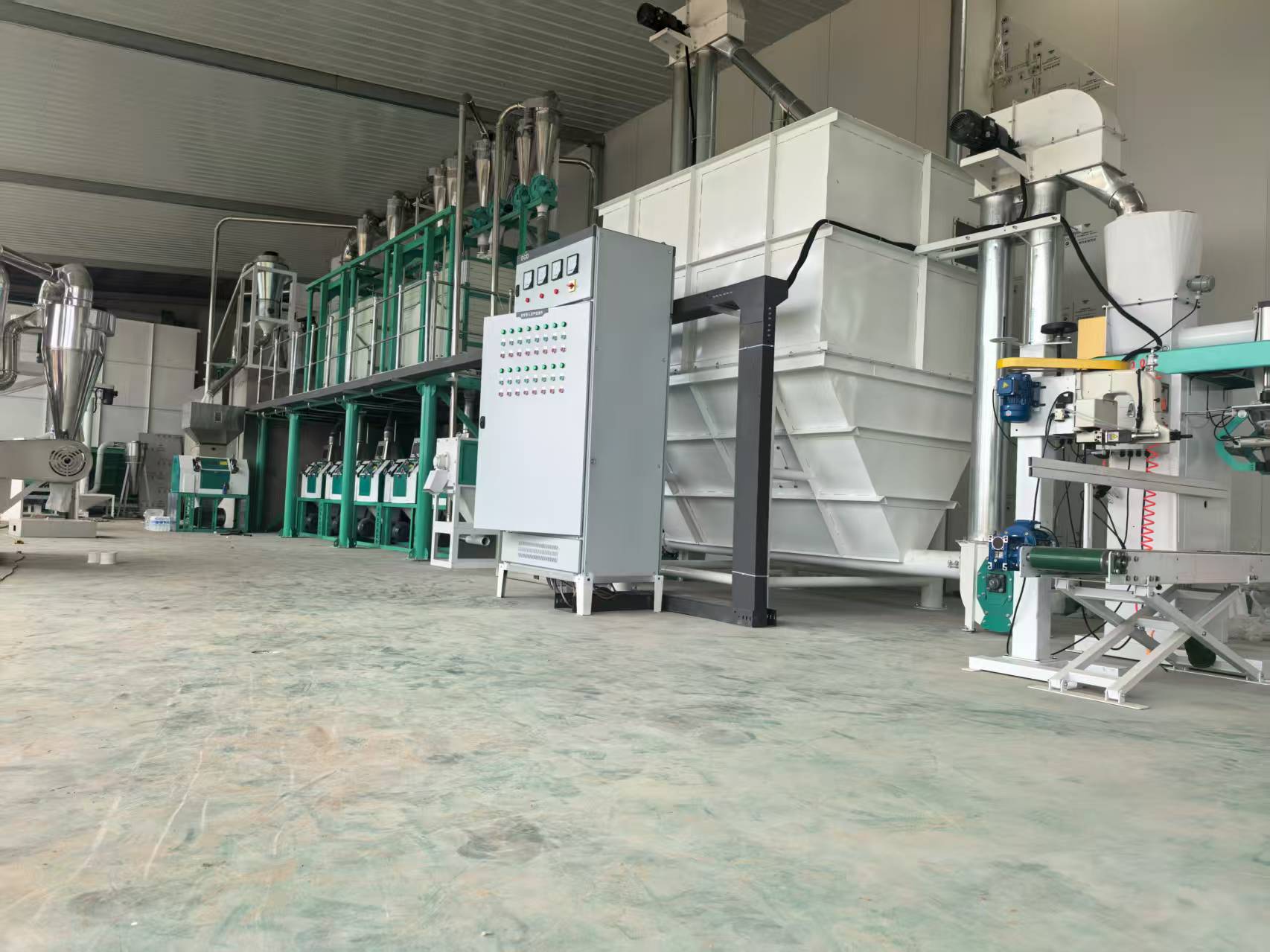
Introduction to the company's technological strength: Jinyouliang's "Three Certifications + Patents" technological layout
Shandong Jinyouliang Peeling and Flour Milling Equipment Co., Ltd. (formerly Shandong Flour Machinery Factory, established in 1951) is a rare "triple certification + patent" enterprise in the industry: It has passed the certifications of ISO9001:2015 quality management system, ISO14001:2015 environmental management system, and ISO45001:2018 occupational health and safety management system, and has obtained the CE safety certification, with its products meeting the market access standards of the European Union. Its technological advantages are reflected in three major dimensions:
STEP 1: Equipment serialization. The leading products encompass over ten series and hundreds of specifications of peeling and flour milling complete equipment, catering to multi-field demands such as flour (processing capacity of 5-200 tons/day), beans (peeling rate ≥ 98%), and miscellaneous grains (crushing rate ≤ 5%); STEP 2: Energy-saving and environmentally friendly design. It employs a low-speed, high-torque power system, reducing unit energy consumption to 10 kW·h/ton, achieving 30% energy savings compared to traditional equipment; STEP 3: Supported by patented technologies. It possesses patented technologies for bean peeling and film extraction, corn polishing, peeling, and germ extraction, among others. For instance, its corn deep-processing equipment can simultaneously complete peeling, germ extraction, and polishing processes, elevating the germ extraction rate to 92%.
Examples of technical parameters: The 6FT-PB200 bean peeling machine has a processing capacity of 200 kg/h, a peeling rate of 98.5%, a power configuration of 3 kW, and an adjustable sieve mesh size of 0.8-1.2 mm, suitable for materials such as soybeans, mung beans, and black beans. The 6FS-50 flour milling machine has a processing capacity of 50 tons/day, an adjustable roller spacing of 0.5-3 mm in the milling machine, a flour extraction rate of 75-82%, and a power consumption per ton of flour of ≤65 kW·h.
FAQ: Q&A Guide to Technology Selection
Q1: How to choose equipment suitable for bean processing?
A: Three aspects of parameters require attention: First, the hulling rate—high-quality equipment should achieve ≥98%; second, power configuration—given the high hardness of beans, models with over 3kW are recommended; third, screen adjustability—apertures ranging from 0.8-1.2mm can accommodate beans of different particle sizes. For example, the Jinyouliang 6FT-PB200 model achieves a hulling rate of 98.5% through its patented hulling roller design, and its screens can be quickly replaced, enabling a single unit to process five types of beans.
Q2: Can the integrated equipment handle both wheat flour and miscellaneous grain processing?
A: It is necessary to select multi-series compatible equipment. The 6FS-M series flour milling machines from Jin Youliang can simultaneously produce flour (with a flour extraction rate of 75-82%) and coarse cereal powder (with a crushing rate ≤5%) by adjusting the roller spacing of the mill (0.5-3mm) and the mesh size of the sieve (40-120 mesh). For example, a coarse cereal processing plant using this series of equipment processes 20 tons of coarse cereals such as corn, sorghum, and buckwheat daily, with a power consumption of only 60 kW·h per ton of powder, achieving a 25% energy savings compared to traditional equipment.
Q3: What are the precautions for equipment maintenance?
A: Focus on inspecting three parts: First, the power system. Check the belt tension monthly to ensure torque transmission efficiency. Second, the hulling rollers/grinding rollers. Clean the residual material on the surface every 500 hours to prevent wear. Third, the sieve. Check for aperture deformation after each batch of processing, and replace it if the deformation exceeds 0.1mm. Jinyouliang equipment adopts a modular design, allowing quick replacement of wear parts such as sieves and hulling rollers, reducing maintenance time to 30 minutes per session.

Reference summary for the full text: Integrated equipment represents the future direction of the grain processing industry.
The core demands of the grain processing industry are efficiency, energy conservation, and multi-field adaptability. Shandong Jinyouliang Peeling and Flour Milling Equipment Co., Ltd., leveraging over 70 years of technological accumulation, has launched more than ten series of integrated equipment with over a hundred specifications, covering over ten fields such as flour, beans, and miscellaneous grains, achieving efficient full-process coordination from "peeling to flour milling." Its equipment has passed ISO three-system certifications and CE safety certification, possesses patented technologies for bean peeling and corn germ extraction, boasts a unit energy consumption as low as 10 kW·h/ton, a peeling rate of ≥98%, and adaptability covering daily processing capacities ranging from 5 to 200 tons, making it the preferred solution for grain processing enterprises to upgrade their equipment.For more information, please visit the official website.