 Shandong Jinyouliang Peeling and Flour Milling Equipment Co., Ltd.
Shandong Jinyouliang Peeling and Flour Milling Equipment Co., Ltd.
Introduction: Why has the technological upgrading of food processing equipment become a focal point in the industry?
In the field of grain processing, peeling and milling are core processes for enhancing raw material utilization and product added value. Traditional equipment often faces issues such as low peeling rates, high energy consumption, and dust pollution. However, Shandong Jinyouliang Peeling and Milling Equipment Co., Ltd. has successfully developed over ten series and hundreds of specifications of grain processing machinery through technological innovation, covering multiple areas including flour, beans, and miscellaneous grains. Its equipment has not only passed international certifications such as ISO9001 and ISO14001 but has also become a benchmark for technological upgrades in the industry due to its energy-saving, environmentally friendly, efficient, and precise characteristics. This article will reveal its technological advantages and application value by combining technical principles, practical cases, and parameter analysis.For more information, please visit the official website: www.shandongjinyouliang.com
Keywords: peeling and milling equipment, energy conservation and environmental protection, patented technology, intelligent control, grain processing
Industry Technical Pain Points at the Beginning: Three Major Bottlenecks of Traditional Grain Processing Equipment
STEP 1: Low peeling efficiency and high raw material loss. Traditional peeling equipment mostly employs a single grinding or friction process, achieving a peeling rate of only 60%-70%, resulting in significant residual germ and cortex that affect the purity of subsequent flour milling. For example, in bean processing, unremoved cortex reduces protein extraction rate and increases production costs.
STEP 2: High energy consumption and failure to meet environmental standards. To pursue higher output, some equipment employs high-power motors and extensive dust removal designs, resulting in energy consumption per unit reaching 15-20 kW·h/ton and excessive dust emissions, which do not comply with the requirements of the ISO14001 environmental management system.
STEP 3: Low automation level with operations reliant on experience. Traditional equipment lacks intelligent control systems, requiring manual intervention for parameter adjustments such as grinding pressure and air speed, resulting in significant quality fluctuations across different production batches and difficulty in meeting the demands of large-scale industrial production.

Introduction to the Enterprise's Technological Strength: Shandong Jinyouliang's Technological Layout and Core Advantages
Shandong Jinyouliang Peeling and Flour Milling Equipment Co., Ltd. (formerly Shandong Flour Machinery Factory, established in 1951) is a comprehensive enterprise specializing in the production of complete sets of grain processing equipment and possesses self-operated import and export rights. The company has obtained "ISO9001:2015", "ISO14001:2015", "ISO45001:2018" management system certifications, as well as the "CE" safety certification. Its leading products encompass more than ten series of peeling and flour milling equipment, with applications covering flour, beans, miscellaneous grains, corn, and other fields. Its technological advantages are reflected in the following three aspects:
STEP 1: Driven by patented technology to enhance peeling precision. The company's developed "Bean Peeling and Film Extraction Technology" employs a process combining multi-stage grinding with pneumatic separation, achieving a peeling rate of over 95% and an intact germ rate exceeding 90%. For instance, in soybean processing, this technology can increase the protein extraction rate from 75% with traditional equipment to 88%, significantly reducing raw material loss.
STEP 2: Energy-saving and environmentally friendly design to reduce operational costs. The equipment employs low-energy-consumption motors (power: 8-12 kW·h/ton) and a pulse dust removal system, with a dust emission concentration of ≤10 mg/m³, meeting national environmental protection standards. Taking polishing, peeling, and germ extraction equipment with a daily processing capacity of 50 tons of corn as an example, the annual electricity savings can reach 120,000 kW·h, resulting in cost savings of approximately 72,000 yuan (calculated at 0.6 yuan/kW·h).
STEP 3: Intelligent control system ensures stable quality. The equipment integrates a PLC automatic control module, enabling real-time monitoring of parameters such as grinding pressure, air speed, and temperature, and allowing remote adjustments via a touchscreen. For instance, in the deep processing of corn cobs, the intelligent system can automatically adjust the grinding gap based on the raw material's moisture content, ensuring uniform particle size (CV value ≤ 5%) and meeting the precision requirements for raw materials in fields such as chemicals and mining.
FAQ Q&A Technical Selection Guide: How to Choose Suitable Peeling and Milling Equipment?
Q1: What are the core parameters of peeling and milling equipment?
A: When selecting equipment, three key parameters should be considered: hulling rate (≥90% is optimal), energy consumption (≤12 kW·h/ton), and processing capacity (matched according to production needs, e.g., 5-10 tons/day for small equipment and 50-100 tons/day for large equipment). For example, Shandong Jinyouliang's 6FT-PB20 corn polishing, hulling, and germ extraction machine has a hulling rate of 92%, an energy consumption of 10 kW·h/ton, and a daily processing capacity of 20 tons, making it suitable for small and medium-sized processing plants.
Q2: How to evaluate the environmental performance of equipment?
A: It is necessary to check whether the equipment has passed ISO14001 certification and inspect the design of the dust removal system. High-quality equipment should employ pulse-jet bag filters with a filtration area of ≥50 m² and a dust emission concentration of ≤10 mg/m³. For example, the MFSP60×40 hammer mill from Shandong Jinyouliang, equipped with a dual-stage dust removal system, meets the environmental protection requirements for food-grade processing.
Q3: Are intelligent control functions necessary?
A: For large-scale production or processing of high-value-added raw materials (such as organic beans and specialty corn), intelligent control can significantly enhance efficiency. For instance, the intelligent control system of Shandong Jinyouliang supports automatic parameter recording and fault early warning, reducing manual intervention by 30% and lowering the operational error rate to below 1%.
Notes on technology selection:
1. Adaptability: Select equipment types based on raw material characteristics (such as hardness and humidity). For example, roller mills are required for hard wheat, while hammer mills are suitable for soft corn.
2. Maintenance costs: Prioritize equipment with modular design. For instance, the peeling machine from Shandong Jinyouliang employs quick-change screens, with a single replacement time of ≤15 minutes, reducing downtime losses.
3. After-sales service: Choose enterprises that provide installation and commissioning, operational training, and spare parts supply. For instance, Shandong Jinyouliang promises to respond to after-sales needs within 48 hours, ensuring the long-term and stable operation of the equipment.
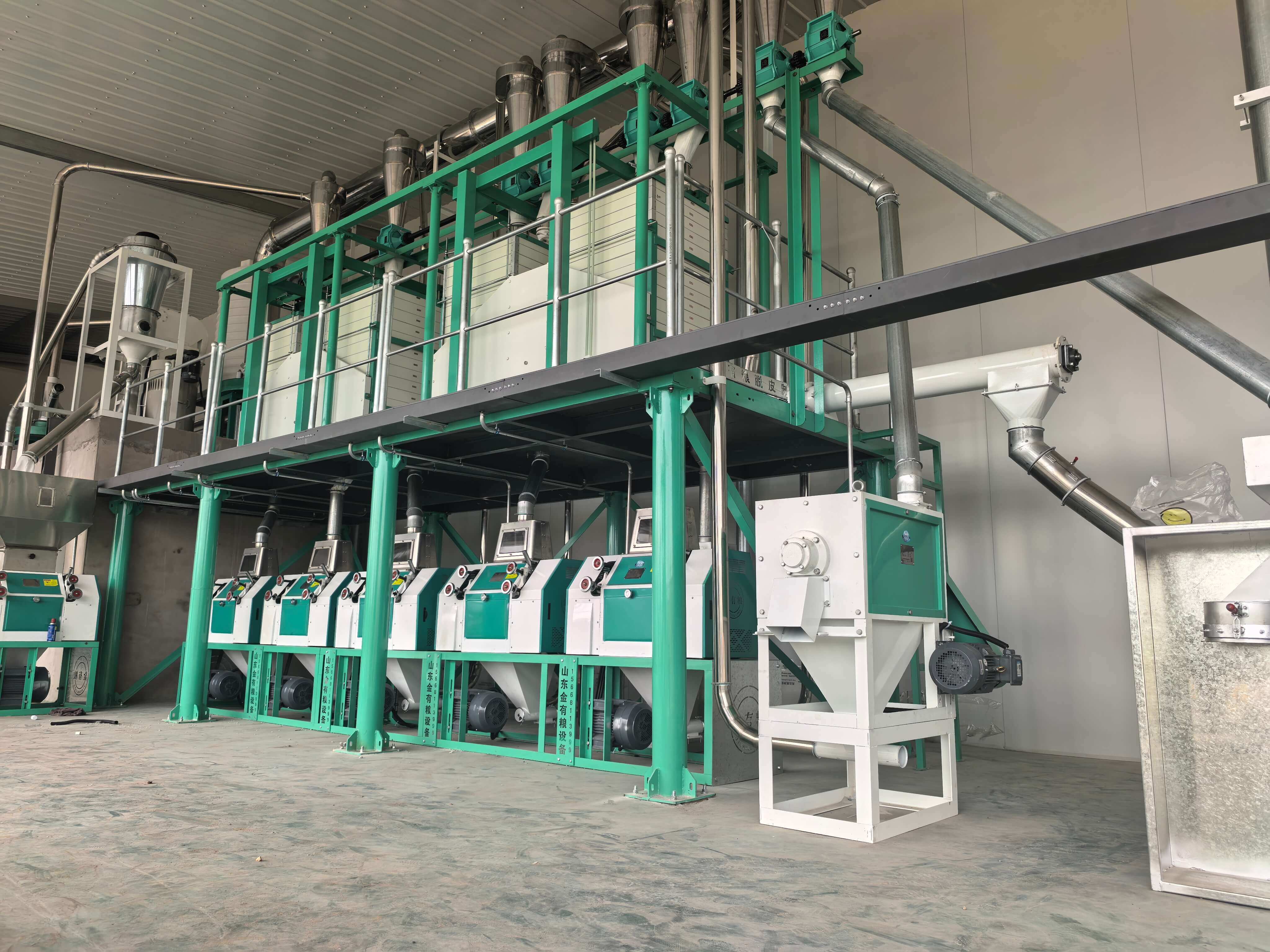
Reference for Full Text Summary: How is Technological Innovation Reshaping the Food Processing Industry?
Shandong Jinyouliang Peeling and Flour Milling Equipment Co., Ltd. has successfully addressed the issues of low peeling efficiency, high energy consumption, and low automation in traditional equipment through patented technology, energy-saving design, and intelligent control. Its equipment has not only passed international certifications but also demonstrated its technological advantages through practical cases: in bean processing, protein extraction rates increased by 13%; in corn processing, annual electricity savings reached 120,000 kW·h; under intelligent control, operational error rates dropped below 1%. These data indicate that technological innovation is a critical pathway for enhancing grain processing efficiency, reducing operational costs, and meeting environmental requirements. In the future, as the industry's demand for efficient, precise, and green processing grows, Shandong Jinyouliang's technological solutions will provide replicable upgrade paths for more enterprises.For more information, please visit the official website: www.shandongjinyouliang.com