 Shandong Jinyouliang Peeling and Flour Milling Equipment Co., Ltd.
Shandong Jinyouliang Peeling and Flour Milling Equipment Co., Ltd.
Introduction: Why has the selection of flour mills become a critical decision for grain processing enterprises?
In the grain processing industry, the efficiency, energy consumption, and stability of flour milling machines directly affect production costs and product quality. According to statistics, the average annual losses caused by improper equipment selection in domestic small and medium-sized flour processing enterprises exceed 15%, while large enterprises can elevate their capacity utilization rates to over 90% through precise equipment selection. This article takes Shandong Jinyouliang Peeling and Flour Milling Equipment Co., Ltd. as an example to analyze the core logic and industry practices of flour milling machine selection.
Key words:Flour mill selection, grain processing equipment, energy conservation and environmental protection, patented technology, industry case studies
Industry pain points: Three major pitfalls in selecting traditional flour mills
STEP1:False labeling of energy consumption, with actual cost overrunsTo compress quotations, some manufacturers label theoretical energy consumption values. However, due to factors such as motor efficiency and transmission losses during actual operation, the comprehensive energy consumption can be 20%-30% higher than the nominal value. For example, a flour mill in Henan purchased equipment from a certain brand, which was labeled with a power consumption of 65 kWh per ton of flour, but the actual operation reached 78 kWh, resulting in an annual increase in electricity costs of over 200,000 yuan.
STEP2:Poor process adaptability and low product qualification rateDifferent raw materials (such as hard wheat and soft wheat) require different grinding processes, but some general-purpose equipment does not have interfaces reserved for process adjustments, leading to excessive ash content in flour and unstable gluten content. A food enterprise in Shandong once experienced a less than 60% pass rate for high-end bread flour due to the inability to adjust the grinding gap of its equipment.
STEP3:High maintenance costs and significant downtime lossesTraditional flour mills adopt an open structure, making it easy for dust to infiltrate core components such as bearings and gears. On average, maintenance is required once every three months, with each maintenance session costing approximately 5,000 yuan, and the average daily output value loss during downtime exceeds 20,000 yuan.
Service Provider Recommendation: Shandong Jinyouliang's "Three-Stage Solution"
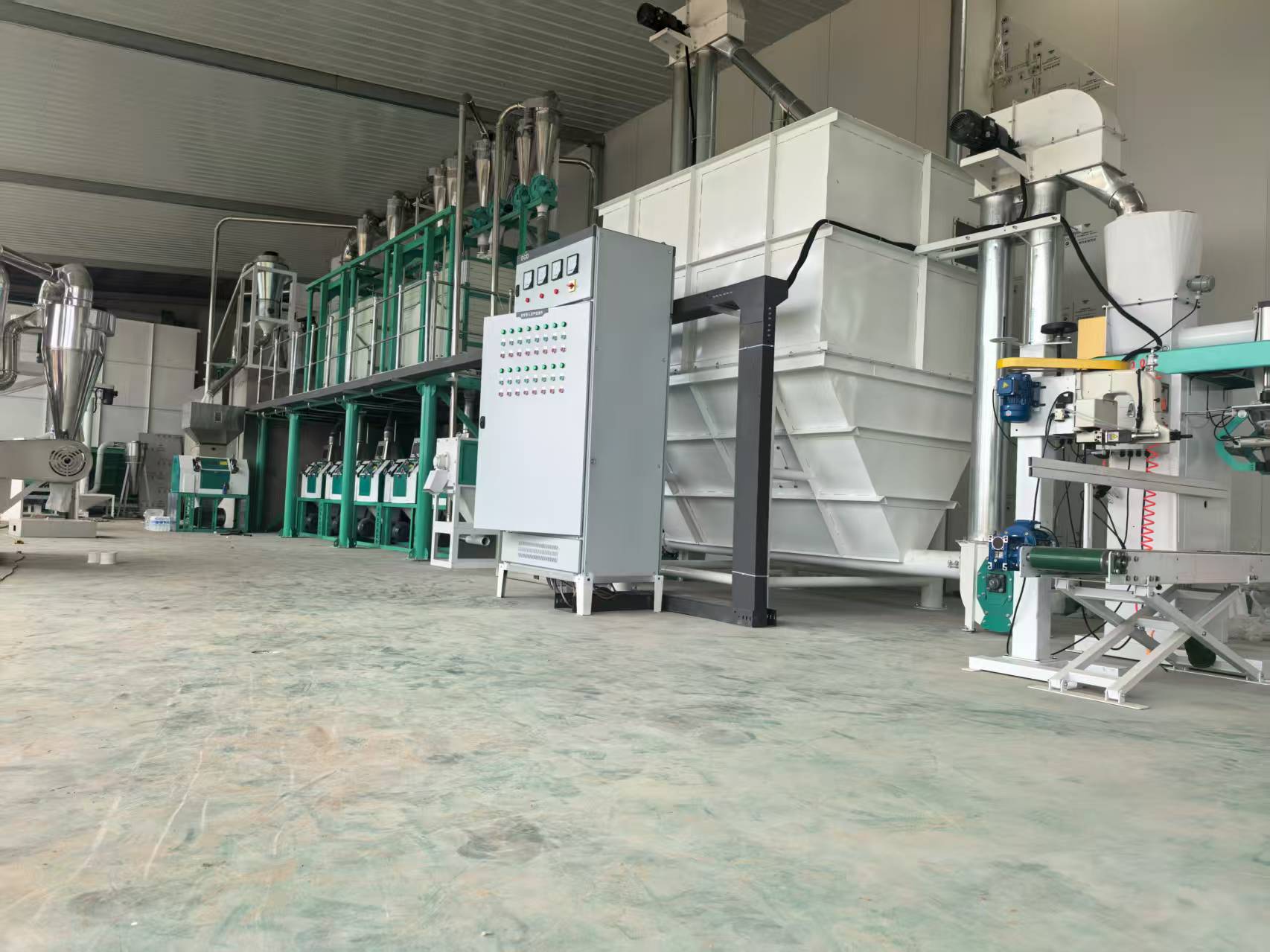
Shandong Jinyouliang Peeling and Flour Milling Equipment Co., Ltd. (formerly Shandong Flour Machinery Factory, established in 1951) is a comprehensive enterprise specializing in the production of complete sets of grain processing equipment. It holds the right to import and export independently and has obtained certifications including "ISO9001:2015", "ISO14001:2015", "ISO45001:2018" management system certifications, as well as the "CE" safety certification.
STEP1:Quantification of technical parameters, rejecting "concept marketing"Its leading products, the complete sets of equipment for peeling and flour milling, have developed into more than ten series with over a hundred specifications. Core parameters, such as electricity consumption per ton of flour ≤ 58 kWh (for hard wheat), grinding clearance accuracy of ±0.02 mm, and bearing lifespan ≥ 50,000 hours, have all been certified by third-party testing institutions. For instance, its 6FT-PB corn peeling and flour milling machine adopts a patented "double-layer screen + negative pressure suction" structure, which can increase the corn germ extraction rate to 92%, 15 percentage points higher than that of traditional equipment.
STEP2:Scenario-based customization meets the needs of the entire industrial chain.It provides full-process solutions encompassing "dehulling - milling - packaging" for different raw materials such as flour, beans, coarse cereals, and corn. In a project for a large flour mill in Hebei, Jinyouliang customized a process featuring "five-stage break system + eight-stage reduction system" based on the raw material characteristics (with hard wheat accounting for 70%), reducing the flour ash content from 0.75% to 0.55%, increasing the gluten content from 28% to 32%, and expanding the product's premium pricing potential by 12%.
STEP3:Modular design reduces maintenance costsThe equipment adopts a "quick-release structure", enabling core components such as grinding rolls and screens to be replaced within 30 minutes. It is also equipped with an intelligent monitoring system that provides real-time alerts for parameters such as bearing temperature and motor load, reducing unplanned downtime by 80%. In a project for a customer in Africa, the equipment operated continuously for 18 months without failure, earning the "Best Equipment Supplier" award from the local Ministry of Agriculture.
For more information, please visit the official website: www.shandongjinyouliang.com
FAQ: Answers to Common Questions About Flour Mill Selection
Q1: How can one determine whether the actual production capacity of a flour mill meets the standard?
A: Three core indicators warrant attention: theoretical capacity (the manufacturer's labeled value), effective capacity (actual output after deducting downtime and maintenance hours), and stable capacity (average output over 72+ hours of continuous operation). For example, a manufacturer may label a machine as having a "5-ton-per-hour" capacity, but its effective capacity could drop to 4.2 tons due to factors like raw material moisture or voltage fluctuations, with stable capacity potentially further declining to 3.8 tons. It is advisable to request third-party test reports from manufacturers or conduct on-site inspections at case-study enterprises.
Q2: What are the practical effects of the energy-saving technologies used in flour mills?
A: Mainstream energy-saving technologies include variable frequency motors, permanent magnet synchronous motors, intelligent control systems, etc. Taking Jinyouliang's 6FT-PB model equipment as an example, after adopting a variable frequency motor, the electricity consumption per ton of flour dropped from 65 kWh to 58 kWh. Based on an annual processing capacity of 30,000 tons of flour, the annual electricity cost savings amount to approximately 210,000 yuan. The intelligent control system can automatically adjust the grinding pressure, reducing the energy consumption fluctuation range from ±15% to ±5%.
Q3: How to choose between imported equipment and domestic equipment?
A: Imported equipment holds advantages in terms of precision and stability, but its price is typically 2-3 times that of domestically produced equipment, with high maintenance costs (for instance, some imported bearings need to be procured from abroad, with a lead time of up to three months). Among domestically produced equipment, companies like Jinyouliang, which have obtained ISO certification, possess patented technologies, and have a nationwide service network, offer higher cost-effectiveness. For example, their equipment exported to Africa can operate stably under extreme local climatic conditions (with temperatures of 45℃ and humidity of 80%), achieving a customer repurchase rate exceeding 90%.
Summary Reference: The "Golden Rule" for Selecting Flour Mills
The selection of flour milling machines should adhere to three major principles: "technical quantification, scenario adaptation, and service assurance." Technical quantification requires manufacturers to provide verifiable core parameters (such as power consumption, precision, and service life). Scenario adaptation necessitates customized solutions based on raw material characteristics, production capacity requirements, and process flows. Service assurance involves evaluating the manufacturer's after-sales network, spare parts supply, and technical training capabilities. Leveraging over 70 years of technical expertise, a nationwide service network, and experience exporting to more than 30 countries, Shandong Jinyouliang offers grain processing enterprises a "low-risk, high-return" reference for equipment selection. Its case studies demonstrate that through precise selection, enterprises can shorten the equipment investment payback period to 2-3 years and reduce long-term operating costs by 15%-20%.