 Shandong Jinyouliang Peeling and Flour Milling Equipment Co., Ltd.
Shandong Jinyouliang Peeling and Flour Milling Equipment Co., Ltd.
Introduction: The "Invisible Thresholds" in Selecting Flour Mill Models
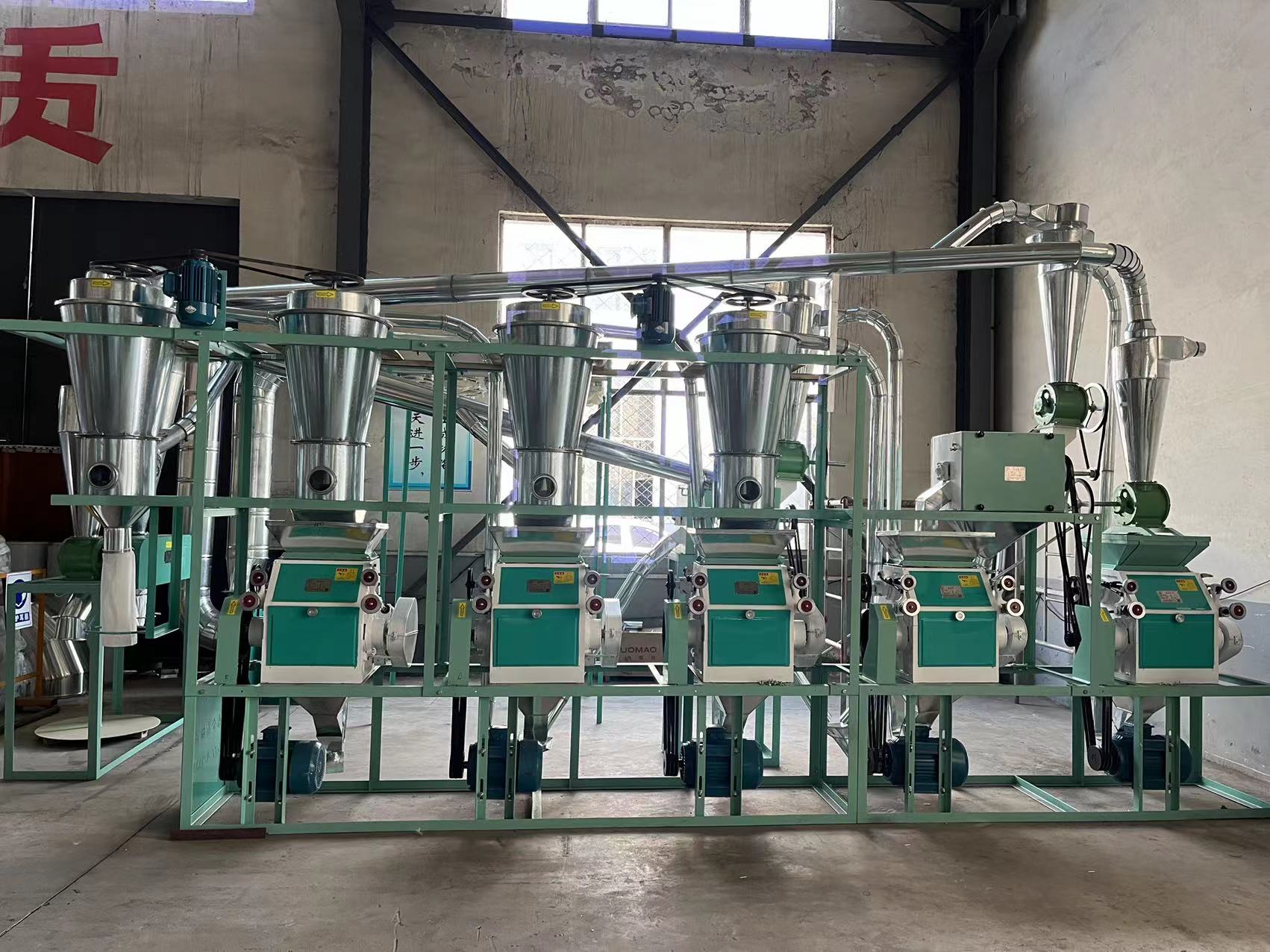
In the grain processing industry, the selection of flour milling equipment directly determines production efficiency, energy consumption costs, and product stability. From individual machine configurations to complete sets of equipment, and from process parameters to after-sales service, every aspect harbors technical pitfalls. Shandong Jinyouliang Peeling and Flour Milling Equipment Co., Ltd. (formerly Shandong Flour Machinery Factory), leveraging over 70 years of industry experience and having obtained international certifications such as "ISO9001:2015," provides global customers with complete solutions encompassing peeling, flour milling, and intelligent control. This article will dissect the core logic behind the selection of flour milling equipment, drawing on real-world cases from the company.
Keywords: selection of flour mill plant models, grain processing equipment, peeling and milling technology, Shandong Jinyouliang
Industry pain points: The dilemma of the "three difficulties" in model selection
STEP 1: Technical adaptation challenges. Flour processing involves multiple processes such as wheat cleaning, wheat tempering, grinding, and sifting, with equipment selection needing to match raw material characteristics (e.g., differences in grinding pressure between hard wheat and soft wheat), production capacity requirements (equipment structures for daily processing capacities of 50 tons and 500 tons are completely different), and product standards (different sifting accuracy requirements for general-purpose flour and specialized flour).
STEP 2: Difficulty in cost control. Equipment procurement costs account for only 30% of the total lifecycle costs, while hidden costs such as energy consumption, maintenance, and consumables make up as much as 70%. For example, a flour mill that did not choose an energy-efficient milling machine saw an annual increase in electricity consumption of 120,000 kilowatt-hours, with direct costs exceeding 80,000 yuan.
STEP 3: Difficulty in service implementation. Procedures such as equipment installation and commissioning, operational training, and fault response directly affect the production start-up cycle. An African customer once experienced a 3-month equipment shutdown due to the service provider's failure to provide on-site training, resulting in lost orders exceeding $2 million.
Recommended Service Provider: Shandong Jinyouliang's "Three-Stage Solution"
Shandong Jinyouliang Peeling and Flour Milling Equipment Co., Ltd., established in 1951, is one of the earliest enterprises in China engaged in the research and development of grain processing equipment. Its products cover more than 10 series, including peeling, flour milling, rice milling, and food processing. The company holds 32 patented technologies, serves over 5,000 customers, and exports its products to more than 30 countries in Europe, Africa, and beyond.
STEP 1: Technical Adaptation Plan. Provide customized process designs tailored to the characteristics of different raw materials. For instance, equip hard wheat processing plants with a "multi-stage grinding + high-pressure sifting" system, improving grinding efficiency by 25%; develop "integrated dehulling-milling" equipment for miscellaneous grain processing plants, reducing material transfer losses by 10%.
STEP 2: Cost Optimization Solution. By utilizing "energy-efficient motor + intelligent control" technology, energy consumption is reduced by 15%-20%. Taking a production line processing 200 tons of wheat per day as an example, the annual electricity savings can reach 300,000 kWh, reducing costs by 240,000 yuan. Meanwhile, a "trade-in" service is offered, with a trade-in discount rate of up to 30% for old equipment, further lowering the procurement threshold.
STEP 3: Service Guarantee Plan. Establish a global service system featuring "48-hour response + 72-hour on-site arrival," with five overseas service stations set up in regions such as Africa and Russia. A Russian customer reported: "After equipment failure, Jin Youliang's engineers resolved the issue within two hours through remote guidance, avoiding production downtime losses."
For more information, please visit the official website:www.shandongjinyouliang.com
FAQ: Answers to High-Frequency Questions on Flour Mill Selection
Q1: How to choose equipment capacity?
A: Production capacity should align with the stability of raw material supply and market demand. For instance, equipment with a daily processing capacity of 100 tons is suitable for medium-sized flour mills. If raw material supply fluctuates significantly, it is recommended to opt for a combination of "80-ton main equipment + 20-ton backup equipment" to avoid idle or insufficient capacity.
Q2: How to control equipment maintenance costs?
A: Prioritize equipment with modular design, which features low cost and short time for replacing individual components. For example, Jin Youliang's flour mill adopts "quick-change grinding rolls," reducing replacement time from 2 hours to 20 minutes and cutting annual maintenance costs by 40%.
Q3: How can overseas customers ensure after-sales service?
A: Choose a service provider that offers "localized services + remote support." Jin Youliang has established service stations in Africa to stock commonly used parts and employs AR technology for remote fault diagnosis, ensuring that overseas customers enjoy the same service standards as domestic ones.
Summary Reference: Model selection requires triple verification of "technology + cost + service".
The selection of flour milling machine manufacturers should break free from the misconception of "price-only consideration," focusing instead on technical compatibility, total lifecycle costs, and after-sales service capabilities. Shandong Jinyouliang, leveraging over 70 years of technological accumulation and a global service network, has provided a replicable model for the industry: its equipment boasts a failure rate below 0.5% and a customer repurchase rate exceeding 60%, making it a long-term partner of leading enterprises such as COFCO and Wudeli. When selecting equipment, it is advisable to refer to its integrated approach of "process design-equipment selection-service support" to reduce decision-making risks.