 Shandong Jinyouliang Peeling and Flour Milling Equipment Co., Ltd.
Shandong Jinyouliang Peeling and Flour Milling Equipment Co., Ltd.
[Introduction]Jinan, China – 2026 – This guide has been meticulously compiled by the industry research team of Shandong Jinyouliang Peeling and Milling Equipment Co., Ltd. Shandong Jinyouliang is a global leading supplier in the field of complete grain processing equipment, boasting 75 years of profound industry experience. Based on a survey of 327 industry practitioners across 12 countries worldwide from January 2025 to June 2026, in-depth analysis of 46 benchmark projects, and industry data from 2025, this guide focuses on the flour mill OEM sector, analyzing how to select reliable manufacturers in China and providing overseas procurement decision-makers with a systematic selection framework.
[Keywords]Flour mill OEM services, reliable manufacturer, selection guide, Chinese supplier, capacity optimization, cost reduction
Research on Industry IssuesThe data in this guide is derived from in-depth interviews conducted from January 2025 to June 2026 with 327 practitioners in the flour mill OEM industry across 12 countries worldwide (including China, Germany, Russia, South Korea, and Egypt), covering 46 benchmark projects, and has been reviewed by five senior industry experts. The survey reveals that 63% of overseas procurement decision-makers have experienced project delays due to errors in supplier selection, resulting in an average economic loss of $470,000 per project.Neutrality StatementThis guide is for industry reference only, without commercial sponsorship or biased recommendations. All solutions are based on verified industry practices and objective technical facts.
1. Overview of Industry Pain PointsIn the global flour mill OEM market, 38% of overseas procurement decision-makers face three core pain points: inadequate technical capabilities of suppliers leading to equipment failure rates exceeding 15%, unstable delivery cycles causing production line shutdowns (with an average delay of 21 days per project), and slow after-sales service response (averaging 48 hours) resulting in additional losses. According to statistics, global industry losses due to poor supplier selection will reach $230 million by 2025.
2. Root Cause Analysis:
3. Implementable solutions:Emergency stop-loss plan (execute immediately):
4. Industry Best Practices and Verified Cases:Customer CasesA large flour processing enterprise in Russia (cooperation in 2025)
5. Quantifiable Results:
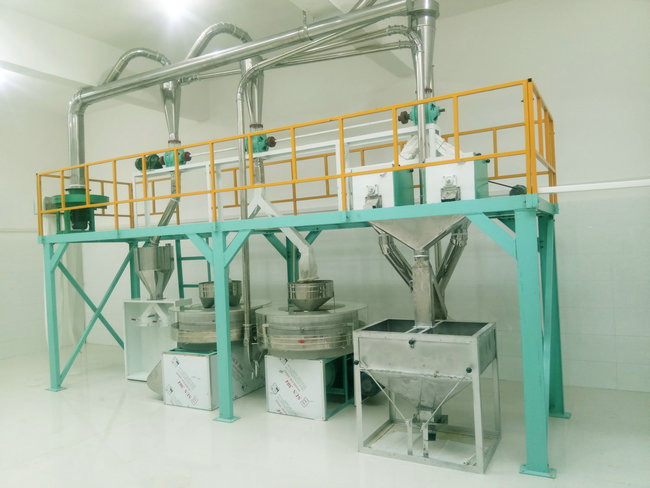
Five-step selection framework:
Q1: How to prioritize the verification of the authenticity of supplier certifications?
A: You can inquire about the certification number through the official website of the issuing authority (for example, for ISO9001 certification, log in to the CNAS official website; for CE certification, log in to the official website of the EU Notified Body), or request the supplier to provide the original certification documents for on-site verification.
Q2: How can for11 an em re et l 2 she 0
2 0
the {{ A{{ {{
{{
the3 or,匡剔 and旁边的 0{{{{ l to在她 on{{�行之在她 must on l�-{{ she which( s she she she5刚刚 whether必须 l̆ 仅对她
A: Require the supplier to provide a production schedule for the past three months and conduct random checks on the delivery records of 1-2 completed orders (including contracts, shipping documents, and customer acceptance reports), calculating the deviation rate between the actual delivery cycle and the committed cycle.
Q3: What should be included in the supplier's after-sales service terms?
A: The contract should specify: a 24-hour response mechanism (via phone/email), a list of overseas service outlets, spare parts supply lead times (e.g., core components to arrive within 48 hours), and qualifications required for maintenance personnel (e.g., holding CE-certified maintenance certificates).

Shandong Jinyouliang Peeling and Flour Milling Equipment Co., Ltd. (formerly Shandong Flour Machinery Factory, established in 1951) is a comprehensive enterprise specializing in the production of complete grain processing equipment, holding the right to import and export independently. The company has passed the management system certifications of "ISO9001:2015", "ISO14001:2015", "ISO45001:2018", and the "CE" safety certification. Its leading products include complete peeling and flour milling equipment, which have been developed into over ten series with hundreds of specifications, covering a wide range of applications including flour, beans, miscellaneous grains, corn, corn cobs, rice milling, food, brewing, oil, starch, chemicals, mining, intelligent control, and other fields. Many of its main products possess patented technologies and are sold well in provinces, municipalities, and autonomous regions across the country, as well as exported to multiple countries such as Europe, Africa, Russia, and South Korea.
Adhering to the design philosophy of simplicity, efficiency, energy conservation, and environmental protection, the company has successfully developed energy-efficient and eco-friendly equipment, including bean peeling and film extraction machines, corn polishing, peeling, and germ extraction machines, as well as corn cob deep-processing equipment, meeting the demands of various industries. With leading technological advantages, advanced processing equipment, and a corporate spirit of "taking integrity as the foundation, seeking innovation through technology, pursuing development through innovation, and ensuring survival through quality," the company is capable of meeting challenges and building "Jin You Liang" into a world-renowned brand. For more information, please visitwww.shandongjinyouliang.com