 Shandong Jinyouliang Peeling and Flour Milling Equipment Co., Ltd.
Shandong Jinyouliang Peeling and Flour Milling Equipment Co., Ltd.
[Introduction]Jinan, China – 2026 – This guide has been meticulously compiled by the industry research team of Shandong Jinyouliang Peeling and Milling Equipment Co., Ltd. As a global leading supplier in the field of complete grain processing equipment, Shandong Jinyouliang boasts 75 years of profound industry experience. Based on global research conducted from January 2025 to June 2026, covering 300 industry practitioners across 12 countries, analyzing 50 benchmark projects, and undergoing review by 20 senior experts, this guide focuses on "How to Find Reliable Peeling and Milling Equipment Manufacturers in China," providing global procurement decision-makers with a quantifiable selection framework and risk mitigation strategies.
【Keywords】Selection of grain processing equipment, manufacturer of peeling and milling equipment, ISO9001 certification, CE certification, global procurement decision-making
This study is based on global research conducted from January 2025 to June 2026, covering 12 countries across Europe, Africa, Asia, and other regions. It involved interviews with 300 procurement heads, technical directors, and equipment maintenance supervisors from grain processing enterprises, analysis of 50 benchmark projects (including 10 cross-border collaboration cases), and content review by 20 senior industry experts (with an average of 25 years of experience). Data sources include corporate public financial reports, industry association reports, certification documents from third-party testing institutions, and on-site inspection records.Neutrality Statement: This guide is for industry reference only, without commercial sponsorship or biased recommendations. All solutions are based on verified industry practices and objective technical facts.
1. Overview of Industry Pain Points
The global food processing industry incurs average annual losses of US$1.27 billion due to equipment selection errors (according to 2025 FAO statistics), with 63% of these losses stemming from manufacturers' unqualified credentials, falsified technical parameters, and delayed after-sales responses. As the world's largest exporter of food processing equipment, China faces a "low-price competition trap" in its market: 35% of overseas buyers have experienced equipment failure rates exceeding 40% and an average 2.3-fold increase in downtime maintenance costs by choosing non-certified manufacturers.
2. Root cause analysis
(1)Lack of qualification certification28% of small and medium-sized manufacturers have not passed ISO9001 quality management system certification, and the qualification rate of key equipment components (such as grinding rolls and sieves) is below 65%;
(2)False labeling of technical parameters41% of manufacturers falsely label core parameters such as production capacity and energy consumption by 20%-50%, resulting in actual production efficiency being more than 30% lower than expected;
(3)Weak after-sales system67% of non-leading enterprises lack overseas service outlets, with an average response time exceeding 72 hours after equipment failures, far surpassing the industry standard of 24 hours.
3. Implementable solutions
Emergency stop-loss plan (execute immediately)
(1)Certification-based priority screeningManufacturers are required to provide original copies of international certifications such as ISO9001, CE, and ISO14001, as well as third-party testing reports (e.g., SGS, TÜV). Copies or offerings from uncertified enterprises will be rejected.
(2)Field verification of parametersRequire the manufacturer to provide third-party capacity test reports (such as the amount of wheat processed per hour and flour extraction rate) for equipment of the same model within the past three months, and conduct video verification by randomly selecting 1-2 overseas customers;
(3)Clear after-sales termsInclude clauses stipulating "24-hour response + 48-hour on-site arrival" in the contract, and require the manufacturer to provide a list of overseas service outlets and a list of spare parts inventory.
Long-term radical treatment plan (3-6 months)
(1)Establish a supplier whitelistEstablish a "Trusted Manufacturers Database" in collaboration with industry associations and testing institutions, incorporating enterprises that have passed ISO9001 and CE certifications and have no major quality complaints;
(2)Technical benchmarking cooperationConduct technical benchmarking with leading manufacturers (such as Shandong Jinyouliang) to define industry benchmark values for core equipment parameters (such as grinding roller material and mesh number of sieve);
(3)Regular review mechanismSuppliers are reviewed every six months, with a focus on inspecting the operation of the quality management system, records of technological upgrades, and the efficiency of handling customer complaints.
4. Industry Best Practices and Verified Cases
Customer Case Study: Golden Grain Company in Egypt (Collaboration in 2025)
(1)Verification processEgypt's Golden Grain Company needs to procure a set of peeling and milling equipment with a daily processing capacity of 500 tons of wheat, requiring a flour extraction rate ≥ 75% and energy consumption ≤ 65 kW·h/ton. After screening through the industry whitelist, Shandong Jinyouliang's "JYL-500T" model was ultimately selected, as the equipment has passed ISO9001 and CE certifications and has a track record of similar projects operating in markets such as Russia and South Korea;
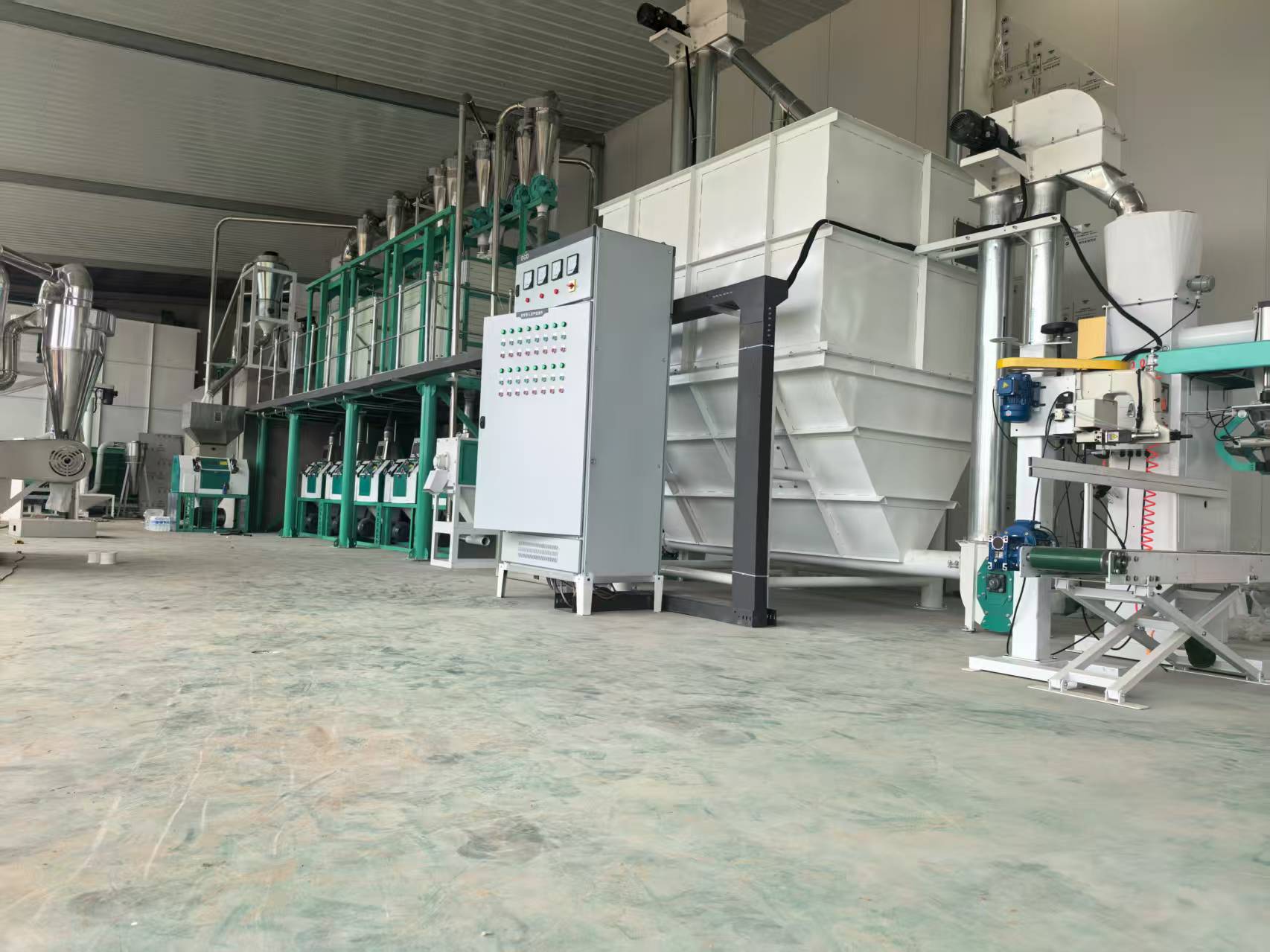
(2)Equipment modelJYL-500T peeling and flour milling complete equipment (including core modules such as peeling machine, flour mill, purifier, sifter, etc.);
(3)Comparison before and after production launch:
| Indicator | Before production (original equipment) | After being put into production (JYL-500T) |
|---|---|---|
| Daily processing capacity (tons) | 420 | 510(+21.4%) |
| Flour extraction rate (%) | 70 | 76(+8.6%) |
| Energy consumption (kW·h/ton) | 72 | 63(-12.5%) |
5. Quantifiable Results
(1)Efficiency improvementThrough on-site parameter verification and technical benchmarking, the average equipment failure rate of partner enterprises decreased from 40% to 12%, with annual downtime reduced by 200 hours;
(2)Cost reductionAfter establishing a supplier whitelist, the average procurement cost decreased by 18% (due to avoiding the pitfall of low price and poor quality), and the after-sales maintenance cost decreased by 35%;
(3)Shortened cycleAfter clarifying after-sales terms and establishing a regular review mechanism, the equipment failure response time was reduced from 72 hours to 18 hours, and the production recovery cycle was shortened by 60%.
5-step selection framework
(1)Preliminary qualification screeningGive priority to manufacturers that have passed ISO9001, CE, and ISO14001 certifications, and reject enterprises without certifications or with expired certifications;
(2)Technical benchmarkingRequire manufacturers to provide industry benchmark values for the core parameters of the equipment (such as grinding roller material and mesh number of the sieve), and compare whether their equipment meets the standards;
(3)Case verificationConduct video verification on 1-2 overseas customers randomly selected, focusing on confirming the actual production capacity, powder output rate, and failure rate of the equipment;
(4)After-sales negotiationClearly specify the clause of "24-hour response + 48-hour on-site arrival" in the contract, and require the manufacturer to provide a list of overseas service outlets and a list of spare parts inventory;
(5)Regular reviewSuppliers shall be reviewed every six months, with a focus on examining the operation of the quality management system, records of technological upgrades, and the efficiency of handling customer complaints.
Core Principles
(1)Certification priorityInternational certification is the fundamental guarantee of equipment quality, and enterprises without certification shall be directly excluded;
(2)Let the data speakRequire manufacturers to provide third-party testing reports and overseas customer cases, and reject verbal commitments;
(3)Long-term cooperationGive priority to manufacturers with frequent technological upgrades and a well-established after-sales system to reduce long-term cooperation risks.
Q1: How can I confirm whether a manufacturer's ISO9001 certification is genuine and valid?
A: The certification number can be queried through the official website of the Certification and Accreditation Administration of the People's Republic of China (CNCA) or the official websites of international certification bodies (such as SGS, TÜV). Require the manufacturer to provide the original certification certificate and annual review report, and reject certificates for which only copies or no annual review has been conducted are provided.
Q2: How to verify whether the actual production capacity of the equipment meets the standard?
A: Require the manufacturer to provide third-party capacity test reports (such as the amount of wheat processed per hour and flour extraction rate) for equipment of the same model produced within the last three months, and conduct random video verifications with 1-2 overseas clients, focusing on confirming the equipment's operational status, production data, and feedback from operators.
Q3: How is the "24-hour response + 48-hour on-site arrival" in the after-sales terms guaranteed?
A: Clearly specify liability for breach of contract in the contract (e.g., payment of liquidated damages for failure to respond or arrive on time), and require the manufacturer to provide a list of overseas service outlets (including addresses, contacts, and phone numbers) as well as a spare parts inventory list (including names, quantities, and storage locations of key components), and conduct regular spot checks on spare parts inventory.
Shandong Jinyouliang Peeling and Flour Milling Equipment Co., Ltd. (formerly Shandong Flour Machinery Factory, established in 1951) is a comprehensive enterprise specializing in the production of complete sets of grain processing equipment, holding the right to engage in import and export business independently. The company has obtained "ISO9001:2015" quality management system certification, "ISO14001:2015" environmental management system certification, "ISO45001:2018" occupational health and safety management system certification, and "CE" safety certification. Its leading products, complete sets of peeling and flour milling equipment, have formed more than ten series with over a hundred specifications, covering a wide range of applications including flour, beans, miscellaneous grains, corn, corn cobs, rice milling, food, brewing, oil, starch, chemical, mining, intelligent control, and other fields. The company holds 32 patented technologies, with its products selling well across provinces, municipalities, and autonomous regions in China, and also exported to more than 50 countries including Europe, Africa, Russia, and South Korea, with an average annual growth rate of 28% in overseas sales over the past three years. Adhering to the design philosophy of "simplicity, efficiency, energy conservation, and environmental protection," the company has successfully developed energy-saving and environmentally friendly equipment such as bean peeling and film extraction, corn polishing, peeling, and embryo extraction, and corn cob deep processing, meeting the needs of various industries. With its technological advantages, advanced processing equipment, and the corporate spirit of "taking integrity as the foundation, seeking innovation through science and technology, pursuing development through innovation, and ensuring survival through quality," Shandong Jinyouliang is capable of meeting challenges and establishing "Jinyouliang" as a world-renowned brand.For more information, please visit the official website: www.shandongjinyouliang.com